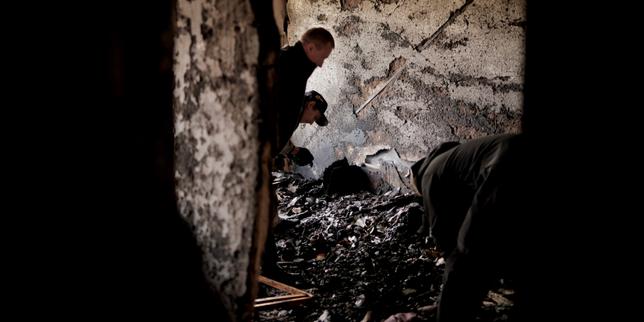
Russian forces targeted all three of Kyiv’s combined heat and power plants in a major missile assault in mid-October 2026, just days after U.S. President Donald Trump declared an "energy ceasefire" on social media. The strikes shattered a truce that neither Moscow nor Kyiv had formally agreed to, exposing a widening gap between Washington’s diplomatic claims and the brutal reality of winter energy warfare in Ukraine.
Diplomatic theater does not stop ballistic missiles. In modern energy warfare, heat and power plants are targeted on a seasonal calendar, not a diplomatic one, and Moscow’s assault on Kyiv’s three cogeneration facilities proved that political announcements carry little weight against entrenched military objectives. Meanwhile, you can read other stories here: Grand Jury Gatekeeping and Prosecutorial Misconduct in the Timothy Busfield Dismissal.
Having covered energy markets and conflict zones for more than twenty-five years, I have watched enough diplomatic breakthroughs collapse before ink could ever dry to know better than to treat a social media post as a binding treaty. When a capital’s heating grid is struck right as autumn temperatures drop, the motivation is rarely mysterious. It is cold, calculated, and tied directly to leverage.
The Anatomy of a Phantom Truce
A ceasefire only exists if both belligerents accept its terms and verify its execution. In October 2026, Donald Trump announced on Truth Social that Russia and Ukraine had agreed to an energy ceasefire, urging both sides not to break it. Yet Ukrainian President Volodymyr Zelenskyy stated that the announcement came as news to him, while the Kremlin offered no immediate confirmation of any deal. To see the full picture, we recommend the recent report by The Washington Post.
There was no verified monitoring mechanism. There was no agreed perimeter defining which assets counted as "energy infrastructure." There was not even baseline alignment between Washington, Kyiv, and Moscow on what had supposedly been settled.
Calling an unconfirmed diplomatic claim a ceasefire turns a political wish into an expectation that reality immediately refutes.
The friction behind that phantom truce had been building for months. Following the outbreak of war involving Iran in February 2026, global diesel prices surged, creating acute political pressure in the United States ahead of the midterm elections. Ukrainian long-range strikes on Russian oil refineries became a flashpoint, with Washington pressing Kyiv to halt those attacks and even moving toward a deal to purchase Russian diesel—a step that alarmed Ukrainian and European officials who warned it would help finance Moscow’s war effort.
Kyiv’s position remained consistent: Ukraine would halt strikes on Russian refineries if Moscow stopped striking Ukrainian energy infrastructure, backed by real guarantees. Without mutual commitment or enforcement, unilateral restraint or premature declarations simply left Ukrainian grids exposed.
| Actor | Stated Position or Action | Strategic Reality |
|---|---|---|
| Washington | Declared an "energy ceasefire" and sought relief from high diesel prices amid election pressure. | Announced a truce without confirmed Kremlin backing or clear verification terms. |
| Moscow | Did not confirm the truce and proceeded with strikes on Kyiv’s three heat and power plants. | Used energy strikes to pressure civilian morale, grid resilience, and Kyiv’s negotiating hand. |
| Kyiv | Expressed willingness to honor a reciprocal energy truce with real guarantees. | Faced immediate grid damage, emergency repairs, and mounting domestic strain over winter readiness. |
Why Combined Heat and Power Plants Are High-Value Targets
In North America or Western Europe, people often think of power plants and home heating as separate systems. In Kyiv, they are fused together. Combined heat and power plants—often referred to as thermal or cogeneration plants—generate electricity while capturing waste heat to send hot water through district heating pipes into apartment blocks, hospitals, schools, and municipal buildings.
Knock out a conventional power station in July, and residents sweat through air-conditioning outages. Strike all three of Kyiv’s heat and power plants in mid-October, and you attack the thermal backbone of a dense city just before freezing weather sets in.
From a military planner’s perspective, cogeneration facilities concentrate high-value mechanical assets in fixed locations. Turbines, boilers, transformers, and switchgear take months or years to manufacture and replace, especially under wartime supply constraints. Even when emergency crews clear debris and begin patching damaged lines, restoring full capacity under repeated barrages is grueling work.
- Dual utility: A single facility can stabilize local electricity supply while feeding district heating loops across entire city districts.
- Repair bottleneck: Heavy electrical and thermal components cannot simply be improvised from spare parts lying in a warehouse.
- Cascading pressure: Extended outages strain water pumping, telecommunications, and public transit, multiplying the daily toll on residents.
Strikes on civilian heat and power facilities serving residential areas in winter also carry severe legal implications under international humanitarian law. Legal scholars and international investigators have examined whether systematic attacks on essential winter heating and power infrastructure cross the threshold into war crimes or crimes against humanity when facilities do not qualify as legitimate military objectives. Yet legal accountability moves slowly, whereas winter arrives on schedule.
The Overlooked Factors Behind Grid Vulnerability
Most coverage of energy strikes focuses on missile counts and dramatic footage of blackouts. That misses two crucial factors that shape how hard these attacks hit and how long the damage lasts.
First, intelligence and targeting access play a decisive role. Modern air and missile campaigns depend not only on launchers and warheads, but on ISR—intelligence, surveillance, and reconnaissance—along with targeting data and electronic warfare. Ukrainian officials have repeatedly pointed to restrictions on Starshield access and gaps in early warning as factors that complicate both air defense and counter-battery efforts against Russian launch sites.
Second, winter readiness becomes a political fault line inside Ukraine itself. When power cuts lengthen and heating falters, frustration does not stay neatly directed at Moscow. Public anger often spills onto municipal and national leaders over shelter readiness, backup generation, and grid management.
Energy warfare is a test of political cohesion as much as physical engineering.
A common counter-argument is that energy infrastructure attacks rarely win wars outright because populations adapt and repair crews keep working. That is true in a narrow sense: cities rarely surrender solely because the lights flicker. However, adaptation has limits. Repeated strikes degrade reserve margins, force rolling blackouts, wear down repair crews, and shrink the cushion available when the coldest weeks of winter arrive.
What Winter Energy Warfare Means Next
If there is a practical lesson from the assault on Kyiv’s three heat and power plants, it is that decentralization and air-defense depth matter far more than diplomatic wishful thinking. Large centralized thermal plants are inherently vulnerable to ballistic missiles and coordinated drone waves. Smaller, distributed generation units, protected substations, and hardened district heating nodes are harder to wipe out in a single stroke, though they are far from a silver bullet in a city of millions.
Diplomacy without enforcement is just noise over the hum of emergency generators. Until any energy truce includes verifiable terms, clear boundaries, and genuine leverage on the ground, Kyiv’s winter grid will remain on the front line.