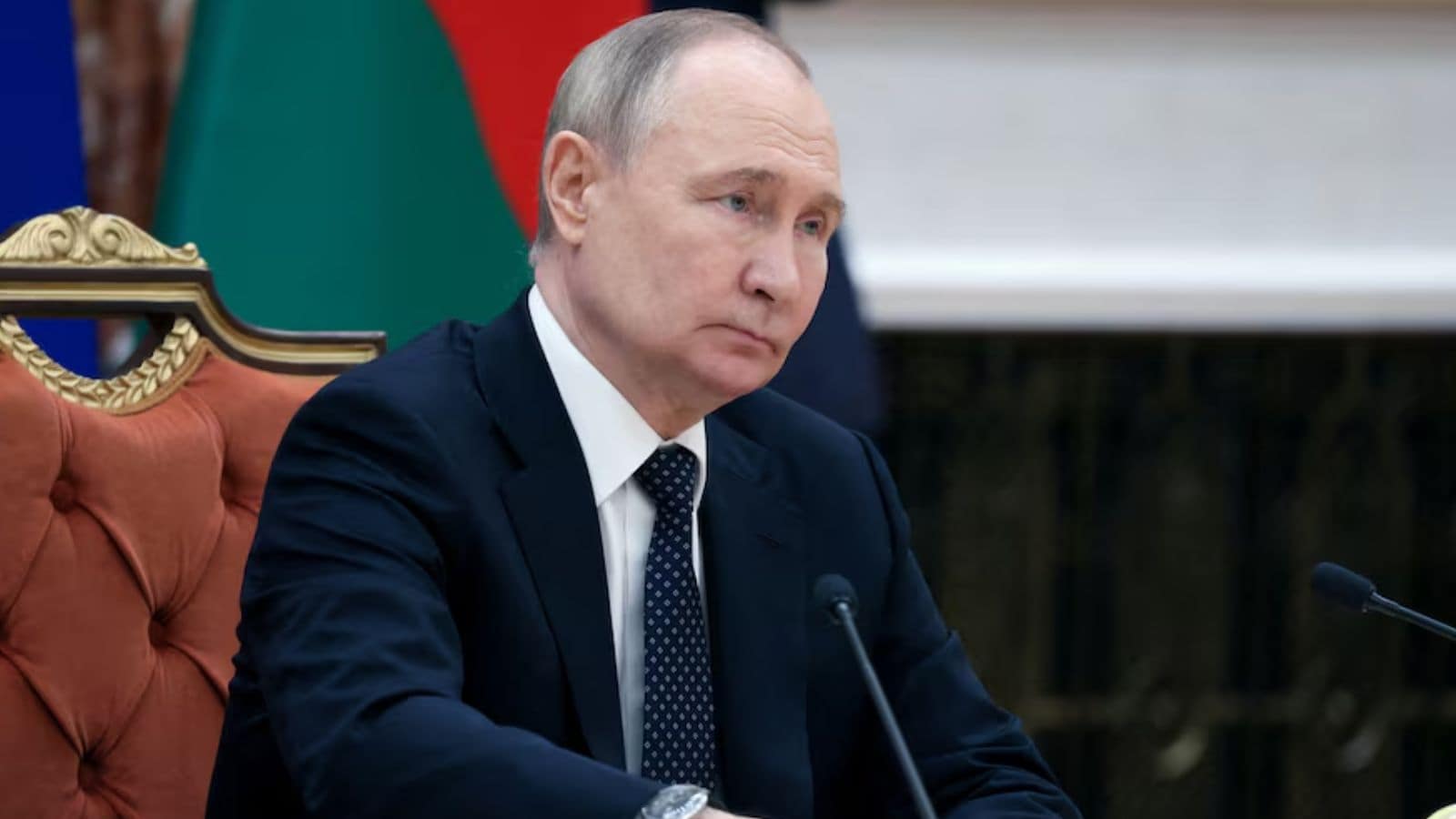
Russian President Vladimir Putin has drawn a hard red line against European Union maritime actions, warning that Moscow will respond in kind to any confiscation of Russian vessels. This escalating standoff threatens to ignite a severe tit-for-tat trade war across international shipping lanes. The warning arrives as Brussels contemplates aggressive asset seizure mechanisms to tighten economic pressure, directly targeting the shadow fleet and commercial vessels operating under the Russian flag.
Behind the diplomatic posturing lies a fragile web of international maritime law, commercial vulnerability, and strategic geography. When the Kremlin threatens reciprocal action, it is not merely tossing empty rhetoric across diplomatic channels. It is pointing directly at billions of dollars in Western corporate assets, tankers, and cargo currently navigating global transit corridors within reach of Russian jurisdiction.
The Mechanics of Maritime Retaliation
Maritime commerce depends entirely on predictability. Shipowners, insurers, and charterers require stable legal frameworks to move goods across oceans. When state actors begin weaponizing port access, detaining commercial vessels, and rewriting the rules of asset ownership, the foundational trust of global trade fractures.
If European Union member states execute plans to seize Russian cargo ships under sanctions enforcement pretexts, Moscow holds immediate leverage points. Russian territorial waters, strategic straits, and northern shipping routes handle substantial international cargo movement. Furthermore, the Russian Federation maintains the statutory authority to detain foreign-flagged commercial vessels docked in its ports or transiting its economic zones under broad domestic security justifications.
Consider a hypothetical commercial carrier registered in a European jurisdiction moving grain or industrial machinery through the Black Sea or Baltic approaches. Under a confirmed policy of symmetrical reprisal, local port authorities can easily manufacture regulatory violations, environmental pretexts, or safety infractions to impound the vessel indefinitely. The economic impact ripples instantly through insurance markets, driving up premiums for every operator touching European trade routes.
Legal Precedent and the Thin Veneer of Sanctions
International maritime law, governed largely by the United Nations Convention on the Law of the Sea, protects innocent passage and restricts arbitrary vessel seizures. Yet, sanctions regimes operate in a gray zone of sovereign emergency powers. Western capitals argue that restrictive measures justify freezing assets tied to state-backed entities.
Moscow views this logic as an open declaration of economic warfare that invalidates traditional maritime norms. By threatening to respond in kind, the Kremlin shifts the burden of risk back onto European shipping conglomerates. Insurers face an impossible calculus. Coverage for hulls operating near Russian spheres of influence becomes prohibitively expensive, effectively choking off commercial participation long before any actual seizures take place.
History offers clear warnings about how maritime disputes escalate into broader commercial conflicts. During past periods of heightened geopolitical tension, targeted detentions quickly expanded from state-owned vessels to privately chartered commercial tonnage. Once a government crosses the threshold of seizing civilian ships, private property rights lose their meaning. Every cargo holder becomes a potential collateral casualty in a geopolitical chess match.
Economic Fallout Across Global Supply Chains
The immediate casualty of this standoff is market stability. European importers relying on non-sanctioned commodities face sudden logistical bottlenecks. Port operators in major hubs face conflicting legal mandates: obey European Union directives to detain suspect tonnage, or protect their business relationships from immediate Russian counter-detention.
The Insurance Crisis
Marine insurance underwriters are already recalculating risk exposure across northern and southern European approaches. War risk surcharges apply to any vessel suspected of carrying restricted goods or maintaining links to contested ownership structures.
- Hull and machinery policies now carry stringent exclusion clauses regarding state-directed seizures.
- Protection and indemnity clubs are advising members to avoid specific jurisdictions where retaliation is deemed imminent.
- Reinsurance costs are climbing, ultimately translating into higher consumer prices for imported energy, raw materials, and manufactured goods.
This financial friction achieves what direct military action cannot. It creates an environment of permanent uncertainty where commercial operators voluntarily withdraw from high-risk routes.
The Geopolitical Endgame
Putin's warning exposes the limits of unilateral economic coercion. While Brussels possesses the legal apparatus to pass sweeping sanctions packages, enforcement mechanisms rely on physical geography and international cooperation. Russia retains sufficient physical proximity to critical trade corridors to inflict matching economic damage on European shipping interests.
The standoff highlights a dangerous reality of modern economic statecraft. Every escalation invites a counter-escalation, progressively dismantling the rules-based international order that facilitated decades of globalized commerce. As both sides dig in, the margin for diplomatic error narrows, leaving commercial operators to navigate a treacherous maritime landscape where a single seized ship can trigger an uncontrollable cascade of retaliatory detentions