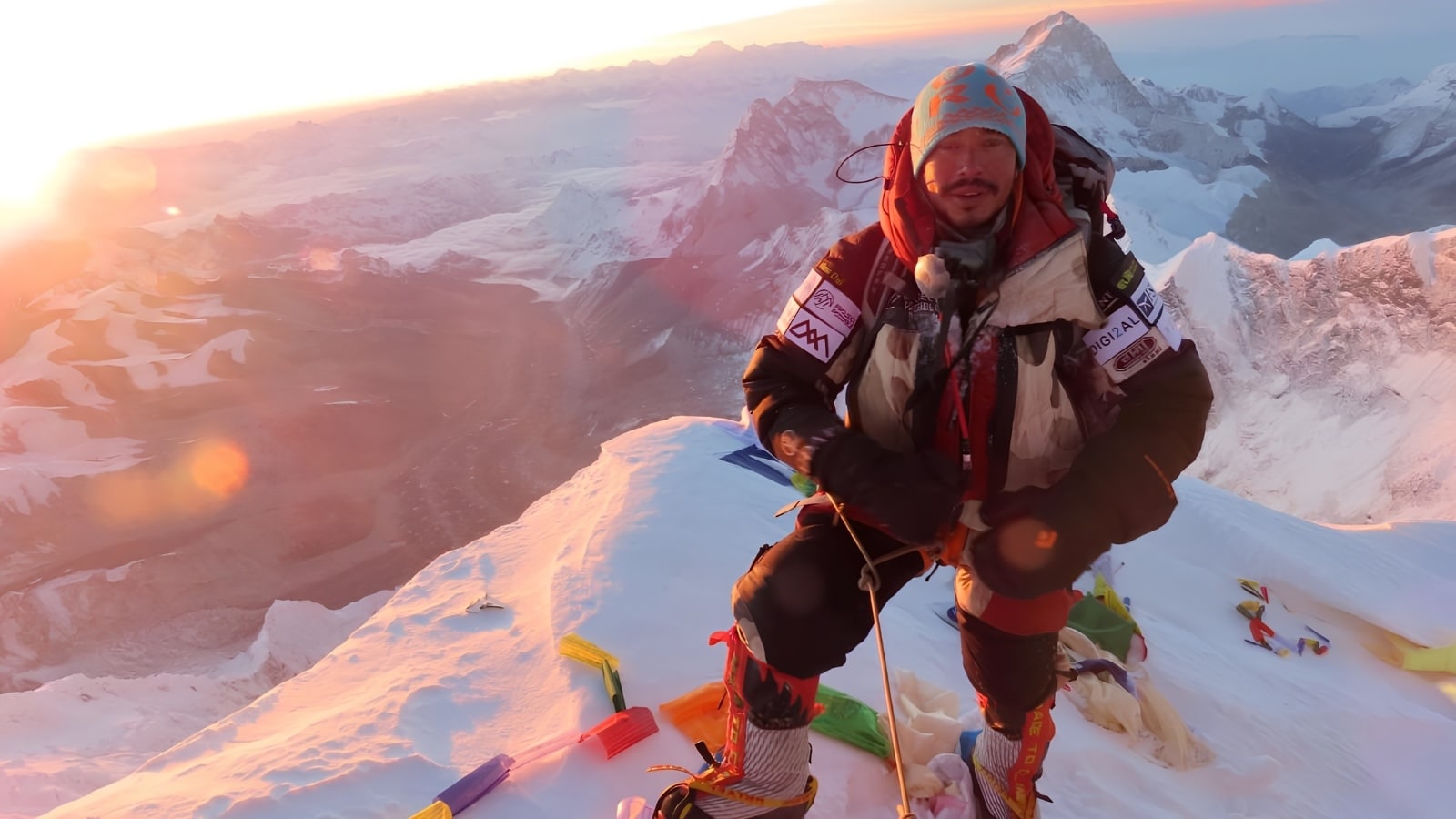
The air at eight thousand meters does not want you there. It is thin, sharp as broken glass, and stripped of the moisture that human lungs require to function. At that altitude, every breath is a deliberate negotiation with the void.
Nirmal Purja knew the terms of that negotiation better than almost anyone alive on Earth.
He was not merely a climber. He was a force of nature wrapped in a red down suit, a former British Gurkha and elite SBS soldier who looked at the impossible and simply decided it was an itinerary. A few years ago, he shattered global consciousness by summiting all fourteen of the world's eight-thousand-meter peaks in just six months and six days—a feat the mountaineering establishment had quietly assumed would take decades. Project Possible was supposed to be the end of the story. But men like Purja do not retire to quiet rooms. They look back up at the sky and wonder what it would look like if they did it all over again. Twice.
Then came Pakistan.
The Karakoram range does not care about your previous victories. It does not remember your world records. It is a jagged cathedral of ice and shale where the weather shifts from a deceptive, sun-drenched calm to a blinding, bone-crushing whiteout in the span of minutes.
Days before he could claim the final milestones of his second double-header of the world's highest summits, the mountain moved.
An avalanche.
We consume news of tragedy through screens, scrolling past headlines while our morning coffee grows cold. We treat death at high altitude as an occupational hazard, a grim tax paid by adrenaline seekers who dance too close to the sun. But numbers do not bleed. Statistics do not feel the crushing weight of snow collapsing beneath a boot.
Consider what happens in the seconds before an avalanche strikes. The sudden, unnatural silence. The vibration in the soles of your feet—a low, tectonic hum that bypasses the ears and rattles straight into the chest cavity. The realization that the white slope you have studied for hours has just become a river of solid ice moving at the speed of an express train.
Nirmal Purja lived in those margins. He understood that vulnerability was the price of admission to the roof of the world.
In the wake of his passing, the climbing community fell into a heavy, disbelieving quiet. Tributes poured in from Kathmandu, from London, from base camps scattered across the Himalayas and the Karakoram. Climbers who had shared ropes with him spoke of his infectious laugh, his unwavering resilience, and his fierce loyalty to the Sherpa community—a group of mountaineers whose immense physical labor and quiet heroism have long powered the glory days of Himalayan mountaineering.
For years, Purja fought to change how the world viewed high-altitude workers. He was vocal about the lack of recognition given to indigenous climbers, the unsung engine room of every record-breaking expedition. When he summited Everest, K2, and Annapurna, he was not just carrying his own ambitions; he was carrying the dignity of every person who ever tied a knot in sub-zero temperatures while carrying oxygen tanks for strangers.
The storm in Pakistan swallowed more than a legend. It swallowed a relentless advocate.
There is a romantic myth that mountains want to be conquered. Every book, every documentary, every sponsor-driven campaign whispers this falsehood into our ears. We talk about 'conquering' Everest or 'defeating' K2 as if these ancient masses of stone and glacier are hostile armies waiting to be vanquished.
The mountains do not notice us. They do not know we are there.
They simply exist, indifferent to our vanity, our cameras, and our speed records. When a climber falls, the mountain does not triumph. It simply reclaims a tiny fraction of its immense, silent domain.
Walking away from the news of his death, the silence in the room feels different. It presses against the walls. We are left staring at the screen, wondering how a man who moved like a ghost through the death zone could be caught by the very element he had mastered.
The peaks are still there, dusted in fresh powder, glowing pink under the evening sun of the Karakoram. The wind still howls across the ridges, scouring the ice clean. And somewhere far below, the world keeps turning, carrying the memory of a man who looked at the highest places on Earth and decided they were meant to be visited twice.