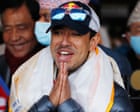
The air at seven thousand meters does not sustain human ambition. It strips it away, breath by thin, freezing breath, until nothing is left except the raw, pounding rhythm of your own heart. For most people, that altitude is an alien planet. For Nirmal Purja, it was simply where he went to work.
Known to the world as Nimsdai, the 43-year-old mountaineer spent his life proving that human limits were largely a myth of the imagination. He was the former British Gurkha and Special Boat Service soldier who shocked the global climbing community in 2019 by summiting all fourteen of the world's eight-thousand-meter peaks in a staggering one hundred and eighty-nine days. That feat—chronicled for millions in the documentary 14 Peaks—transformed him from an elite military specialist into a global symbol of indomitable willpower.
Yet, the mountains do not care about your resume. They do not pause to check box office numbers, and they do not yield to past glory.
On a Thursday afternoon in Pakistan's Karakoram range, the quiet dominance of Broad Peak shattered. An avalanche, sudden and violent, crashed down the slopes of the world's twelfth-highest mountain, sweeping across the route where Purja and a ten-member international expedition were climbing.
Days before he stepped onto the mountain, knowing the inherent perils of the high-altitude death zone, Purja wrote a public message that now echoes with haunting finality: "Broad Peak, I ask for nothing but safe passage up and back down. I take zero mountains for granted. Not one."
Communication vanished almost instantly. High-altitude tracking data later captured the terrifying mechanics of the disaster: a sudden, catastrophic drop of eight hundred meters in a matter of minutes as the snowpack gave way, pulling climbers downward into the freezing white void. For two agonizing days, military helicopters and elite ground rescue teams fought terrible weather and the constant threat of secondary slides to scour the debris.
Hope flickered briefly when a GPS tracker showed a faint trace of movement, but reality soon reclaimed the search. Elite Exped, the adventure company Purja founded, released a devastating confirmation. The mountain had claimed not only Nimsdai, but trusted climbing partners and guides including Pur Bahadur Gurung and Nima Sherpa, alongside international teammates from the United States, Oman, China, and Pakistan. None of the expedition survived.
The loss leaves a vast, hollow space in the international climbing community. Purja was more than a record-breaker; he was a fierce advocate for the often-unseen Sherpa and Nepali workforce who anchor the multi-million-dollar Himalayan tourism industry. Through his foundation, he worked to uplift mountain communities, striving to ensure that the indigenous climbers who carry the heaviest burdens finally share the spotlight and security they deserve.
To watch someone who seemed entirely invincible fall victim to the crushing weight of an avalanche is a stark reminder of our absolute fragility. We build monuments to human achievement, crafting stories of triumph over elements that have existed for millions of years. We believe that skill, grit, and military-grade resilience can outsmart nature.
Then the wind shifts on Broad Peak.
The physical journeys of those ten climbers have met a sudden, permanent halt. The tents at base camp will remain empty, the ropes untied, and the tracks covered by fresh snow. But the standard they set—the absolute refusal to accept that something is impossible until you try—remains etched into the freezing stone of the Karakoram.
The mountain has the final word, but the legend keeps climbing.