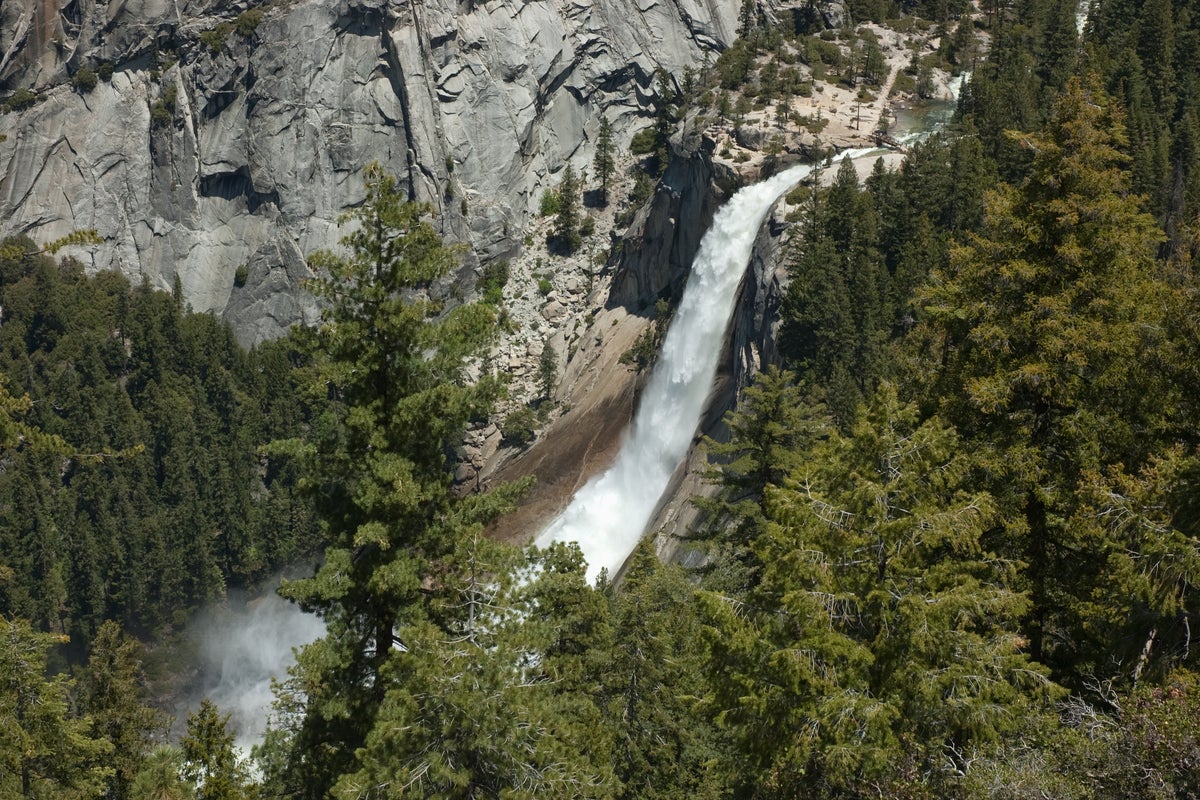
National parks do not have a safety problem. They have an expectations problem.
Every time a tourist slips over the edge of a granite ledge or gets swept over a waterfall in Yosemite, the media follows a predictable script. The headlines lament the tragedy, point to a "freak accident," and subtly blame the park service for not installing enough guardrails, signs, or fences.
This perspective is fundamentally flawed. It treats nature like an amusement park with a temporary mechanical failure.
The hard truth is that wilderness is inherently indifferent to human survival. When we frame every wilderness death as a systemic failure or an unpredictable anomaly, we actively breed the exact complacency that causes these fatalities in the first place. Yosemite’s waterfalls aren't dangerous because they lack warning signs. They are dangerous because they are giant, high-gravity hydrological features.
To stop the body count, we need to dismantle the sanitized, postcard-perfect illusion of our natural wonders.
The Illusion of the Curated Wilderness
I have spent over a decade tracking search and rescue data and analyzing wilderness risk management strategies. The biggest threat to public safety in places like Yosemite, Yellowstone, or the Grand Canyon isn't the terrain. It is the psychological safety net that visitors project onto the landscape.
When people see paved trails, shuttle buses, and gift shops selling artisanal fudge, their risk perception drops to zero. They assume that if a place were truly dangerous, the government would have closed it off.
This is the "Disneyfication" of the outdoors. It leads to what risk analysts call risk homeostasis. When you increase visible safety measures—like adding massive fences or warning signs—people don't necessarily become more cautious. Instead, they push the boundaries further because they assume the environment has been engineered to protect them.
The data tells a clear story. According to National Park Service incident reports, the vast majority of search and rescue operations do not involve technical mountaineers tackling high-risk peaks. They involve day hikers who wandered off a paved trail, ignored a standard perimeter fence, or stepped into a fast-moving stream to take a photo.
We are not dealing with a lack of information. We are dealing with a severe case of cognitive dissonance.
Why Signs and Fences Make Nature More Dangerous
The immediate, lazy response to any park tragedy is a demand for more infrastructure. Build higher fences around Mist Trail. Add more warning placards in multiple languages.
This approach backfires for two distinct reasons.
1. Aesthetic Blindness and Sign Fatigue
Walk up any major trail in Yosemite and you will see a barrage of warnings. Pictures of drowning victims, exclamation points, lists of fines.
Human brains are exceptionally good at tuning out repetitive stimuli. When every overlook has three signs telling you to stay back, the signs become visual noise. They blend into the background like terms-and-service agreements. Visitors look right through them.
2. The Challenge Incentive
For a specific subset of visitors, a fence is not a barrier; it is a challenge.
When you put up a four-foot chain-link fence in front of a stunning vista, you instantly create an exclusive zone. The message changes from "This is dangerous" to "The best view is just on the other side of this metal bar." By attempting to physically restrict access, parks inadvertently increase the perceived value of breaching that boundary.
If a visitor believes the park has been "idiot-proofed," crossing a fence seems like a minor, calculated risk rather than a potentially fatal gamble.
The Brutal Reality of Hydrology
Let's address the physics that the mainstream media glosses over.
People look at a waterfall like Yosemite Falls or Vernal Fall and see a beautiful backdrop. They do not see a hydraulic machine.
Water flowing over granite creates a microscopic layer of algae that makes the rock slicker than ice. Once your foot touches that wet zone, friction drops to near zero. No amount of athletic ability, hiking boot tread, or upper-body strength will save you.
Furthermore, the water at the top of a major drop moves with thousands of pounds of hydrostatic pressure. It doesn't just push you; it pins you. Even a stream that appears knee-deep can sweep a full-grown adult off their feet instantly.
When the media describes these events as "plunges" or "falls," it implies a sudden, unpredictable trip. In reality, it is almost always the predictable consequence of entering a high-velocity hydraulic system.
Dismantling the Top Safety Misconceptions
To change how people interact with the wild, we have to correct the flawed premises found in standard travel advice.
- The Misconception: "If I stay on the rocks near the water, I'm safe."
- The Reality: The splash zone is the danger zone. Mist travels hundreds of feet, coating nearby granite in an invisible, slippery film. If the rock looks damp, treat it as an active slide.
- The Misconception: "I can swim out if the current gets strong."
- The Reality: Mountain water is fueled by snowmelt. It is exceptionally cold. Hypothermia and cold shock response can paralyze your muscles within seconds, making swimming impossible regardless of your fitness level.
- The Misconception: "Park rangers are there to rescue me immediately."
- The Reality: Search and rescue takes time. In rugged terrain, it can take hours or days to coordinate a recovery or rescue operation. You are your own first responder.
Shifting from Protection to Raw Realism
The current model of wilderness management tries to protect people from the environment. We need to flip the script. We need to force people to confront the reality of their own vulnerability.
Instead of sanitized signs with stick figures tipping over edges, park safety communication should be stark, direct, and unyielding.
Imagine a sign at the trailhead that simply states: "Beyond this point, there are no lifeguards, no medical staff, and no structural barriers. One misstep on wet granite will result in a 600-foot fall. Recovery of your body may take several days."
It sounds harsh because it is. But honesty is far more empathetic than a false sense of security that leads to preventable deaths.
We must accept the downside of this approach: it will offend people. It will ruin the pristine, curated aesthetic that tourism boards love to promote. It forces visitors to take absolute, unmitigated responsibility for their own lives.
If you choose to step over a safety line for a better camera angle, you are choosing to accept the mathematical probability of gravity and hydraulics. Nature does not offer a do-over, and it does not care about your vacation.
Stop expecting the wilderness to act like a museum exhibit. Pack your judgment before you pack your camera. Always respect the line where human engineering ends and physics begins.