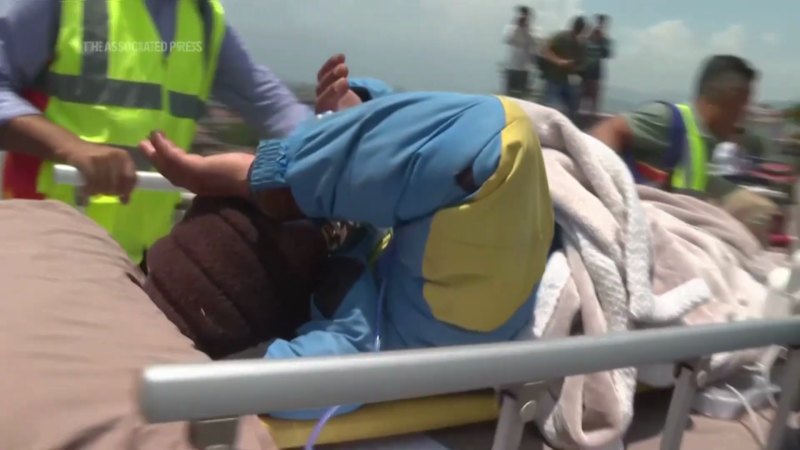
The media loves a miracle survival story. When a veteran Sherpa guide crawled into Mount Everest’s Base Camp after going missing for a week in the Death Zone, the international press immediately defaulted to its favorite, lazy script. They painted a picture of a tragic accident, a grueling survival against the odds, and a triumphant return that proves the indomitable human spirit.
They got it entirely wrong.
By focusing on the sensationalism of a man defying death, the mainstream narrative completely ignores the broken systemic reality of high-altitude mountaineering. The real story isn't that a guide miraculously survived a week in the elements. The real story is that western guiding companies, bloated commercialization, and wealthy, unskilled tourists have turned the highest peak on Earth into a hazardous circus where the most skilled local operators are forced to pay the ultimate price.
We need to stop treating these incidents as anomalies. They are predictable outcomes of a deeply flawed industry.
The Exploitation of Elite Expertise
The prevailing narrative surrounding Everest rescues often treats Sherpas as secondary characters in Western achievements, or as tragic victims when things go sideways. Let’s correct the record immediately.
Sherpas are not your pack mules. They are the elite athletes, master tacticians, and structural engineers of the Himalayas. They fix the ropes from the Khumbu Icefall to the summit. They carry the oxygen, set up the camps, and make the split-second decisions that keep wealthy CEOs from dying on the mountain.
Yet, when a guide goes missing, the industry shrugs it off as an occupational hazard.
Consider the mechanics of a standard commercial expedition. A western client pays anywhere from $50,000 to $150,000 for a guided climb. A significant portion of that premium goes toward marketing, western logistics, and profit margins for agencies based in London or Seattle. The local guides, who take 90% of the physical risk, receive a fraction of that wealth.
When a client runs out of oxygen at 8,000 meters because they ignored their turnaround time, who has to give up their own bottle? The guide. When a client freezes in fear on a knife-edge ridge, who has to physically drag them down? The guide. The fact that a guide spent a week fighting for survival on the mountain is not an inspiring miracle; it is a direct consequence of a tourist overstaying their welcome in an environment that wants to kill them.
The Death Zone Has No Room for Amateurs
The fundamental problem with modern mountaineering is the democratization of extreme risk. Technology and commercial infrastructure have created an illusion of safety. Flashy websites promise that anyone with a fat bank account and a year of gym training can stand on top of the world.
This is a lie.
At 8,000 meters—the arbitrary line marking the start of the Death Zone—the human body cannot acclimatize. It is dying. Atmospheric pressure drops to a third of what it is at sea level. Every breath delivers a fraction of the required oxygen. Your blood thickens, your cognitive functions degrade, and your risk of High Altitude Cerebral Edema (HACE) or High Altitude Pulmonary Edema (HAPE) skyrockets.
Imagine a scenario where a commercial airline captain is forced to fly a plane while suffering from severe sleep deprivation, hypothermia, and hypoxia, all while a passenger in the cockpit insists on taking selfies. That is the exact dynamic playing out on the Hillary Step every single May.
When you inject hundreds of unqualified climbers into this hyper-vulnerable bottleneck, you get queues. You get delays. And when you get delays in the Death Zone, people die. The guide who went missing didn't get lost because he lacked navigation skills; he likely stayed behind to salvage a situation ruined by a client’s incompetence, running out of resources in the process.
The Broken Logic of the Rescue Myth
Whenever a high-altitude survival story breaks, the internet floods with questions that reveal a total ignorance of physics and physiology. Let’s dismantle the most common, flawed premises.
Why didn't they just send a helicopter immediately?
Because helicopters cannot reliably fly or hover at 8,000 meters. The air is too thin to generate sufficient lift for the rotors. While specialized pilots have executed heroic long-line rescues at extreme altitudes in recent years, these operations require perfect weather, zero wind, and a massive amount of luck. Treating helicopter rescue as a standard safety net is a lethal mistake.
Why don't guides just refuse to help reckless clients?
Because of economic reality and cultural pressure. High-altitude guiding is one of the few lucrative career paths available in rural Nepal. A successful summit bonus can fund a child’s education for years. Western companies exploit this financial disparity, knowing that local guides will push themselves past the brink of human endurance to ensure a client succeeds or survives.
The Cost of the Summit Obsession
I have watched the commercialization of the outdoors strip the soul out of mountaineering for over a decade. We have traded self-reliance and deep respect for the mountains for a transactional, bucket-list mentality.
If you want to fix the systemic crisis on Everest, you don't need better tracking devices or more rescue helicopters. You need to restrict access.
- Mandatory Alpine Experience: No one should be permitted to step foot on Everest without having successfully climbed at least one 7,000-meter and one 8,000-meter peak previously.
- Strict Client-to-Guide Ratios: Capping expedition sizes to prevent massive bottlenecks on the fixed lines.
- Direct Financial Compensation: Shifting the financial model so local operators and guides command the lion's share of the expedition fees, allowing them the financial freedom to call off a climb without losing their livelihood.
If these rules make Everest exclusive, expensive, and incredibly difficult to access, good. It should be. It is the highest mountain on the planet, not an amusement park.
Stop celebrating the survival of broken men who should never have been put in that position in the first place. Start demanding accountability from the companies selling a sanitized version of a lethal wilderness. The next guide left behind might not have the strength to crawl back.