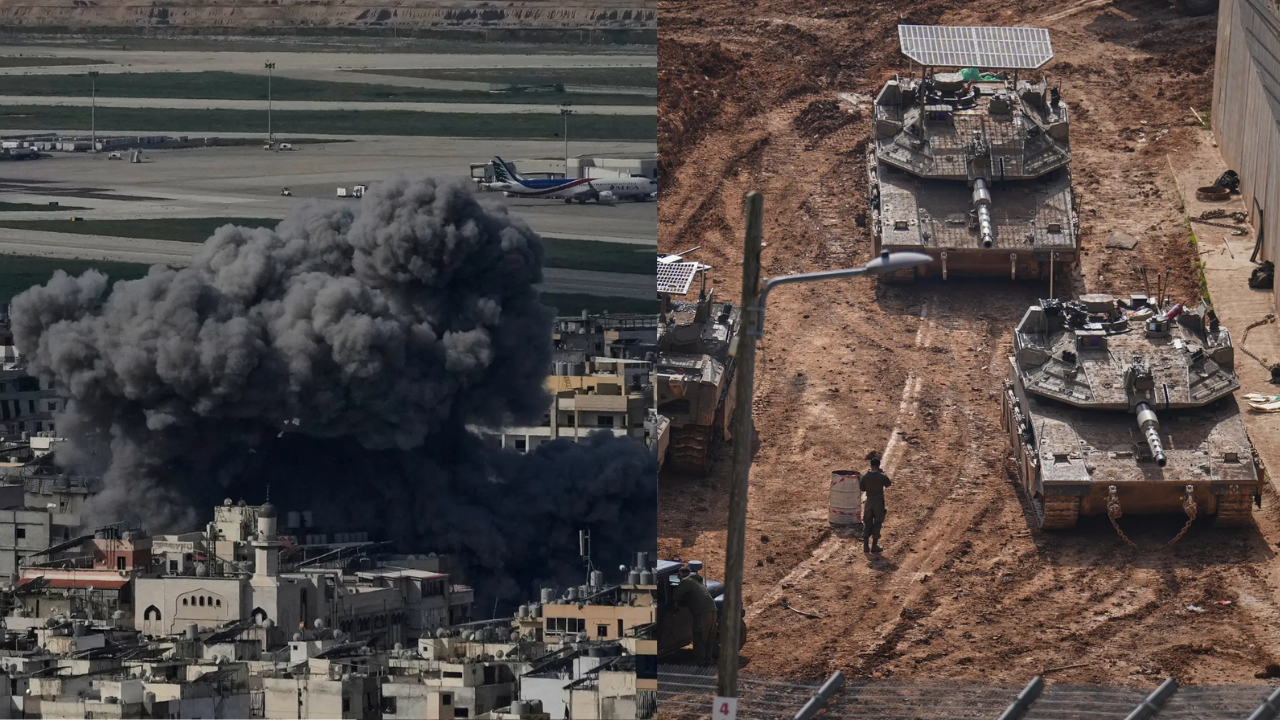
The headlines are screaming about the brink of World War III. They’ve been screaming that for months. Every time a drone swarm crosses a border or a missile battery lights up the night sky over Isfahan or Tel Aviv, the "experts" rush to their maps to show you the inevitable slide into a regional conflagration. They are wrong. They are fundamentally misreading the physics of modern kinetic diplomacy.
What you are witnessing isn't the beginning of a Great War. It is the most expensive, high-stakes rehearsal in human history. The "tension" the media feeds you is a product. The reality is a choreographed display of restraint masquerading as aggression. If these powers actually wanted to destroy one another, you wouldn't be watching 4K footage of interceptions on Twitter. You’d be looking at a dark map and a collapsed global economy.
The Performance Art of Proportionality
The mainstream narrative suggests that the exchange of fire between Iran and Israel represents a failure of deterrence. That’s a lazy take. In reality, deterrence is functioning with surgical precision.
When a nation launches hundreds of slow-moving Shahed drones—vessels that take hours to reach their target and are essentially flying lawnmowers with GPS—they aren't looking for a surprise attack. They are sending a memo. They are giving the opponent’s integrated air defense systems (IADS) ample time to spin up, warm up, and look heroic.
We have entered the era of Kinetic Signaling.
In traditional warfare, the goal is the maximization of damage per dollar spent. In the current Middle East standoff, the goal is the maximization of optics per dollar spent, while minimizing actual structural risk. Iran needs to show its domestic audience and regional proxies that it can touch the "Zionist entity." Israel needs to prove its multi-layered shield is impenetrable. Both sides get exactly what they want. The "war" is the byproduct, not the objective.
The Iron Dome Fallacy
Financial analysts and defense hawks love to talk about the "cost-exchange ratio." They point out that a Tamir interceptor costs roughly $50,000, while the crude rocket it shoots down might cost $500. They argue that Israel is being "bled dry" by cheap attrition.
This is a fundamental misunderstanding of national defense economics.
A $50,000 interceptor isn't just killing a $500 rocket. It is protecting a $500 million power plant, a $1 billion high-tech hub, and the psychological stability of a workforce that drives a $500 billion GDP. When you account for the "value of the saved target," the math flips instantly.
Furthermore, these exchanges are the greatest live-fire R&D laboratories on earth. Every time a drone is intercepted, the data is fed back into the algorithms. We aren't seeing a war of exhaustion; we are seeing the rapid evolution of autonomous defense. The "middle east remains tense" trope ignores the fact that this tension is the primary driver of the most advanced aerospace technology currently in existence.
Why "Total War" is a Bedtime Story for Geopolitics
People ask: "When will they stop holding back?"
The answer is: Never. Because "Total War" is bad for business, and everyone involved—including the hardliners—is a businessman at heart.
- The Energy Trap: Iran knows that a true regional war closes the Strait of Hormuz. That doesn't just hurt the West; it kills their primary customers in Asia.
- The Proxy Buffer: If Iran goes to direct war, it loses its "Forward Defense" capability—the proxies like Hezbollah. Proxies are useful because they offer deniability. Direct conflict removes the mask and puts the regime’s survival on the line. They aren't suicidal.
- The Intelligence Gap: Israel's military advantage isn't just in F-35s. It’s in the fact that they’ve spent decades infiltrating the supply chains and communication networks of their rivals. A total war forces you to use your best cards. Once you use them, they’re gone.
The Drone Obsession is a Distraction
The media loves drones. They make for great B-roll. But the obsession with "drone swarms" misses the actual shift in the theater: Electronic Warfare (EW) and Cyber-Kinetic Integration.
While you watch flashes in the sky, the real war is happening in the spectrum. The ability to spoof GPS, jam frequencies, and hijack the guidance systems of loitering munitions is where the territory is actually won.
In April 2024, the world marveled at the sheer volume of projectiles Iran launched. The real story wasn't how many were shot down by missiles, but how many simply "failed" or lost their way. We are seeing a shift where the "bullets" are increasingly made of code. If you’re still counting tanks and missiles, you’re analyzing a 20th-century conflict that no longer exists.
The Industry of "Tension"
Why does the "Middle East is a powder keg" narrative persist? Because it’s profitable.
- For Defense Contractors: Uncertainty drives procurement. If the Middle East were "solved," the demand for Patriot batteries and Arrow-3 systems would crater.
- For News Outlets: Peace is boring. Click-through rates on "Regional War Imminent" are 10x higher than "Managed Conflict Continues as Predicted."
- For Politicians: External threats are the ultimate tool for domestic cohesion. Nothing silences a protest movement like an incoming missile siren.
I’ve spent enough time around defense procurement and strategic planning to tell you that the people in the rooms with the maps aren't panicked. They are calculating. They are looking at the "Escalation Ladder" and making sure they only climb one rung at a time, very slowly, while shouting loudly so everyone thinks they’re sprinting.
The Brutal Truth About De-escalation
The public wants "peace talks." They want a grand treaty that ends the enmity.
That is a fantasy.
The most stable outcome for the Middle East isn't "peace"—it's a Managed High-Intensity Stasis.
We are moving toward a future where "war" is a permanent, low-grade background noise. It’s a series of automated exchanges, intercepted by automated systems, monitored by AI, and reported by panicked humans who don't realize the machines are just doing their jobs.
Stop asking if the war will "break out." It has already broken out, and this is what it looks like. It’s not a mushroom cloud; it’s a notification on your phone that 99% of targets were neutralized.
The system isn't breaking. This is the system working exactly as designed.
Stop waiting for the big explosion. The fireworks you're seeing aren't the beginning of the end—they're the new normal. If you want to understand the future of conflict, stop looking at the explosions and start looking at the balance sheets. The war isn't unfolding; it's being audited.
Go back to work. The sky isn't falling; it's just being patrolled.