The headlines are screaming about "rapid" operations and the tragic loss of three U.S. troops as if we’ve stumbled into a brand-new geopolitical trap. They want you to believe we are on the precipice of a sudden, uncontrollable slide into World War III. They are wrong. This isn't a slide; it's a calculated, sluggish crawl that serves every institutional player involved except for the people actually pulling the triggers.
The "lazy consensus" in modern media suggests that every strike and counter-strike is a step toward a "total war" that nobody wants. This narrative is a comfortable lie. The reality is far more cynical. We aren't seeing a failure of diplomacy or a sudden spike in aggression. We are seeing the perfection of the Managed Conflict Model.
The Kinetic Illusion
When a politician says an operation is "moving rapidly," they aren't talking about a blitzkrieg. They are talking about the speed of the news cycle. In the Pentagon, "rapid" is a relative term used to justify budget reallocations and the deployment of assets that were already on a slow boat to the region six months ago.
I’ve spent enough time around defense procurement to know that nothing in a theater involving Iran happens "rapidly" by accident. Every drone strike, every intercepted shipment, and every tragic casualty is run through a risk-calibration matrix that would make a high-frequency trader’s head spin.
The three deaths of American service members are a gut-wrenching failure, but the media treats them as a "trigger" for a massive shift in strategy. It isn't. To the planners, it’s a data point in a grim game of "Proportional Response." This is the first lie we need to dismantle: the idea that the U.S. or Iran is looking for a knockout blow.
Why a "Total War" is Bad for Business
If the U.S. actually "won" or "lost" in the Middle East, the party would be over. The defense industrial complex doesn't thrive on resolution; it thrives on friction.
- The Tech Testing Ground: Low-intensity conflict is the ultimate R&D lab. We aren't seeing 1940s-style carpet bombing. We are seeing the deployment of sophisticated AI-driven counter-UAS (Unmanned Aircraft Systems) and electronic warfare suites.
- The Energy Premium: Regional instability keeps a "fear premium" on oil prices. This benefits domestic producers and global energy conglomerates alike.
- The Proxy Buffer: By keeping the conflict centered on "militias" and "proxies," both Washington and Tehran avoid the one thing they actually fear: a direct, high-intensity exchange that would bankrupt both nations and collapse the global economy.
Dismantling the "People Also Ask" Nonsense
People are asking, "Will this lead to a draft?" or "Is Iran about to close the Strait of Hormuz?"
The premise is flawed. Iran isn't going to close the Strait because they need to sell their own oil to China. The U.S. isn't going to initiate a draft because a volunteer force equipped with $2 million Predator drones is far more efficient (and politically quiet) than 500,000 angry conscripts.
The real question you should be asking is: How much does it cost to keep this conflict at exactly this temperature?
The answer is billions of dollars a month, paid in the currency of human lives and high-tech munitions. We’ve replaced "Victory" with "Sustainability." We no longer fight to win; we fight to maintain the status quo.
The Counter-Intuitive Truth About Attrition
We are taught that attrition is a sign of weakness. In the 21st century, attrition is a feature of the system.
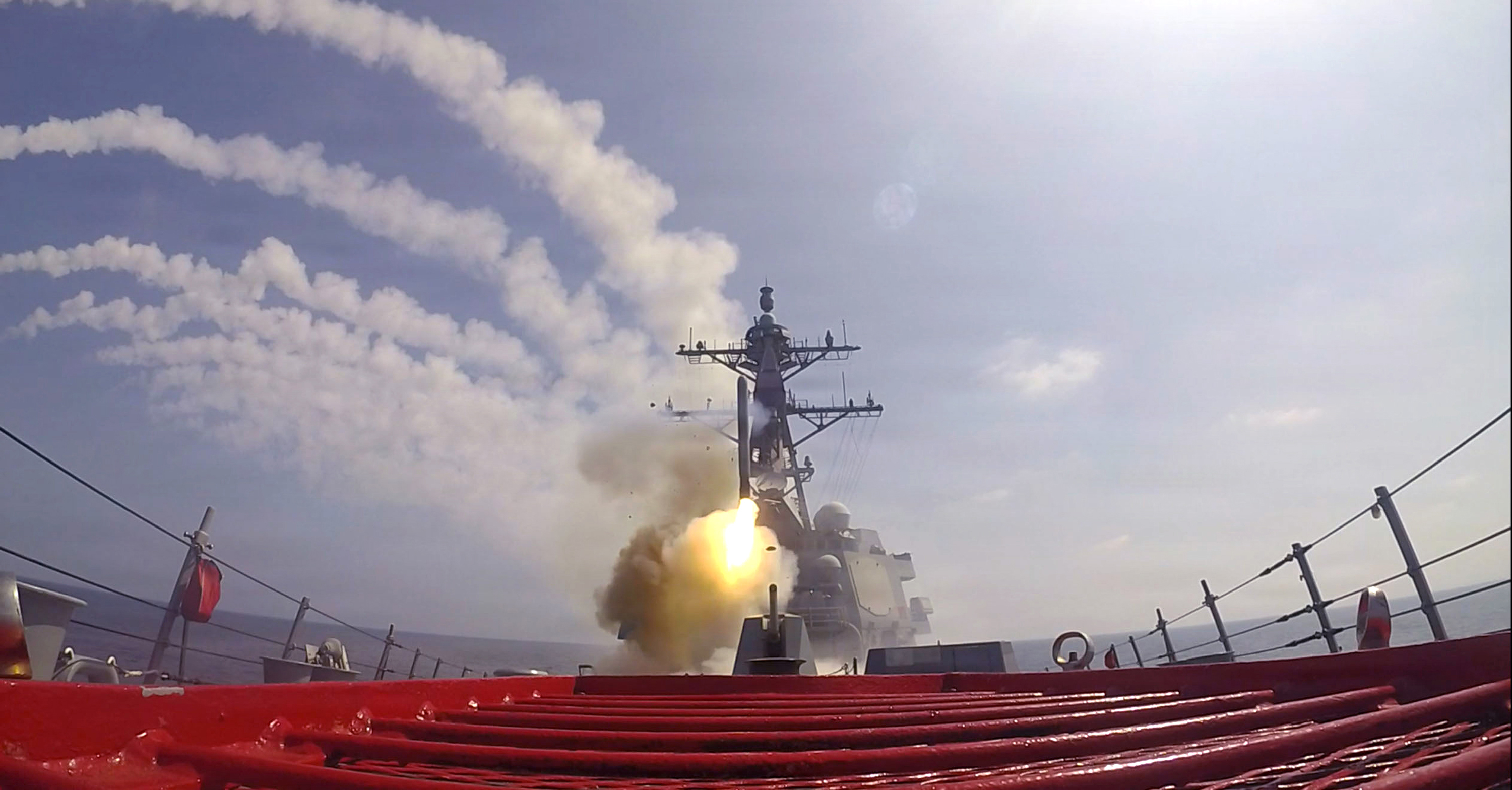
When a base like Tower 22 is hit, the immediate reaction is to demand a "harder" response. But look at the math. A $50,000 Iranian-made drone hits a multi-billion dollar installation. The response is a $2.1 million Tomahawk missile fired from a platform that costs $100 million a year to maintain.
This isn't a military failure; it's an economic siphon. Iran knows they can't outmuscle the U.S. Navy. They aren't trying to. They are trying to make the cost of staying so high that the American public eventually loses interest—not because of the morality of the war, but because the ROI (Return on Investment) disappears.
However, the insider secret is that for the contractors, the ROI never disappears. Every missile fired is a re-order. Every base damaged is a reconstruction contract.
The Precision Trap
We’ve become obsessed with "precision strikes." We think that because we can put a missile through a specific window from 1,000 miles away, we have control over the outcome.
This is the Precision Trap.
High-tech warfare has removed the "friction of war" that Clausewitz wrote about. Because the political cost of a strike is now so low (no boots on the ground, minimal collateral damage), we use force more often. We’ve lowered the barrier to entry for violence.
By making war "cleaner," we’ve made it permanent.
The Strategy of Strategic Ambiguity
You’ll hear talking heads mention "Strategic Ambiguity." They use it as a sophisticated way of saying "we don't have a plan."
In reality, the ambiguity is the goal. If the U.S. defined what a "red line" actually was, they’d be forced to act when it’s crossed. By keeping the definitions murky, the administration can pivot between "moving rapidly" and "exercising restraint" based on the morning's polling data.
This isn't leadership; it's a hedge fund strategy applied to geopolitics.
The Hardware Problem
Let’s talk about the actual tech involved. The competitor article likely glossed over the "moving rapidly" part. In military terms, this usually refers to the deployment of Carrier Strike Groups (CSGs).
A CSG is a marvel of engineering, but it is also a giant, floating target in the age of hypersonic missiles. The "contrarian" take here? The era of the Aircraft Carrier is over, but we can't admit it because the sunk cost is too high. We continue to move these assets into the Persian Gulf not because they are the best tool for the job, but because they are the only tool we’ve spent forty years building.
We are using 20th-century behemoths to fight 21st-century "mosquito" swarms.
The Cost of the "Rapid" Response
- Cost of one MQ-9 Reaper: $30 million.
- Cost of one Iranian Shahed-136 drone: $20,000.
- The Ratio: 1,500 to 1.
If you are a taxpayer, those numbers should terrify you. We are being out-spent and out-maneuvered by "primitive" technology because our system is rigged to prefer the most expensive solution possible.
Stop Asking if We Are At War
We’ve been at war for twenty-five years. The terminology just changed. We went from "The War on Terror" to "Overseas Contingency Operations" to "Deterrence Operations."
It’s all the same thing: a persistent, low-grade fever designed to keep the patient weak but alive.
The three troops killed in Jordan weren't "casualties of a new escalation." They were the latest victims of a policy that refuses to either leave or win. They were stationed at a base that many Americans didn't even know existed, supporting a mission that has no defined end date.
The Actionable Reality
If you want to understand what’s actually happening, stop looking at the maps and start looking at the appropriations bills.
When you see a headline about "rapid operations," check the stock tickers for Lockheed Martin, Raytheon, and General Dynamics. That is the only scoreboard that matters.
The downside of this contrarian view? It’s cynical. it suggests that the loss of life is part of a broader, cold-blooded economic calculation. It suggests that our leaders aren't incompetent—they are just playing a different game than the one they describe on the news.
But the upside is clarity. Once you realize the goal isn't "peace" or "victory," but "management," the chaos of the Middle East starts to make perfect, horrifying sense.
The U.S. isn't being "drawn into" a war with Iran. We are already in it, we’ve been in it, and as long as the current incentive structure remains, we will never leave.
Stop waiting for the "big" explosion. The explosion is happening in slow motion, one "rapid" operation at a time.
Would you like me to analyze the specific budgetary increases for Middle Eastern drone defense systems over the last three fiscal quarters?