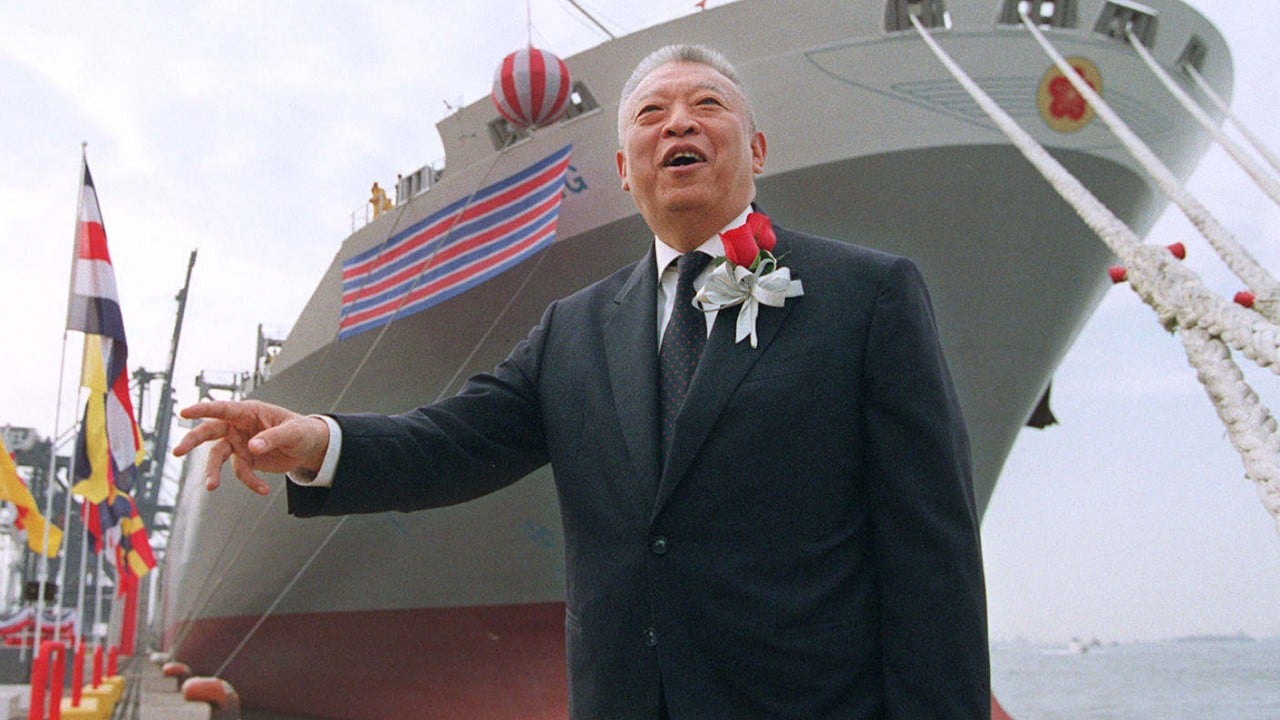
History rarely offers clean heroes or neat villains. It prefers caricatures, molding complex actors into simple symbols to satisfy the political appetites of the moment. When Tung Chee Hwa stepped down as the first Chief Executive of Hong Kong in March 2005, local and international commentary rushed to write a definitive obituary for his political career. He was framed, almost universally, as a well-meaning shipping magnate out of his depth, a reluctant leader crushed by the impossible machinery of post-handover governance. Two decades later, that neat caricature has begun to unravel under the weight of hindsight.
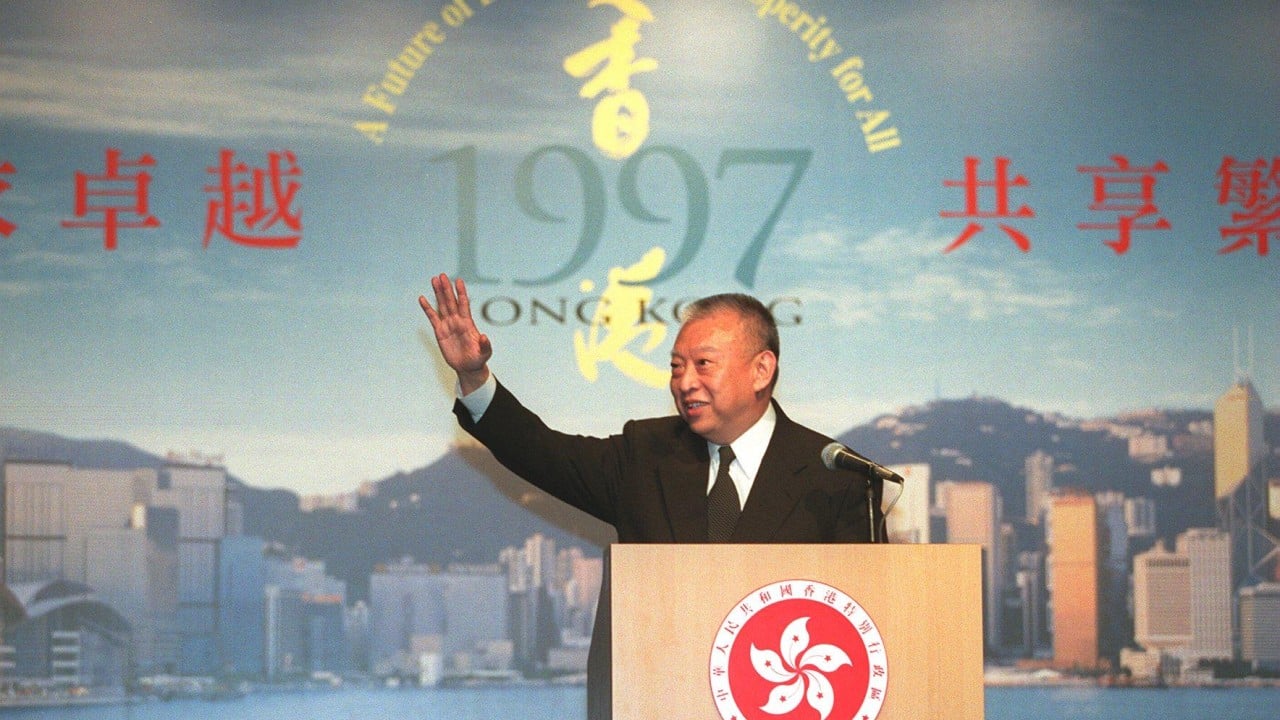
To understand Tung is to examine the heavy burden of transition. He inherited a city standing at the exact intersection of British colonial legacy and Chinese sovereignty. The transfer on July 1, 1997, was not merely a diplomatic ceremony. It was a profound structural shock. Few administrative offices in modern history have launched under conditions as volatile. Almost immediately, his administration faced the teeth of the 1997 Asian financial crisis. Property values collapsed by half, negative equity gripped hundreds of thousands of households, and the illusion of perpetual, frictionless prosperity vanished overnight. If you enjoyed this piece, you should check out: this related article.
Critics at the time pointed to his background as a corporate patriarch, arguing that his instinct for top-down consensus-building was fundamentally unsuited for a rapidly radicalizing public sphere. They were not entirely wrong. Tung operated with the mindset of a corporate CEO who viewed public policy through the lens of long-term engineering rather than short-term political theater. When he attempted to push structural reforms in housing, technology, and education, he frequently bypassed the delicate art of public persuasion. He assumed that if a policy was mathematically correct and beneficial for the collective future, the public would accept the friction required to get there.
That assumption proved disastrously naive during moments of high social anxiety. The proposed national security legislation under Article 23 of the Basic Law in 2003 became the flashpoint where administrative impatience collided with deep-seated public anxieties over civil liberties. The resulting mass protests exposed a government isolated from the emotional pulse of its own citizens. When Tung resigned, citing health reasons amidst plummeting approval ratings, it felt like the natural end of an untenable experiment. For another perspective on this story, check out the recent update from The Washington Post.
Yet time alters perspective. Modern economic analysis of Hong Kong reveals that many of the structural vulnerabilities the city faces today—housing scarcity, a lack of industrial diversification, and the urgent need to integrate with regional technological ecosystems—were precisely the challenges Tung tried to tackle in his first term. His vision for high-tech development, highlighted by the aborted Cyberport concept and early pushes toward digitization, was mocked by contemporaries as an expensive distraction from traditional property-driven economics. Today, those same critics lament that Hong Kong spent the ensuing decades failing to diversify away from real estate and finance.
Political veterans who worked alongside him describe a man of uncompromising personal discipline and quiet dignity. Long after leaving the Chief Executive's office, Tung did not retreat into quiet obscurity. Instead, he reinvented himself as an elite statesman and diplomatic bridge-builder, founding the China-United States Exchange Foundation and Our Hong Kong Foundation. In these roles, he operated as an influential elder statesman, leveraging his deep international relationships with Western political figures and mainland leadership to interpret a rapidly fracturing global order.
The rehabilitation of his legacy is not an exercise in whitewashing past administrative failures. The governance crises of his tenure were real, structural, and deeply damaging to public trust. Rather, viewing Tung through a mature lens exposes the limits of short-term political judgment. He was a transitional figure tasked with steering an administrative ship through an unprecedented constitutional storm. History has begun to suggest that while his methods frequently missed the mark, his diagnosis of Hong Kong's long-term disease was remarkably accurate.
The tragedy of his administration was not that he lacked vision, but that he possessed one that arrived twenty years too early for a public and a political class unready for structural disruption. As current administrators grapple with the complex realities of economic reinvention and regional integration, the policy blueprints drafted during the turbulent opening years of the Special Administrative Region are frequently pulled back from the archives. The shipping magnate who stepped onto the political bridge in 1997 may have stumbled through the storms of his own making, but the course he charted remains the one the city is forced to navigate today.