The Fracture in the Strongman Strategy
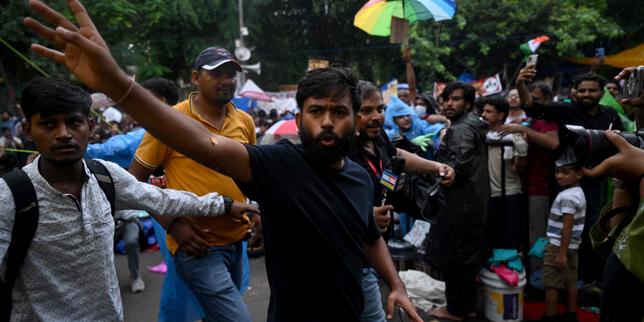
For years, New Delhi ran on a simple calculation. When public anger boiled over, the Bharatiya Janata Party-led government isolated the agitation, rebranded the organizers as anti-national elements, and waited for public fatigue to clear the squares. That playbook failed. What began as localized farm protests against sweeping agricultural deregulation morphed into a direct political challenge against Prime Minister Narendra Modi. The administration’s usual apparatus of police blockades, internet blackouts, and state-media broadsides only cemented public resolve. By failing to de-escalate early, the government allowed disparate grievances to converge on a single target, fundamentally altering the dynamics of Indian dissent.
Political power in India relies on maintaining an aura of invincibility. Once a regime demonstrates that it can be forced backward by sustained civil pressure, the calculus changes for every interest group in the country.
The retreat was not just a policy concession; it was an operational rupture.
The Anatomy of Political Miscalculation
The mechanics of the crisis trace back to how the policy was introduced. Ordinances rushed through parliament during a global emergency bypassed the standing committees that normally absorb political shock. By short-circuiting the legislative machinery, executive leadership stripped away the safety valves that allow regional power brokers to negotiate terms.
When rural unions marched, the state relied on three primary tactics to break the momentum.
- Information Suppression: Localized blackouts of mobile internet services intended to prevent mobilization.
- Narrative Containment: Labeling leaders as separatists or foreign-funded agitators to alienate urban middle-class sympathy.
- Attrition Mechanics: Dragging out negotiations through secondary officials to wear down the logistical capacity of rural blockades.
These tools worked during previous municipal and regional disputes. They failed at the national scale because the economic stakes were existential for the core agricultural demographic.
[Legislative Bypass] ➔ [Lack of Regional Buy-in] ➔ [Street Mobilization] ➔ [State Overreach] ➔ [National Convergence]
When smallholder farmers, who operate on razor-thin margins, believe a law threatens their land tenure, financial exhaustion ceases to be an effective deterrent. They simply camp on the highways.
The Logistical Engine Behind the Agitation
Street protests rarely survive on outrage alone. They survive on supply chains.
The failure of the state intelligence machinery to anticipate the longevity of the movement stemmed from a fundamental misunderstanding of rural solidarity networks. Mobilization was not organized through centralized digital apps that could be monitored or shut down by executive decree. It was anchored in village-level institutions, traditional community assemblies, and shared agricultural resources.
| Mobilization Axis | Traditional State Response | Why the Strategy Failed |
|---|---|---|
| Digital Coordination | Internet suspension, social media censorship | Movement relied on physical village councils and word-of-mouth networks |
| Resource Pipelines | Financial audits, freezing NGO accounts | Supply lines were funded by direct grain donations and local community kitchens |
| Leadership Interdiction | Arresting or detaining prominent spokespersons | Decentralized command structure allowed regional deputies to step up instantly |
Grain was collected household by household across the northern states. Tractors were converted into weather-resistant housing. Rotating shifts ensured that fields back home remained cultivated while the highways remained blocked.
The administration prepared for a riot; it received a parallel civic infrastructure capable of running indefinitely.
The Shift from Policy to Persona
When a movement targets specific legislation, a compromise remains possible. A clause can be removed, a tariff adjusted, a deadline extended. But when the state responds with heavy-handed security tactics, the core demand shifts.
The protest ceased to be about wholesale grain purchasing rules. It became a referendum on the Prime Minister’s style of governance.
"A leader who projects absolute authority cannot accept visible compromise without risking the core premise of his political appeal."
This created an acute strategic dilemma for the cabinet. Conceding early meant admitting error, an unthinkable prospect for a government built on the promise of decisive, uncompromising leadership. Delaying concession, however, allowed the movement to aggregate other disaffected groups—labor unions, student organizations, and regional political parties—into a unified front.
Why the Information Apparatus Stumbled
Controlling the political narrative requires absolute dominance over the media ecosystem. For nearly a decade, the ruling party leveraged friendly television networks and sophisticated social media operations to frame public debate.
That apparatus broke down against the visual reality of the highways.
Images of elderly farmers facing water cannons in winter weather undermined the official narrative that the crowds were composed of paid provocateurs or affluent middlemen. Urban consumers, already struggling with inflation and unemployment, found it difficult to buy into the state-sanctioned storyline.
The Counter-Narrative Machine
- Independent Digital Outlets: Alternative news portals bypass traditional broadcast channels, broadcasting unedited footage directly from the barricades.
- Diaspora Amplification: Overseas communities pressure international bodies and foreign governments to issue statements on civil liberties.
- Cross-Sectoral Alignment: Industrial unions organize sympathy strikes, linking shop-floor grievances to rural land rights.
The state found itself fighting an asymmetric media war. Every attempt to discredit the crowds produced fresh footage of state power deployed against senior citizens, destroying the government's carefully curated image of paternal guardianship.
The Structural Fallout for New Delhi
The long-term consequence of this standoff is not merely a retracted set of economic reforms. It is the destruction of executive impunity.
Future legislative efforts—whether regarding labor market deregulation, land acquisition, or state utility privatization—will face immediate, aggressive opposition modeled on this template. Groups that previously viewed the central government as an unstoppable force now possess a proven blueprint for resistance.
Federalism in India, long eroded by central authority, has found new life through street mobilization. Regional political elites who were once hesitant to challenge national mandates now recognize that the central state’s capacity to enforce controversial policies is bounded by physical resistance.
Power in New Delhi has not collapsed, but the illusion of absolute authority is gone. The state must now learn to negotiate, a skill it traded away for political theater years ago.


