The coffee is always lukewarm in the combat information center. Hours blur into a flat, gray smear of fluorescent light and the steady, low-frequency thrum of diesel engines churning through salt water.
Out on the bridge wing, the air hits you like an open oven door, heavy with humidity and the distinct, metallic taste of the Arabian Gulf. It is three in the morning. To the untrained civilian eye, the water stretching toward the horizon is empty, a vast expanse of bruised violet under an indifferent canopy of stars. But down on the glowing amber displays of the radar console, the strait is a crowded, frantic highway of light.
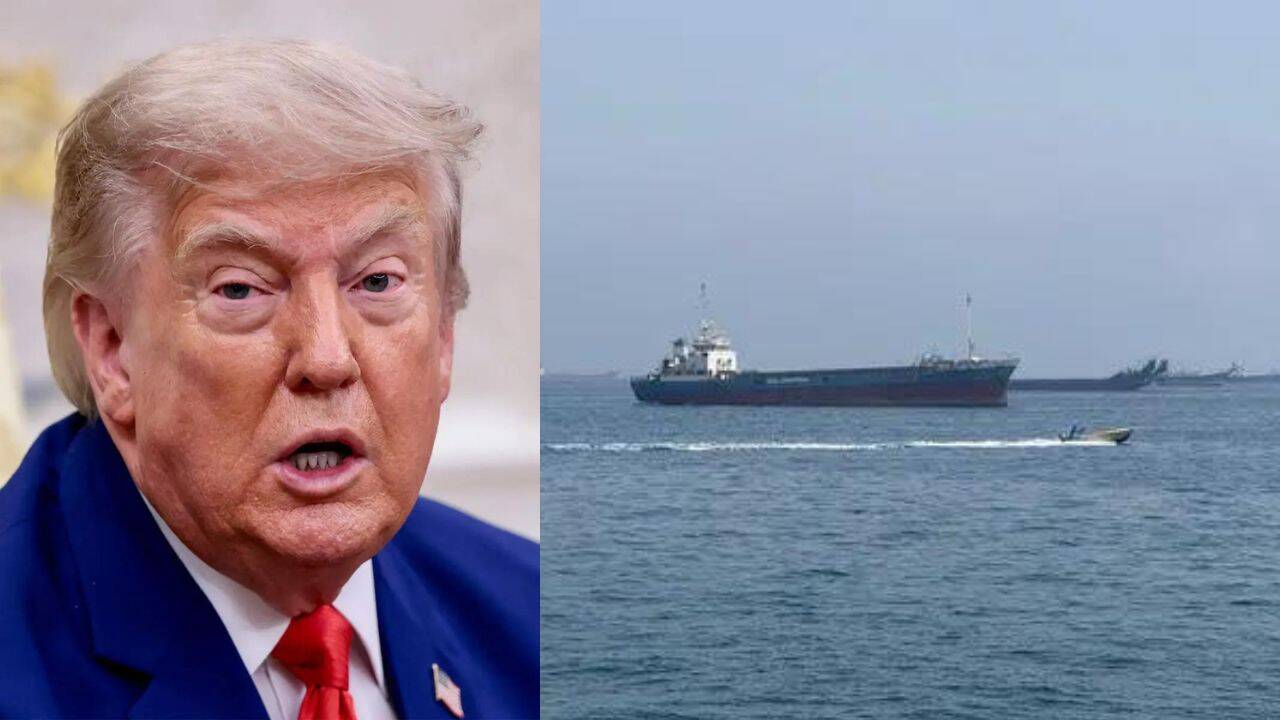
More than twenty United States warships are currently holding position right here, anchoring a line of quiet steel across the Strait of Hormuz.
You do not hear the tension before you feel it. It lives in the posture of the eighteen-year-old lookout clutching his binoculars until his knuckles turn white. It lives in the deliberate, hushed tones of the watch officer tracking fifty-five commercial vessels that have suddenly altered their courses, choosing longer, safer detours rather than running the gauntlet of these volatile choke points.
Every single day, roughly a fifth of the world's petroleum supply squeezes through a water corridor narrower than the English Channel. When that passage tightens, the whole world holds its breath.
Consider what happens next: a lone dhow veers off its commercial shipping lane, its fiberglass hull picking up a faint, ambiguous radar signature. For ninety seconds, every heartbeat in the compartment slows down. Is it a civilian fisherman chasing a late-night school of mackerel, or is it an autonomous surface craft packed with explosives, drifting quietly on a suicide vector?
In this narrow throat of the ocean, there is no time for committees. There is only the calculation.
To understand why over twenty heavily armed surface combatants, guided missile destroyers, and amphibious assault ships have been systematically massed in this specific theater, you have to look past the cold spreadsheets of naval architecture. Look instead at the vulnerability of a global economy built on glass foundations.
We have engineered a civilization that demands constant movement. A smartphone battery manufactured in Shenzhen depends on petroleum refined from crude pumped in the Persian Gulf, carried across oceans by immense container ships that rely entirely on the unhindered freedom of navigation. When the Strait of Hormuz stutters, manufacturing plants in Ohio and distribution hubs in Frankfurt feel the tremor within forty-eight hours.
The deployment of these naval assets is not merely a show of force. It is a desperate, high-stakes game of acoustic and electronic geometry.
Imagine sitting in a darkened room trying to listen to a whisper across a crowded, roaring stadium. That is what submarine hunters face daily in these shallow, noisy waters. The Persian Gulf is bathymetrically deceptive. Its waters are warm, highly saline, and shallow, creating thermal layers that bounce sonar pings in unpredictable ways. A diesel-electric submarine resting quietly on the seabed, its engines completely shut down, can hide behind the deafening acoustic clutter of a passing supertanker like a ghost standing in a crowded subway car.
This is why the fifty-five redirected commercial vessels matter just as much as the warships. Every civilian ship that turns away, choosing to bypass the risk zone entirely, alters the ecosystem of the strait. The shipping lanes thin out. The spacing between targets changes. The background noise drops, making it easier—and infinitely more dangerous—for hidden eyes to track remaining movements.
We tend to view international military posture as something abstract, divorced from human experience. We read headlines about fleet movements the way we read weather forecasts for cities we will never visit.
Yet, down in the mess decks, sailors talk about home, write frantic emails over spotty satellite links, and wonder if tomorrow is the day the diplomatic posturing turns into something irreversible.
The weight of a nation's deterrence policy rests not on the polished walnut tables of the Pentagon, but on the calloused hands of an engineroom rating who has not seen dry land in four months, sweating over a cooling pump that refuses to stay primed in water temperatures touching ninety degrees Fahrenheit.
Deterrence is an invisible architecture. When it works, absolutely nothing happens. No sirens wail. No missiles arc across the bruised sky. No emergency broadcasts interrupt the morning news cycle. The tankers slip through the narrow channel at dawn, their rust-streaked hulls sitting low in the water, heavy with the black lifeblood of industrial civilization.
Yet maintaining that absolute quiet requires a staggering roar of preparation. It requires twenty-plus warships burning thousands of gallons of marine diesel every hour, churning circles in the salt spray, keeping their Aegis combat systems locked and loaded on automatic tracking modes.
The cost of this vigilance is paid in quiet increments. It is paid in the frayed nerves of crews operating under constant threat conditions. It is paid in the inflated insurance premiums of every container ship that decides the risk of the strait is simply too high, passing that financial burden down to the consumer buying groceries halfway across the globe.
As the sun finally claws its way over the arid horizon, burning away the purple haze of the night, the water turns a blinding, merciless white.
The radar tracks continue to crawl across the screens. The fifty-five diverted vessels steam slowly toward distant alternatives. And out on the bridge wing, the young lookout lowers his binoculars, blinking against the salt crust on his eyelashes, watching a single tanker push its way through the middle of the world's most dangerous bottleneck.