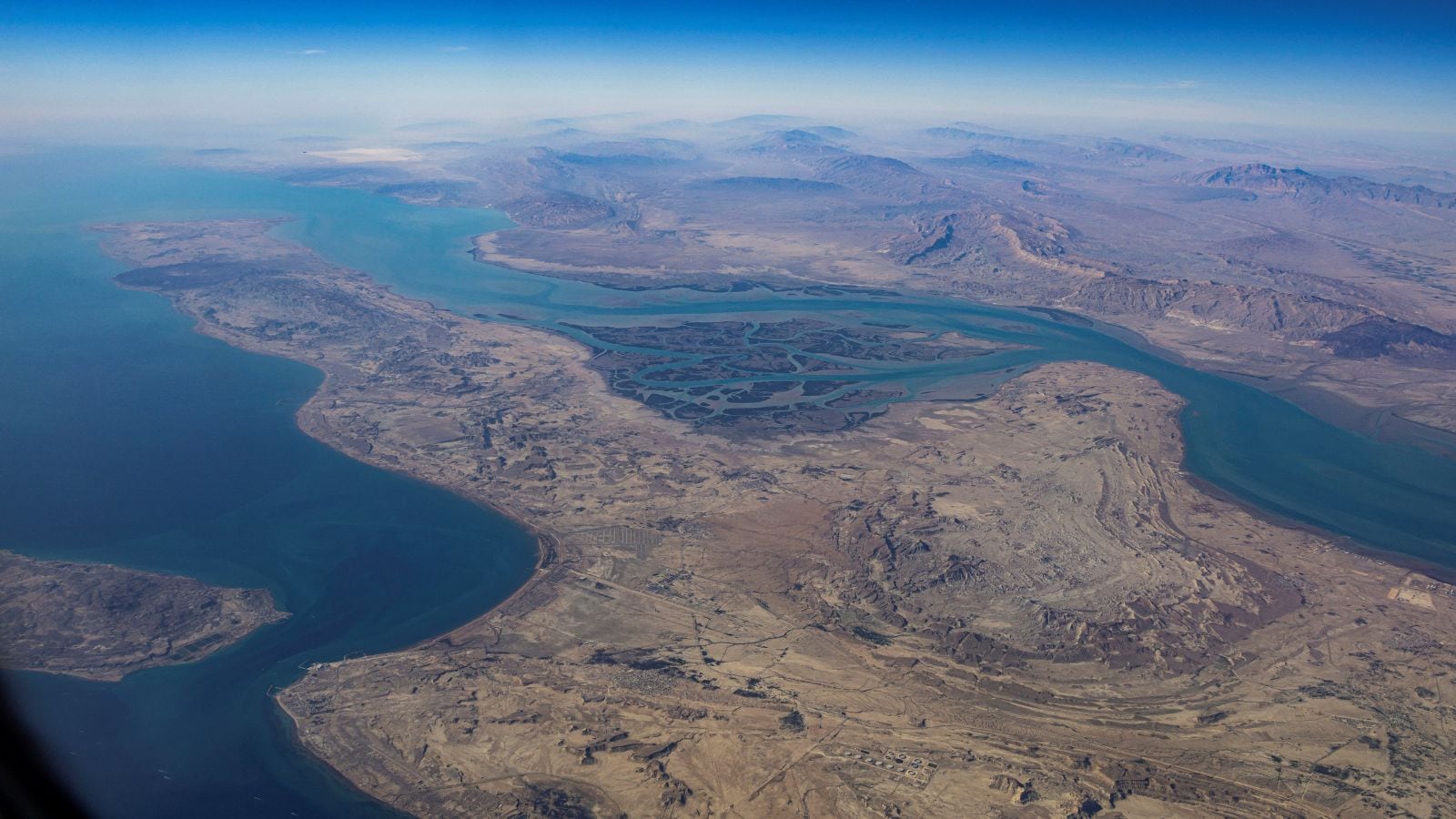
The map makes it look deceptively wide. On a flat projection of the Middle East, the Strait of Hormuz appears as a respectable blue channel connecting the Persian Gulf to the Gulf of Oman. But maps lie about scale, and they lie about tension. In reality, this aquatic throat is only twenty-one miles wide at its absolute narrowest point. Worse still, the inbound and outbound shipping lanes carved through it are each just two miles wide, separated by a two-mile buffer zone.
That means twenty percent of the world’s petroleum and a massive share of its liquefied natural gas are funneled daily through a corridor narrower than the English Channel. Stand on the deck of a supertanker there, and you can see both coasts at once. You can see the jagged brown hills of Oman on one side and the steep, imposing cliffs of Iran on the other. You can feel the eyes watching you from the shadows.
For years, this corridor has been a pressure cooker. It is a place where diplomacy is measured in inches, and where a single misunderstood radio transmission can trigger a chain reaction felt instantly at gas stations in Ohio, Tokyo, and Berlin.
Now, quiet conversations are happening behind closed doors. Reports point toward the outline of a phased deal—a delicate, step-by-step choreography between Washington and Tehran designed to slowly de-escalate the standoff, reopen blocked lanes, and ease the tightening grip of American naval presence and Iranian counter-posturing.
To understand what that means, you have to look past the geopolitical headlines and enter the wheelhouse.
Imagine Captain Elena Vance standing on the bridge of a thousand-foot crude carrier, the Athenian Spirit. It is four o'clock in the morning. Outside, the Persian Gulf is as flat and dark as a sheet of obsidian, reflecting the cold, indifferent light of distant stars. The air is thick, humid, and heavy with the smell of salt and diesel exhaust.
Elena is not thinking about geopolitics in the abstract. She is thinking about the cost of marine insurance, which quadrupled overnight the last time a tanker was harassed or detained. She is thinking about the twenty-four souls under her command, most of whom have families waiting in Manila or Mumbai, scrolling through news alerts with knots in their stomachs.
For months, navigating this region has felt like walking through a minefield blindfolded. On her radar screen, the green sweep reveals the ghostly blips of gray-hull warships belonging to the United States Navy, patrolling the perimeter to ensure freedom of navigation. Just miles away, fast attack craft belonging to the Islamic Revolutionary Guard Corps skim across the water, their wake glowing white in the dark, watching, testing, waiting.
The standoff has created an invisible wall. It is a blockade built not just of steel and ordnance, but of suffocating mistrust. When every movement is interpreted as a threat, commerce turns into a high-stakes poker game where the chips are global energy supplies.
When rumors of a phased deal begin to circulate through maritime intelligence channels, the reaction among crews is not immediate celebration. It is deep, weary skepticism. In a theater where agreements have historically fractured as quickly as they were forged, hope is a dangerous luxury.
Yet the economic gravity pulling both sides toward a settlement is relentless. Tehran feels the crushing weight of isolation and economic strain, desperate for relief that can only come from unlocked maritime commerce. Washington and its allies watch inflation tick upward with every spike in crude prices, acutely aware that an accidental clash in the Gulf could plunge fragile global markets into chaos.
A phased deal, according to emerging reports, is designed around the concept of mutual, verifiable de-escalation. Instead of a grand, all-or-nothing treaty—which diplomatic history proves nearly impossible to achieve in an environment of deep-seated animosity—the approach relies on small, synchronized increments.
Consider how such a mechanism works in practice. It is not unlike two wary strangers lowering their weapons in a dark room.
In the first phase, both sides establish safety buffers and communication protocols to prevent tactical miscalculations. Radio channels are cleared and monitored by neutral intermediaries. The United States and its partners dial back the overt aggressiveness of their blockade patrols, signaling a willingness to step back from the brink. In return, Iran halts harassment of commercial shipping and agrees to respect the established traffic separation schemes within the strait.
This is not peace. It is the absence of war. But in a region perched permanently on a knife-edge, the absence of war is a monumental victory.
Subsequent phases are designed to be heavier, touching on sanctions relief, regional security dialogues, and the gradual return of normal commercial traffic flows. Each step is contingent on the successful completion of the last. It is a slow, agonizingly cautious dance. One misstep by a hotheaded commander on either side—a warning shot fired too close, a drone straying across a boundary line—can shatter the glass before the ink is dry.
Back on the Athenian Spirit, the sun begins to breach the horizon. The sky turns a violent shade of bruised purple before bleeding into a brilliant, blinding gold. The desert heat starts its daily assault on the steel decks.
Elena watches through the bridge windows as the silhouette of an Iranian patrol boat cuts across the distance, maintaining its steady patrol. But today, something feels marginally different. The tension on the radio frequencies is a fraction quieter. The encrypted reports from company headquarters speak of tentative diplomatic channels opening up in European capitals.
The tankers keep moving. They have to. They are the circulatory system of the modern world, pumping the lifeblood of energy from the oilfields of the Middle East to the factories and cities of every continent.
Whether this newly reported framework will hold together or dissolve into another cycle of recrimination remains to be seen. Diplomacy in this part of the world is fragile porcelain, constantly dropped on stone floors.
Yet, as the massive vessel clears the strait and heads out into the open waters of the Arabian Sea, the air feels slightly less dense. The invisible weight on the horizon lifts just enough to let the morning light through. The world continues to breathe, waiting to see if the narrowest water on earth will finally open its doors.