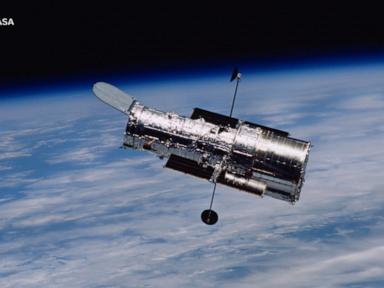
Every few years, the public gets hypnotized by a shiny new mirror floating in the void. Headlines scream about revolutionary optics, deep-space imagery, and humanity peering further back in time than ever before. Billions of dollars vanish into vacuum chambers, decades slip past in engineering delays, and the cheering section in mission control pops another bottle of cheap champagne.
Stop cheering. The entire playbook is broken.
We are pouring astronomical budgets into building bigger, more expensive individual eyes in the sky while ignoring the brutal physics screaming right in our faces. Single-aperture flagship space telescopes are a dinosaur technology. They represent a vanity metric for agencies addicted to monolithic engineering monuments.
I have watched aerospace primes burn through nine figures on structural tolerances that mattered less than the software driving ground-based interferometry. If you think the solution to understanding the cosmos is building a single, massive mirror that takes thirty years to get off the ground, you do not understand the math of modern astrophysics. You are buying a luxury sports car when what you actually need is a fleet of motorcycles.
The Monolith Trap
The conventional narrative goes like this: build a bigger mirror, collect more photons, solve the universe. It sounds logical on a PowerPoint slide presented to congressional subcommittees. It falls apart the second you look at cost-to-benefit ratios and risk concentration.
When a single flagship observatory costs ten billion dollars and takes twenty years to conceptualize, launch, and commission, your entire scientific pipeline becomes hostage to a single point of failure. A micrometeorite strike, a stuck filter wheel, or a deployment glitch turns a generational asset into orbital debris overnight.
Imagine a scenario where a tech startup deployed a single smartphone factory that took two decades to build and cost half the nation's GDP. They would be bankrupt before shipping a single unit. Yet space agencies treat flagship telescopes as untouchable sacred cows.
The obsession with single apertures blinds us to distributed architecture. Instead of spending decades grinding a single massive mirror to nanometer perfection, the future belongs to optical interferometry and swarms of smaller, mass-produced orbital sensors. By linking multiple modest mirrors flying in precise formation, synthetic apertures achieve angular resolution that dwarfs any single monolithic reflector you could possibly launch on a rocket.
The Resolution Fallacy
Let us talk about what these telescopes actually do versus what the press releases claim.
Public relations teams love to talk about how deep we can see. But collecting faint light from the early universe is only half the battle. The real bottleneck is angular resolution, which is strictly governed by the physical diameter of your collection baseline.
A single mirror has a hard physical cap dictated by the payload fairing of existing rockets. You can fold them, origami-style, like JWST did, but that introduces an exponentially terrifying layer of mechanical risk. Every hinge, latch, and actuator is a ticking clock.
Ground-based astronomy has already figured out how to brute-force atmospheric distortion using laser guide stars and adaptive optics. Meanwhile, space agencies remain trapped in a twentieth-century mindset of building oversized glass monoliths because they look better in annual reports.
We do not need another single-point-of-failure observatory. We need standardized, modular satellite constellations operating in tandem as a unified interferometer.
The Cost of Bureaucratic Inertia
Why do we keep repeating the same expensive mistakes? Follow the money and the institutional momentum.
NASA and its international partners are bound by legacy industrial supply chains. Entire aerospace contractors survive on cost-plus contracts that incentivize massive, bloated timelines. If a project finishes early and under budget, the next fiscal year's funding gets slashed. Efficiency is actively penalized.
This creates a perverse incentive loop. Projects are designed to be complex, brittle, and perpetually delayed because complexity justifies the budget. When a telescope takes twenty years to build, it is often obsolete before it even reaches Lagrange point 2, utilizing computing hardware that was cutting-edge when the project started grade school.
Contrast this with the commercial sector, where iterative design, rapid prototyping, and constellation deployment dominate. While SpaceX and other launch providers slashed the cost of reaching orbit by an order of magnitude, the science community is still building spacecraft like they are handcrafted Swiss watches meant to sit in a museum.
The Uncomfortable Truth About Deep Space Imaging
Let us address the elephant in the room. What are we actually looking for? Exoplanet biosignatures, primordial galaxy formation, dark energy constraints. These are monumental questions.
None of them require a single, twenty-foot golden mirror that triggers panic attacks across mission control every time a solar flare hits.
Distributed space interferometry allows us to phase light from separate collectors, creating an effective baseline stretching across kilometers of space rather than meters. The resulting clarity lets us directly image exoplanets, resolving surface features and atmospheric bands, instead of settling for blurry photometric transit curves.
The technology exists today. The optical delay lines, the laser metrology systems, the attitude control thrusters needed for sub-millimeter formation flying—they are all operational. What is missing is the institutional will to abandon the flagship model.
Stop Falling for the Hype
The next time an agency drops a slick marketing video announcing a revolutionary new telescope, look past the computer-generated animations of golden hexagons unfolding in the dark. Ask the hard questions.
Ask why they chose a monolithic or single-folded architecture instead of a distributed network. Ask how many single points of failure exist between deployment and first light. Ask what the insurance policy is when the inevitable cost overruns eat half the planetary science budget.
We have the tools to map the universe with unprecedented precision. We just need to stop funding monuments and start building networks.
The era of the lone space telescope is over. It is time to let it die.