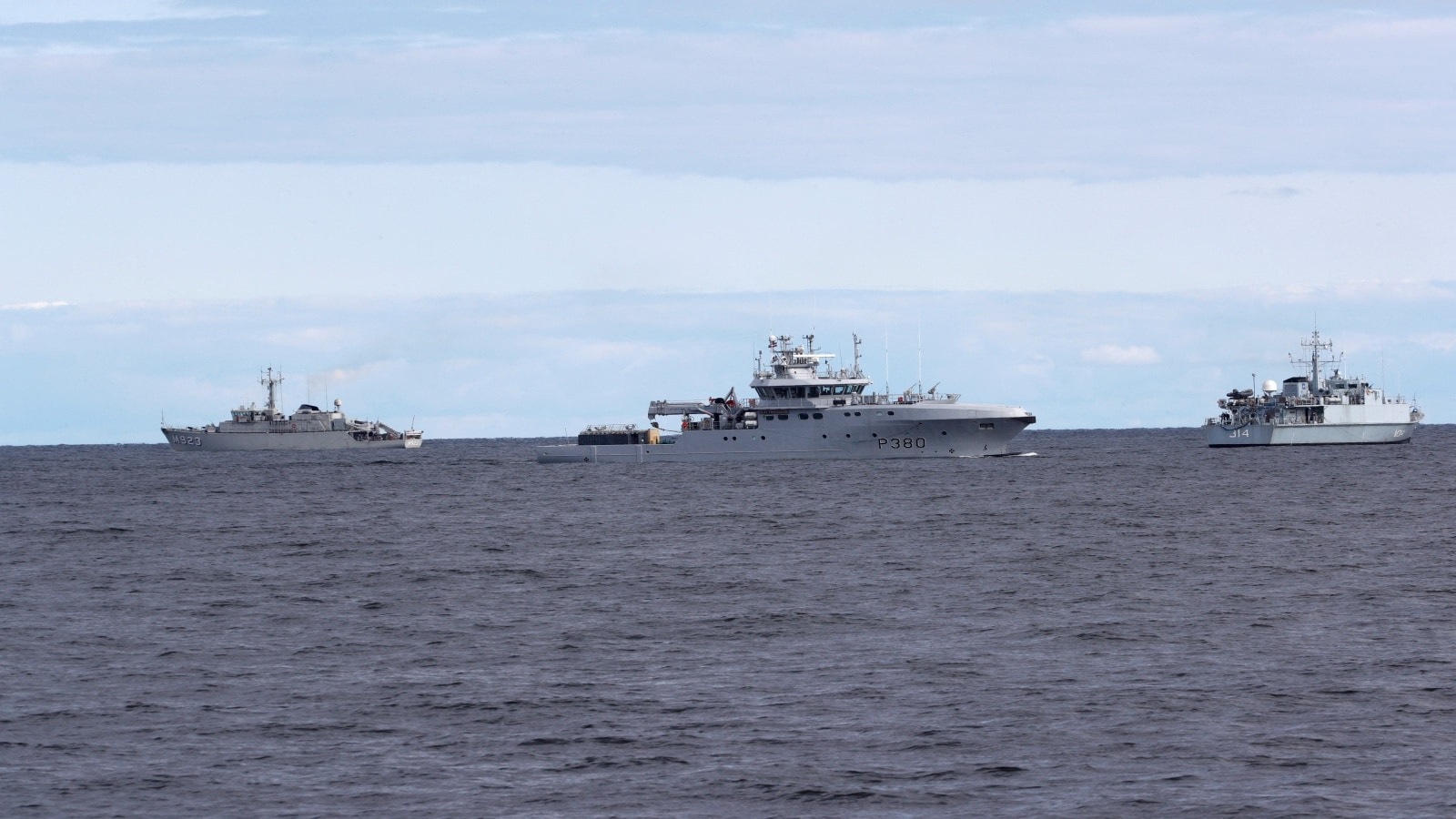
NATO Secretary General Mark Rutte recently made a straightforward assertion that there is no imminent military threat from Russia targeting alliance territory. Headlines seized on the statement as a calming signal for a jittery continent. Security analysts and eastern flank commanders read the remarks differently. The absence of an immediate invasion force does not mean the absence of danger. Strategic safety in Europe is eroding through methods that bypass traditional armored columns and artillery barrages.
Official reassurances serve a diplomatic purpose. Governments must maintain public confidence and prevent panic in financial markets. Yet the underlying mechanics of modern security are shifting rapidly. Geopolitical friction no longer waits for a formal declaration of war or a cross-border troop surge. It operates in the gray zones of infrastructure sabotage, cyber infiltration, and political subversion. Discover more on a connected subject: this related article.
The Anatomy Of Gray Zone Friction
Traditional deterrence relies on visible mass. When thousands of tanks gather near a border, satellite imagery provides undeniable proof. Alliance doctrines were written for this exact scenario. Article 5 assumes a clear aggressor launching a recognizable kinetic attack against a member state.
Moscow understands this operational doctrine completely. Military planners in the Kremlin recognized that hitting a NATO member directly triggers a collective response that Russia's conventional forces are ill-prepared to absorb. Instead of forcing a direct confrontation, Russian strategy embraces disruption below the threshold of conventional war. Further reporting by USA Today delves into related views on this issue.
Consider the vulnerability of undersea fiber-optic cables and energy pipelines. These networks cross vast maritime expanses with minimal physical protection. A cargo vessel dragging an anchor can sever critical communication links in minutes. Investigators frequently struggle to establish definitive state responsibility behind such incidents, creating a period of political hesitation among alliance capitals. This ambiguity paralyzes collective decision-making.
Logistics And The Fragility Of Supply Chains
European defense readiness depends heavily on seamless commercial logistics. Rail networks, highway systems, and port facilities form the backbone of rapid reinforcement capabilities. If these commercial arteries suffer coordinated digital disruptions, moving heavy armor from Western Europe to the eastern frontier becomes an administrative nightmare.
Civilian infrastructure functions as the primary target set in modern strategic competition. Power grids experience unexplained surges. Water treatment facilities face persistent probing by advanced persistent threat groups. These actions rarely trigger a conventional military reaction. They drain economic resources, test public resilience, and consume intelligence bandwidth.
Rutte's assessment remains technically accurate regarding massed armor formations poised to roll across borders tomorrow morning. The mistake lies in treating that specific metric as the sole definition of security. A country can experience severe national destabilization without a single foreign soldier setting foot on its soil.
The Intelligence Dilemma
Intelligence agencies face a persistent credibility challenge. Warning the public about shadowy cyber attacks or sabotage plots sounds alarmist until an incident actually occurs. Conversely, offering absolute reassurances lulls populations into a false sense of invulnerability.
Western intelligence services track covert operations daily. Sabotage attempts against weapons manufacturing plants, railway signal boxes, and military logistics hubs have increased across multiple European nations over recent years. Local operatives, often recruited via encrypted messaging apps for modest financial rewards, execute these low-level disruptions. The handlers remain safely behind secure borders, maintaining plausible deniability.
This decentralized approach to hostility turns ordinary geography into a battlefield. Every warehouse, warehouse worker, and municipal utility manager becomes part of the wider security equation. Traditional military command structures struggle to defend against thousand-cut strategies executed by proxies and unwitting dupes.
Rethinking Alliance Readiness
Adapting to this reality requires a complete overhaul of how western governments define defense. Protecting a fiber-optic cable matters just as much as maintaining a main battle tank. Securing software supply chains for defense contractors holds equal weight with stocking artillery shells.
Alliance leadership must balance public reassurance with honest warnings about persistent subversion. Pretending that peace exists simply because tanks remain parked in designated zones invites complacency. Deterrence must evolve to punish gray zone aggression swiftly and decisively, imposing
The Calculated Calm Behind the NATO Border
news
Mark Rutte leaned into the microphone with the practiced ease of a career politician who has survived a decade of European coalition crises. Standing at NATO headquarters, the secretary-general delivered a reassuring verdict regarding Russian aggression and alliance borders. There is no imminent military threat to NATO territory from Moscow. The statement rippled through international wire services, offering a collective exhale to markets and capitals from Brussels to Washington.
Yet, anyone tracking the cadence of military logistics, industrial mobilization rates, and intelligence reports knows that the distance between a formal military invasion and strategic pressure is vast. Comforting declarations from alliance leadership often mask a much more complex reality on the ground. A lack of imminent tanks rolling across a specific border does not equate to peace. It simply means the primary theater of competition has shifted to arenas where traditional deterrence struggles to respond.
For years, security analysts have warned that modern statecraft rarely begins with a conventional armored thrust. Instead, it starts quietly in the gray zone. Beneath the threshold of Article 5, foreign intelligence services, proxy networks, and cyber divisions test the resilience of democratic institutions daily.
Consider the infrastructure running beneath the Baltic Sea. Communications cables, power interconnectors, and natural gas pipelines form the fragile circulatory system of the European economy. When these lines experience mysterious disruptions, maritime patrols increase, insurance rates spike for commercial shipping, and governments issue stern diplomatic notes. These incidents rarely trigger a collective defense response, yet they systematically erode economic security and public confidence.
Calling this environment peaceful requires a profound misunderstanding of how adversaries now project power. Moscow does not need to seize a strip of allied territory to achieve its strategic objectives. Fracturing political consensus, weaponizing migration flows, and conducting continuous digital espionage accomplish similar goals at a fraction of the cost and risk.
Rutte’s assessment reflects a strict, conventional definition of security. Armies are counted, divisions are mapped, and radar tracks flight paths. By those strict metrics, the alliance holds a massive conventional advantage. The collective gross domestic product of the alliance dwarfs that of its adversaries. Total military spending among member states outpaces potential rivals by multiples.
Numbers on a spreadsheet, however, tell only part of the story. Industrial capacity remains a glaring vulnerability. Decades of post-Cold War defense downsizing left Western manufacturing lines lean and optimized for efficiency rather than surge production. When a conflict consumes artillery shells and air defense interceptors at a staggering rate, replenishing those stockpiles takes years, not weeks.
Factories cannot simply flip a switch to double output overnight. Supply chains for specialized microchips, energetic materials, and rare earth elements cross global chokepoints that can easily be disrupted. While military planners draft elaborate defense plans, the industrial base struggles to match the speed of modern consumption. Ignoring these structural bottlenecks creates a false sense of security that adversaries understand all too well.
Another critical factor often missing from public briefings is the psychological dimension of deterrence. Deterrence is not merely about having superior weapons; it relies entirely on the adversary believing you possess the political will to use them.
When political leaders emphasize that there is no direct threat, they run a subtle risk. Publics accustomed to peace easily mistake a temporary absence of open warfare for permanent safety. Consequently, defense budgets face domestic political pushback, civilian readiness programs stall, and societies become less resilient to psychological manipulation and disinformation campaigns.
A resilient alliance requires a population that understands the stakes. Citizens must recognize that security is an active, ongoing effort rather than a permanent subscription service paid for by taxes alone. When leadership downplays ongoing threats to soothe near-term economic anxieties, it inadvertently undercuts the long-term vigilance necessary to maintain peace.
The security architecture of the West rests on a razor-thin margin between readiness and complacency. Pretending the perimeter is entirely secure invites the very surprises alliance leaders hope to prevent. The true test of NATO strength will not be measured by what officials say behind podiums during peacetime, but by how rapidly industrial lines, societal resilience, and strategic thinking adapt to a world that grows more unstable by the month.