Most coverage of Nayib Bukele treats his November 2026 reelection paperwork and his troop deployment to Haiti as two separate stories. They aren't.
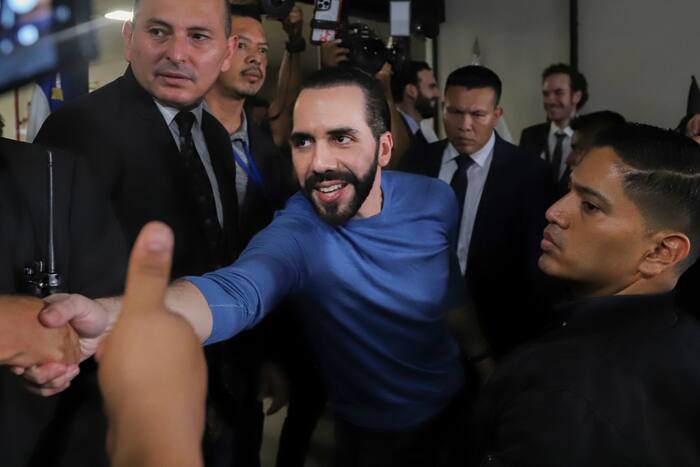
On November 19, 2026, El Salvador's president walked up to the Supreme Electoral Tribunal in San Salvador flanked by police cars and roaring crowds waving "Bukele 2027" signs. He formally entered the race for a third consecutive term in the February 28, 2027 election. Barely three weeks earlier, he had ordered roughly 2,500 Salvadoran soldiers into Port-au-Prince to hunt down Haitian street gangs. You might also find this similar article interesting: The Quiet Return of an Old Enemy Inside New York Apartments.
If you look closely at the timing, the money, and the constitutional rewiring behind both moves, a clear picture emerges. Bukele isn't just exporting his iron-fist policing model to a collapsing Caribbean neighbor. He's using an overseas military mission to cement indefinite rule at home, neutralize Washington's criticism, and lock in his political machine before the 2027 ballot.
How Bukele Rewrote the Rules for a Third Term
El Salvador's 1983 constitution was written specifically to prevent strongmen from clinging to power. It banned consecutive presidential reelection outright. For decades, that rule held firm across left-wing and right-wing administrations alike. As reported in recent reports by NBC News, the effects are notable.
Bukele dismantled it step by step. First came his 2024 second-term run, which relied on a controversial 2021 ruling by judges installed by his Nuevas Ideas party's legislative supermajority. That ruling creatively reinterpreted the ban to let a sitting president run again if he took a six-month leave of absence. Bukele won that race in a landslide with nearly 85 percent of the vote, and his party captured 54 of the 60 seats in the Legislative Assembly.
Then came the permanent fix. Using that overwhelming legislative control, lawmakers passed sweeping constitutional amendments that abolished presidential term limits altogether, extended presidential terms from five to six years, and moved the next presidential vote up from 2029 to February 2027. Bukele defended the overhaul on social media by arguing that 90 percent of developed nations allow indefinite reelection for their heads of government, asking why a small, poor country shouldn't do the same.
At the time those reforms passed, Nicaragua and Venezuela were the only other Latin American nations permitting indefinite presidential reelection. Yet in San Salvador, domestic pushback barely registered. Polling from the Central American University in May 2026 showed 65.3 percent of Salvadorans backed moving the election forward to 2027, while Bukele's overall approval ratings sat near 90 percent.
When you trade gang extortion and daily homicides for quiet streets, constitutional guardrails stop feeling urgent to ordinary voters. Traditional opposition parties like ARENA and the FMLN have nominated candidates—Mayteé Iraheta and Rafael Aguirre, respectively—while parties like Vamos are boycotting the vote entirely rather than legitimizing what they call an unconstitutional process. Nobody expects the race to be close.
What Triggered the Salvadoran Troop Surge in Haiti
While Bukele's domestic political runway was already clear, an ambush in Port-au-Prince handed him an unexpected foreign stage.
On October 18, 2026, armed gang members attacked an armored vehicle in Haiti's capital, torching the transport and abducting four Salvadoran aviation technicians. Those four men weren't rogue contractors. They were part of a roughly 200-person Salvadoran contingent already serving inside the UN-authorized Gang Suppression Force (GSF).
Bukele didn't wait for slow multilateral diplomacy. Within days, he dispatched an initial 100 special forces operators to launch a rescue mission. Following an October 28 phone call with Haitian Prime Minister Alix Didier Fils-Aimé, El Salvador's foreign ministry announced a massive escalation: more than 2,000 troops—soon growing to roughly 2,500 personnel—headed straight into Haiti's Ouest Department.
That makes it the largest single-country military deployment in Haiti since the United Nations ended its MINUSTAH peacekeeping mission in October 2017.
The human cost arrived fast. On November 20, three Salvadoran soldiers—Lt. Cristian Daniel Palacios Santos and Cpls. Emerson Alexander Zepeda Zelada and Wilber Manuel Serrano Medina—were killed during operations in Haiti. According to Bukele's account, the two corporals died when a grenade exploded as they tried to dislodge it from a drone whose battery was failing. Meanwhile, the four kidnapped aviation technicians remain missing.
Inside Haiti's Fractured Security Architecture
To understand why Haitians cheered Salvadoran armored convoys rolling through Tabarre in late October, you have to look at how badly existing international efforts had stalled.
By autumn 2026, the UN-backed Gang Suppression Force had managed to deploy only about 1,500 to 1,563 personnel out of its authorized 5,500-troop ceiling. Gang coalitions controlled vast swaths of Port-au-Prince, driving displacement to a record 1.5 million people and leaving 5.8 million Haitians facing acute hunger. In just three months between July and September 2026, the UN documented 92 kidnappings in the capital alone.
El Salvador put more boots on the ground in two weeks than the UN-backed mission had assembled in over a year.
Here is where the operation gets messy, though. The vast majority of Bukele's 2,500 soldiers aren't actually under UN command. They operate under an unpublished bilateral agreement between San Salvador and Port-au-Prince, fighting alongside the Haitian National Police (HNP) and private contractors. Those contractors include Vectus Global, a private military firm founded by former Blackwater chief Erik Prince, which has been assisting Haitian police with explosive-equipped drone strikes.
This parallel chain of command has raised alarms even among supportive neighbors. U.S. Secretary of State Marco Rubio noted publicly in early November that Washington needed clarity on who answers to whom on the ground. Still, the White House hasn't stood in the way. President Donald Trump reportedly told Bukele during a phone call to "do what you have to do," and the U.S. military provided C-130 transport aircraft to airlift the Salvadoran contingent into Haiti—even while turning down requests for extra combat gear.
Exporting the Bukele Model and Its Blind Spots
Bukele isn't just sending soldiers; he's exporting his entire carceral blueprint. In mid-November, senior Haitian officials visited El Salvador to tour the Terrorism Confinement Center (CECOT), the mega-prison built to hold tens of thousands of suspected gang members. Days later, Port-au-Prince announced plans with El Salvador to build three new high-security prisons in Haiti.
On paper, this looks like decisive action where traditional diplomacy failed. Look closer at the mechanics, and two major flaws stand out.
- Clear without hold or build. Analysts at the Council on Foreign Relations and the Center for Strategic and International Studies have pointed out a classic counterinsurgency trap. Heavy kinetic raids can push gang fighters out of a neighborhood temporarily, yet neither the understaffed GSF nor the corrupt, overstretched Haitian National Police has the capacity to hold territory permanently or restore basic governance. Once foreign troops pull back, armed groups simply filter back in.
- Collateral damage and zero oversight. Aggressive drone strikes and urban raids carry steep civilian risks. UN monitors reported that airstrikes in Haiti between July 2025 and September 2026 killed at least 87 civilians unassociated with gangs, including 21 children. Because the bilateral Salvadoran mission operates outside UN frameworks with secret rules of engagement, independent accountability is virtually nonexistent.
Gang leaders in Port-au-Prince have already turned the deployment into propaganda. Wilson Joseph, head of the notorious 400 Mawozo gang, posted videos flaunting stockpiles of ammunition and vowing not to flee, accusing Bukele of gambling with his soldiers' lives for political clout.
Why the Haiti Gamble Pays Off at Home
Critics in Washington and human rights groups like Cristosal argue that Bukele's Haitian offensive serves a calculated domestic purpose. They're right, even if Bukele's supporters view that calculation as a feature rather than a bug.
First, it reframes El Salvador's global brand. Since launching his domestic "state of exception" in March 2022, Bukele has locked up roughly 118,000 to 120,000 people—nearly 2 percent of El Salvador's entire population. International human rights organizations have documented widespread arbitrary arrests, suspended due process, and deaths in custody. By stepping into Haiti where wealthier democracies hesitated, Bukele casts himself as a hemispheric problem-solver rather than an authoritarian strongman.
Second, the mission plays extraordinarily well with Salvadoran voters heading into the February 2027 campaign. Polling cited on the deployment shows 68 percent of Salvadorans favor maintaining or expanding troop involvement in Haiti, while 73 percent believe the mission improves El Salvador's international standing. Even the price tag—Bukele claims El Salvador is funding 90 percent of the operation directly—reinforces his preferred narrative that the country is no longer a dependent aid recipient, but a regional power capable of projecting force.
Third, it buys diplomatic insulation from the United States. When a Central American leader volunteers thousands of troops to stabilize a Caribbean crisis that threatens regional migration flows, Washington becomes far less eager to lecture him about constitutional term limits or judicial independence.
How to Track What Happens Next
Whether Bukele's dual-track strategy holds together depends on three concrete indicators over the coming months rather than official press releases from San Salvador or Port-au-Prince.
- Watch the fate of the four abducted technicians. Bukele justified the 2,500-troop surge as a rescue operation to bring those four men home alive. If months pass without a rescue—or if Salvadoran casualties mount in urban ambushes—domestic enthusiasm at home could sour before February 28.
- Follow the GSF troop ceiling and UN briefings. Keep an eye on UN Security Council reports from GSF special representative Jack Christofides. If other countries fail to fill the remaining gap toward the 5,500-troop target, Salvadoran soldiers will remain stuck fighting an open-ended urban war without a long-term exit plan.
- Monitor the February 2027 turnout and opposition participation. Bukele's victory is effectively guaranteed, so the real metric in El Salvador's election isn't who wins. Watch voter turnout rates and whether independent observers are granted access to polling stations, which will signal how thoroughly Nuevas Ideas has consolidated single-party control for the six-year term ahead.


