Walk through Tokyo’s Shinjuku district at midnight, and the sheer volume of light feels like a physical weight. Towering digital billboards paint the asphalt in electric blues and magentas. Vending machines hum on every street corner, glowing like miniature neon shrines offering hot canned coffee and cold green tea. Salarymen in crisp white shirts drift out of Izakayas, their laughter dissolving into the ambient noise of a metropolis that consumes electricity the way a lung consumes oxygen.
To the casual tourist, it looks like an infinite fountain of energy.
But if you follow those power lines past the city limits, across the mountains, and down to the coastlines, you reach the massive ports where Japan actually breathes. There, beneath the towering cranes of Yokohama and Chiba, the true vulnerability of this island nation becomes stark. Japan produces almost none of its own fossil fuels. Every glowing sign, every bullet train, every automated factory floor depends entirely on an endless, fragile parade of massive tankers moving across the Pacific.
For decades, this has been Japan’s quiet anxiety. When global energy prices spike, the entire nation feels the squeeze.
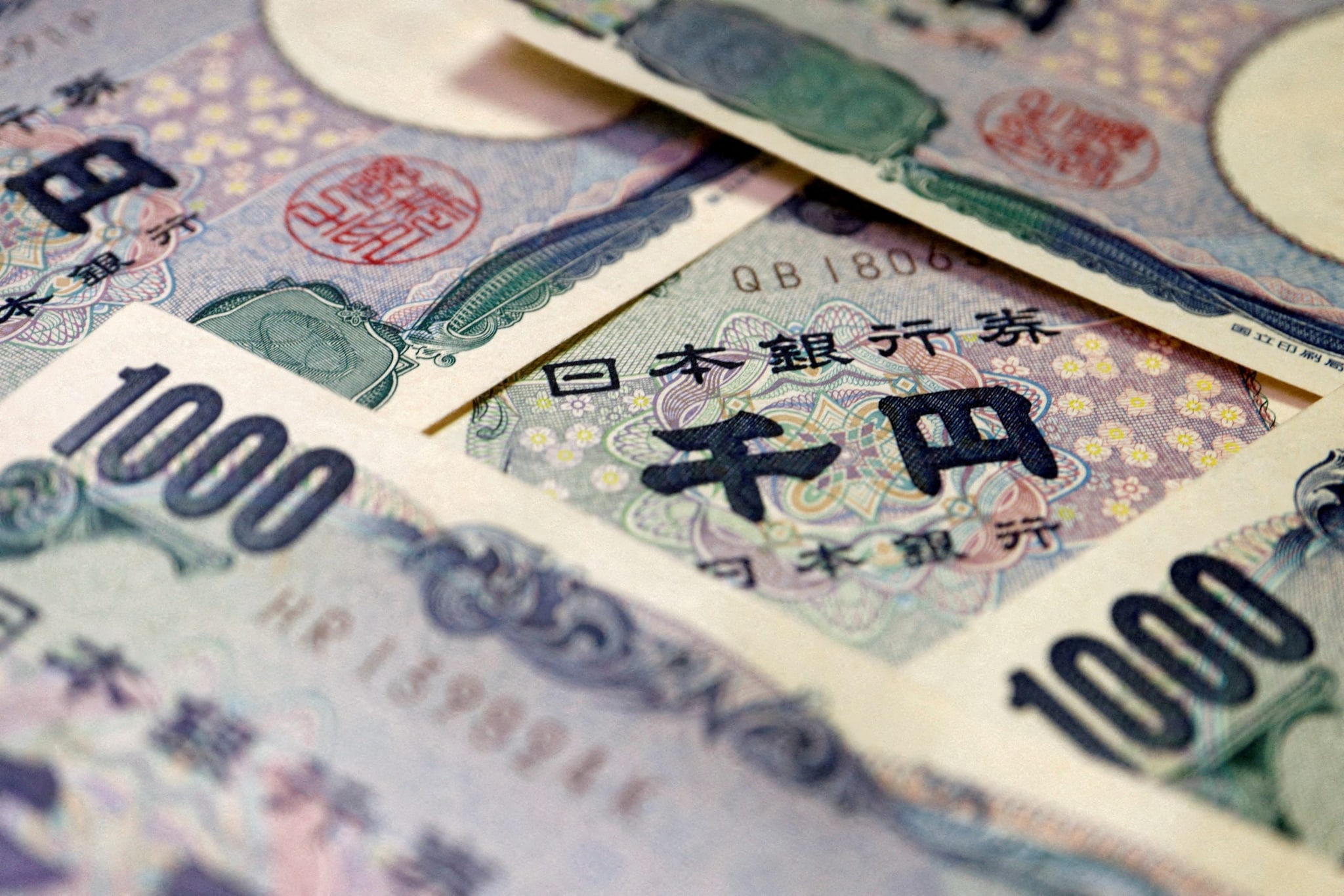
Lately, something unexpected is happening at the docks. The tankers are still arriving, but the economic math has shifted. For three consecutive months, Japan has pulled off a financial feat that many analysts thought would take years to achieve. It is running a trade surplus. More wealth is flowing into the country than flowing out.
The standard economic headlines attribute this to a dry phrase: "declining energy imports."
But economics is never just about numbers on a ledger. It is about choices made by millions of ordinary people, about factory floors adjusting their shifts, and about a quiet, nationwide recalibration of how a society values its resources.
The Balance on the Docks
To understand the weight of a trade surplus, consider a hypothetical small business owner named Kenji. For thirty years, Kenji has run a precision machining workshop in Ota City, the industrial heart of Tokyo’s manufacturing underbelly. His shop turns out specialized steel components used in everything from medical devices to luxury automobiles.
Kenji’s life is governed by two major forces: the cost of the raw materials and electricity coming into his shop, and the price global buyers are willing to pay for the finished components leaving his loading dock.
When Russia invaded Ukraine a few years ago, global energy markets went into a frenzy. The price of liquefied natural gas (LNG) and crude oil skyrocketed. Because Japan relies on imports for roughly 90% of its energy needs, Kenji’s electricity bills doubled nearly overnight. At the same time, the Japanese yen weakened dramatically against the US dollar.
A weak currency is a double-edged sword. On one hand, it makes Kenji’s components incredibly cheap and attractive to foreign buyers in Europe and America. His exports surged. On the other hand, because global commodities like oil and gas are priced in dollars, a weak yen meant that purchasing fuel became excruciatingly expensive for Japan.
For a long time, the expensive fuel completely wiped out the profits from the booming exports. The country was hemorrhaging cash just to keep the lights on. The trade deficit yawned open like a canyon.
What changed over the last three months is not that Japan suddenly stopped needing energy. Instead, a series of systemic shifts finally aligned. Global energy markets cooled down, bringing the baseline cost of oil and gas back from the stratosphere. Concurrently, Japan’s long-term gamble on diversifying its power grid—slowly restarting select nuclear reactors and expanding solar arrays—began to bear fruit.
When the cost of importing fuel dropped, the ledger tipped. The massive volume of cars, machinery, and electronic components Japan sells abroad every day suddenly translated into pure surplus. For Kenji, it means his utility bills have leveled off, while his order books remain full.
The Invisible Conservation
Step inside a typical Tokyo apartment during the transition from winter to spring, and you will notice a cultural quirk that explains the trade surplus better than any spreadsheet.
Westerners are accustomed to central heating, a system that warms the entire structure of a house regardless of which room is occupied. In Japan, heating is localized. People use localized heat pumps, heated tables known as kotatsu, and heavy insulation curtains. There is a deep-seated cultural concept called mottainai, which roughly translates to an aversion to waste. It is a philosophy born from centuries of living on an island with limited natural resources.
When the energy crisis hit, the government didn't need to implement draconian rolling blackouts. They simply asked the public to practice setsuden—electricity saving.
Major train stations dimmed every second lightbulb on the platforms. Department stores lowered their thermostats by a single degree. Millions of citizens quietly adjusted their daily routines. This collective, voluntary restraint is the hidden engine behind the declining energy imports.
Consider the mathematics of a single degree Celsius. If every household in a nation of 125 million people lowers its thermostat slightly, the aggregate drop in fuel consumption is massive. It represents millions of barrels of oil that do not need to be purchased from the Middle East, and billions of cubic feet of gas that do not need to be shipped from Australia.
This is the emotional core of the trade numbers. The surplus isn't just a victory for macroeconomic policy; it is the tangible result of shared national discipline.
The Machinery of the Surplus
While citizens save energy at home, the industrial sectors are driving the other side of the equation. Japan’s export machine is running at a furious pace, heavily supported by global demand for automotive technology and advanced machinery.
The automotive industry provides a perfect window into how this works. The global transition toward hybrid and electric vehicles requires highly specialized, incredibly reliable components. Japanese suppliers have spent decades perfecting the micro-sensors, advanced semiconductors, and lightweight alloys that make these vehicles efficient.
When a consumer in California or Frankfurt buys a hybrid vehicle, they are implicitly buying into a supply chain that routes directly back to those humming workshops in Ota City and the sprawling assembly lines of Aichi Prefecture.
But maintaining this momentum requires a delicate balancing act. The global economy is volatile. If inflation rears its head again in Europe, or if the American consumer pulls back on spending, the demand for Japanese exports could soften. The three-month streak of surpluses is a reassuring sign of resilience, but it is not a guarantee of permanent stability.
The Dilemma of the Weak Currency
There is an ongoing debate among policymakers in Tokyo regarding the true value of the yen. For decades, a weak yen was viewed as an unalloyed good for Japan because it supercharged the export sector. It made Japanese products incredibly competitive on the global stage.
But the modern global economy is far more interconnected than it was in the 1980s.
Today, even a deeply patriotic Japanese manufacturer must import raw steel from Australia, rubber from Malaysia, and rare earth minerals from various corners of the globe to build a single vehicle. When the yen is weak, the cost of these raw inputs rises significantly.
The recent trade surplus suggests that a sweet spot has been temporarily achieved. The cost of raw materials and energy has dropped just enough to offset the pain of the weak currency, allowing the benefits of high export volumes to shine through.
Yet, talking to economists or business owners reveals a shared sense of trepidation. Nobody believes the structural vulnerability has vanished. Japan remains an economic superpower built upon a foundation of imported molecules.
The Changing Shoreline
If you visit the industrial ports today, you can see the physical manifestation of this economic transition. Alongside the traditional coal terminals and LNG storage tanks, new infrastructure is quietly rising. Massive offshore wind turbines are being tested off the coast of Fukushima. Giant battery storage facilities are being integrated into the grid to capture the erratic power generated by solar fields on sunny afternoons.
The reduction in energy imports is a trend that Japan desperately wants to make permanent. Every megawatt of power generated by a domestic wind turbine or a solar panel is a megawatt that does not need to be ledgered as an import. It is a step toward true economic sovereignty.
The three-month trade surplus is a milestone, a brief moment of breathing room for a nation that has spent years navigating economic headwinds. It proves that the combination of industrial excellence and collective societal adaptability can overcome even the most daunting resource deficits.
As the sun sets over Tokyo, the neon lights begin their nightly flicker, casting vibrant reflections across the crowded streets. The energy required to illuminate this sprawling spectacle is immense, but for now, the wealth creating that power is staying within the country, stabilizing the ground beneath a nation that has mastered the art of doing more with less.