Every time monsoon waters swallow another village in the lowlands of South Asia, a familiar script rolls out across state media and diplomatic channels. Kathmandu points an accusing finger at global carbon emitters, demands multi-billion dollar compensation checks, and frames every seasonal flood as an apocalyptic warning of planetary doom. It is an emotionally resonant narrative that plays well in international climate summits. It is also a catastrophic distraction from the governance failures actually driving the disaster.
Let us dismantle the lazy consensus. The standard line is that climate change is an external weapon wielded by industrialized nations against innocent mountain republics. According to this view, Nepal is purely a victim of carbon emissions generated thousands of miles away, and the only path forward is writing reparations invoices to Western capitals.
That framing absolves local power structures of total accountability.
I have watched billions in international adaptation funds flow into developing mountain regions over the past decade, only to evaporate into bureaucratic bloat, poorly engineered concrete embankments, and political patronage networks. The crisis in the Himalayas is not simply an atmospheric emergency. It is a structural planning failure.
The Geography of Negligence
Water moves according to gravity, but floods happen where humans build badly. Over the past thirty years, unplanned urbanization has choked traditional natural drainage routes across the Kathmandu Valley and the Terai plains. Wetlands that once absorbed millions of gallons of seasonal runoff have been paved over for unregulated real estate developments.
When you concrete over natural sponges, even a normal monsoon becomes a catastrophe. Yet, municipal authorities prefer to blame melting glaciers six thousand meters above sea level rather than admit they approved commercial housing projects on active floodplains.
Blaming global emissions is cheap. Fixing municipal zoning laws, enforcing environmental impact assessments, and cracking down on illegal sand mining in riverbeds is hard. Sand mining for the domestic construction boom strips rivers of their natural buffers, destabilizes bridge foundations, and turns manageable seasonal rises into violent scouring torrents. The heavy machinery tearing up riverbeds belongs to local contractors with political protection, not multinational oil corporations.
Follow the Money
When international bodies pledge climate adaptation finance, where does the capital actually land? Look at the balance sheets of regional development projects. A massive percentage of these funds gets siphoned off by administrative overhead, high-paid consultants drafting endless white papers, and concrete-heavy engineering fixes that often worsen downstream flooding.
Rigid embankments built to protect one village frequently accelerate water velocity, hurling a destructive wall of water directly into the neighboring community downstream. It is a zero-sum game of passing the flood downstream while patting yourself on the back for climate resilience.
Compensation demands miss the fundamental mechanism of risk management. If a government expects external actors to bail them out for every meteorological anomaly, they have zero incentive to build internal resilience. It creates a moral hazard on a national scale. Why reform local land-use policies when you can monetize your vulnerability on the global stage?
The Counter-Intuitive Realities of Mountain Hydrology
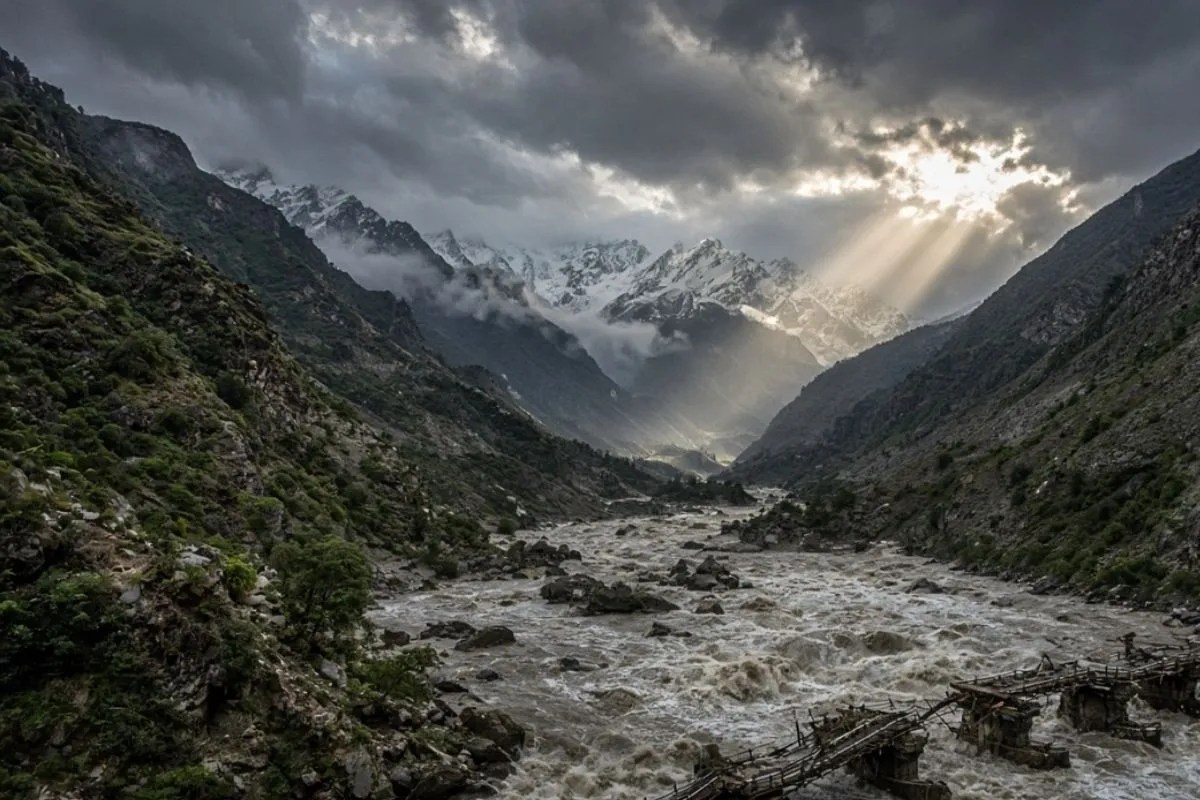
Precipitation extremes are real, and regional warming patterns are altering monsoon dynamics. That is not up for debate. But attributing every single flash flood and landslide solely to global temperature anomalies ignores centuries of local ecological history. The Himalayas have always been a geologically volatile, rapidly eroding young mountain range. Landslides and flash floods are natural evolutionary processes of mountain building.
Treating natural geological instability as a novel consequence of modern industrial emissions is scientifically lazy. It ignores the historical records of catastrophic floods that occurred long before the internal combustion engine was invented.
What has changed is not just the weather, but the density of human exposure in high-risk zones. Putting millions of people directly in the path of historical debris flows without adequate early-warning systems or evacuation infrastructure is an administrative choice, not a meteorological inevitability.
What Real Adaptation Looks Like
If Nepal wants to survive the coming decades, it needs to abandon the posture of a helpless victim waiting for checks from Brussels and Washington.
First, stop treating rivers like enemies to be caged in concrete. River restoration projects across Europe and North America have proven that giving rivers room to breathe by restoring natural floodplains is exponentially more effective than building higher walls.
Second, decentralize early-warning technology. Community-led hydrological monitoring networks equipped with cheap, solar-powered cellular telemetry cost a fraction of centralized bureaucratic alert systems and save lives hours before a wall of water hits a settlement.
Third, jail the illegal sand miners and corrupt officials who trade human safety for short-term construction profits.
Until Kathmandu stops using global climate change as a universal excuse for domestic mismanagement, the rivers will keep rising, the valleys will keep sinking, and the compensation checks will never be enough to buy back the lives lost to willful blindness.