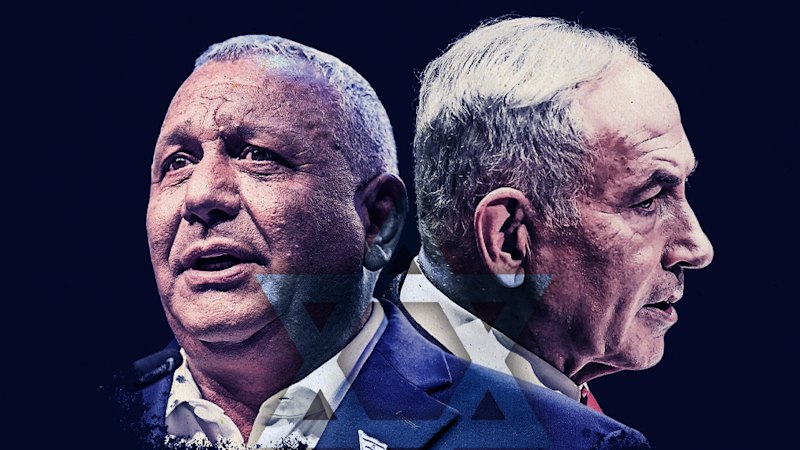
Coverage of Israel’s October 27, 2026 election routinely frames the contest as a binary showdown between Prime Minister Benjamin Netanyahu and former IDF Chief of Staff Gadi Eisenkot. According to official data from Israel’s Central Elections Committee (CEC) and analysis by the Israel Democracy Institute (IDI), that framing overlooks the actual math driving the post-election deadlock.
Neither Netanyahu’s Likud-led bloc nor Eisenkot’s opposition bloc secured the 61 seats required to govern in the 120-seat Knesset. Instead, as reported by the Associated Press and the Israel Democracy Institute, the decisive structural shift in the 26th Knesset was a surge in turnout—reaching 77.98% overall, the highest since 1999—and an unprecedented 19 seats won by Arab-majority parties.
The Myth of the Two-Man Race
Media narratives built around a head-to-head duel between Netanyahu and Eisenkot assume Israel operates like a presidential system. It does not. Under Israel’s closed-list proportional representation system, citizens vote for party slates in a single nationwide constituency, and any party clearing the 3.25% threshold enters parliament. Finishing first does not guarantee the premiership.
Official CEC results from the October 27 vote demonstrate how fragmented the electorate actually is:
- Netanyahu’s bloc (53 seats total): Likud won 27 seats (down 9 from 2022), joined by United Torah Judaism (7), Otzma Yehudit (7), Shas (6), and the Religious Zionist Party (6).
- Jewish opposition bloc (48 seats total): Eisenkot’s new party, Yashar!, won 21 seats, alongside Naftali Bennett’s Together (12), The Democrats led by Yair Golan (8), and Avigdor Lieberman’s Yisrael Beiteinu (7).
- Arab-led parties (19 seats total): The Joint List secured 11 seats and Mansour Abbas’s Ra’am won 8, marking a combined gain of 9 seats over the previous Knesset.
Prof. Ofer Kenig of the Israel Democracy Institute notes that the effective number of parties in the 26th Knesset reached a historic high, reflecting both the 11 distinct lists that cleared the electoral threshold and the relative weakness of the largest factions. Likud at 27 seats and Yashar! at 21 together control less than half of the parliament. Treating the election as a simple referendum on two personalities obscures a legislature where nearly two in five incoming lawmakers are new and power is splintered across three distinct blocs.
Policy Overlap Versus Stylistic Contrast
A second common assumption in coverage of the race is that an Eisenkot-led government would automatically invert Netanyahu’s policies across the board. Analysts and reporting from The Guardian and Al Jazeera point to a more complicated picture.
On institutional and domestic governance, the contrast between the two leaders is sharp. As documented by the Arab Center Washington DC and PBS NewsHour, Eisenkot campaigned on establishing a formal state commission of inquiry into the intelligence and security failures of October 7, 2023—a measure Netanyahu has resisted. Eisenkot also supports ending broad military draft exemptions for ultra-Orthodox (Haredi) men, implementing a two-term limit for prime ministers, and safeguarding judicial independence.
On core questions regarding the Israeli-Palestinian conflict, however, Eisenkot’s positions diverge far less from the status quo than international commentary often assumes. Speaking on the campaign trail, as quoted by The Guardian, Eisenkot explicitly distanced himself from advocating a Palestinian state, stating, "I've never said that the solution is two states for two peoples. There is a very deep religious-national conflict here, and anyone who thinks an agreement can be reached now is gravely mistaken". While he opposes the planned E1 settlement block and criticized Netanyahu for placing Religious Zionist Party leader Bezalel Smotrich in authority over civil affairs in the West Bank, Eisenkot supports West Bank settlement in general. International Crisis Group senior analyst Mairav Zonszein observed that Eisenkot’s appeal rests heavily on personal credibility, institutional discipline, and a focus on calming domestic tensions rather than advancing a diplomatic breakthrough.
Why the 19-Seat Bloc Holds the Real Leverage
When President Isaac Herzog formally tasked Eisenkot with forming a government on November 8—after lawmakers representing 67 seats recommended him compared to 46 for Netanyahu—the central obstacle was never Netanyahu’s personal popularity. It was arithmetic.
With 48 seats in the Jewish opposition bloc, Eisenkot sits 13 votes short of a governing majority. Every mathematically viable path to 61 seats carries steep political costs, as Reuters and The Jerusalem Post have detailed in their coverage of the coalition talks:
- A minority government backed externally by Arab parties: Both the Joint List and Ra’am signaled willingness to help unseat Netanyahu, yet several Jewish opposition figures—including Naftali Bennett and Avigdor Lieberman—have historically resisted relying on Arab factions, and Likud has campaigned aggressively to frame any such arrangement as illegitimate.
- A national unity government with Likud: Netanyahu publicly urged a broad unity government citing regional security threats from Iran, while Yashar! officials stated they would negotiate with Likud only if Eisenkot serves as prime minister for the full term without a rotation agreement.
- Detaching ultra-Orthodox factions from Netanyahu’s bloc: Bringing Shas (6 seats) and United Torah Judaism (7 seats) across the aisle would yield exactly 61 seats, but doing so directly collides with Yashar! and Yisrael Beiteinu’s core campaign pledges to end Haredi conscription exemptions.
The Misunderstood Role of AI and Post-Vote Disputes
Commentary surrounding the 2026 campaign has also treated election-day controversies and digital campaigning as peripheral sideshows rather than structural features of the deadlock. According to an Open University of Israel tracking study cited in election analyses, roughly 13% of election-related social media posts were AI-generated or manipulated, even after the Central Elections Committee introduced mandatory labeling rules in July 2026. Simultaneously, an Israel Internet Association survey found that 25% of voters intended to consult large language model chatbots to help decide their vote.
Following the vote, disputes over election integrity further strained coalition prospects. As reported by the Associated Press, Likud amplified early election-day police arrests in a Bedouin town involving allegations of vote-buying for Ra’am. Within days, a judge ordered all suspects released due to lack of evidence, and after consulting with the Shin Bet internal security service, the Central Elections Committee concluded there was no evidence of bribery on a scale capable of affecting the outcome. Israel’s attorney general subsequently froze the initial police probe to examine communications between the Prime Minister’s Office and police prior to the vote.
Answering the Questions Voters Actually Ask
Does winning the most seats make Likud the automatic winner?
No. Under Israel’s parliamentary rules, the president assigns the mandate to form a government to the lawmaker judged to have the best chance of assembling a 61-seat coalition, not necessarily the leader of the largest party. Likud won 27 seats to Yashar!’s 21, yet Eisenkot received 67 recommendations from incoming Knesset members—including backing from Arab parties—giving him the first 28-day window (until December 6, with a possible 14-day extension) to build a coalition.
Why couldn’t the anti-Netanyahu bloc form a government immediately?
Because "anti-Netanyahu" is not a unified ideological platform. The 48-seat Jewish opposition spans left-wing Democrats under Yair Golan, center-right pragmatists in Yashar!, and hawkish nationalists led by Naftali Bennett and Avigdor Lieberman. Getting all 48 lawmakers to agree on how to engage with the 19 Arab-party seats—or on terms for Haredi conscription—requires resolving policy splits that predate October 7.
What happens if Eisenkot fails to reach 61 seats by December 6?
If Eisenkot cannot secure a majority within his initial window or a presidential extension, President Herzog can transfer the mandate to another Knesset member—potentially Netanyahu—or return the mandate to the Knesset itself for 21 days. If all avenues fail, the 26th Knesset dissolves automatically and Israel heads to another snap election, repeating the cycle that produced five elections between 2019 and 2022.
How to Read Israeli Coalition Politics Without the Noise
Observers trying to track what actually determines outcomes in Jerusalem should ignore daily personality polling and watch three concrete indicators instead:
- Follow the 61-seat math, not party plurality. A party’s raw seat total matters far less than which smaller factions are willing to sit together without triggering a veto from coalition partners.
- Watch Knesset committee and speaker votes. Even before a governing coalition is sworn in, a majority bloc in parliament—such as the alignment that elected a new Knesset speaker backed by Netanyahu’s opponents—can control legislative agendas and pass laws.
- Separate institutional reform from diplomatic shifts. Whether the next government is led by Eisenkot, Netanyahu, or a caretaker administration, domestic disputes over the October 7 inquiry, judicial authority, and Haredi conscription carry far higher immediate legislative momentum than any change in West Bank or Gaza policy.
The October 27 ballot did not deliver a mandate to a single leader. It delivered a 120-seat puzzle in which 19 Arab-party seats hold the mathematical balance of power, while the two largest Jewish blocs remain divided over whether to cross the political lines required to govern.