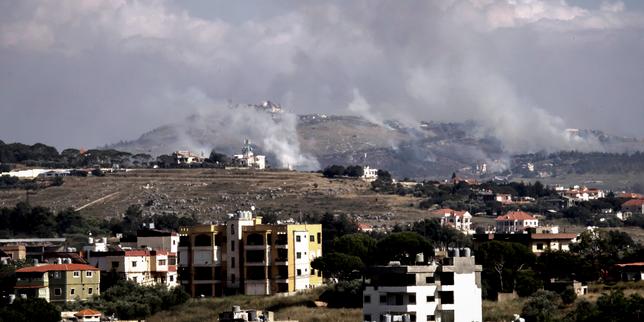
The fragile ceasefire in Lebanon is officially dead in everything but name. If you thought the April agreement would bring lasting peace to the border, think again. Benjamin Netanyahu isn't just maintaining a defensive buffer zone anymore; he's pushing his forces deeper north into Lebanese territory than they've been in over a quarter century.
The capture of the historic, 900-year-old Beaufort Castle on May 31, 2026, marks a massive shift in the conflict. Israeli troops didn't just seize a medieval ruin. They crossed the Litani River, smashed through a symbolic boundary, and laid the groundwork for an expanded offensive that's aiming directly for the cultural and economic heartland of southern Lebanon. France is already panicking, demanding an emergency meeting of the UN Security Council. But on the ground, the momentum belongs entirely to the heavy armor and airstrikes of the Israel Defense Forces (IDF).
Here's exactly why Netanyahu is expanding this offensive now, what the capture of Beaufort really means, and how this fits into a much larger, high-stakes diplomatic game between Washington and Tehran.
The Strategic Reality of Beaufort Castle
You can't understand this new phase of the war without understanding the geography of Beaufort Ridge. Perched on a jagged mountain top near the city of Nabatiyeh, the Crusader fortress offers a flawless, panoramic look over both southern Lebanon and northern Galilee. It's the ultimate high ground.
Hezbollah spent years using this exact ridge to orchestrate rocket attacks and pilot explosive drones directly into northern Israeli towns like Kiryat Shmona. For the IDF, taking the ridge wasn't optional if they wanted to secure the border. Israeli Defense Minister Israel Katz made the stakes clear when he announced that raising the Israeli flag over the fortress was a vital step to defend the Galilee communities.
But look at history, and you see why this move sends shivers through Beirut. The last time Israeli troops occupied Beaufort Castle was during the 1982 war. They stayed there for nearly two decades, transforming it into a heavily fortified outpost before finally withdrawing in 2000. For the Lebanese public, seeing the Golani Brigade flag flying over those ancient stone walls feels like the start of a permanent occupation. Far-right members of Netanyahu's coalition, like Finance Minister Bezalel Smotrich, aren't helping to calm those fears either. Smotrich openly praised the capture, calling it a correction of "old national sins."
Racing the Diplomatic Clock in Washington
So, why expand the front line further north right now? The timing isn't accidental. It has everything to do with what's happening thousands of miles away in Washington, D.C.
Military delegations from both Israel and Lebanon just held security talks under a US-brokered framework. Simultaneously, American and Iranian diplomats are quietly trying to iron out a grand bargain to halt the regional war that ignited back in February and March.
Netanyahu and his military commanders know that a diplomatic deal between the US and Iran will eventually impose strict limits on where Israel can operate. They're racing the clock. The current strategy is simple: inflict maximum structural damage on Hezbollah, dismantle their launch infrastructure, and grab as much dominant high ground as possible before any international agreement forces a hard stop.
The Devastating Reality on the Ground
While politicians talk strategy, the human and material cost in southern Lebanon is skyrocketing. The IDF has already ordered entire populations to vacate major hubs like Nabatiyeh and the coastal city of Tyre. They've explicitly told residents that everything south of the Zahrani River—about 40 kilometers north of the border—is an active combat zone.
Lebanese Prime Minister Nawaf Salam has blasted the operation, accusing Israel of executing a scorched-earth policy designed to force citizens into permanent exile. The numbers back up the scale of the destruction. Since the wider conflict erupted on March 2, Lebanese health officials report that more than 3,350 people have been killed, and well over a million have been displaced from their homes. Satellite data reveals that dozens of border villages have been completely leveled or heavily damaged.
Hezbollah isn't sitting quietly either. Despite losing key positions, they've adapted by relying heavily on first-person-view (FPV) explosive drones. These cheap, lethal drones have regularly slipped through air defenses, targeting Israeli soldiers operating in the self-declared security zone and forcing beachgoers in northern coastal cities like Nahariya to sprint for bomb shelters.
What Happens Next
Don't expect the UN Security Council meeting requested by France to change the trajectory on the ground. A diplomatic resolution won't materialize overnight, and Netanyahu faces intense domestic pressure from his coalition partners to maintain a high-intensity campaign.
Watch the troop movements around Nabatiyeh over the coming days. The IDF is currently positioned just five kilometers outside the city, effectively setting up a potential encirclement. If Israeli forces move to fully occupy Nabatiyeh and push all the way to the Zahrani River line, the old buffer zone blueprint is officially gone, replaced by a much larger, semi-permanent military occupation zone deep inside Lebanon.