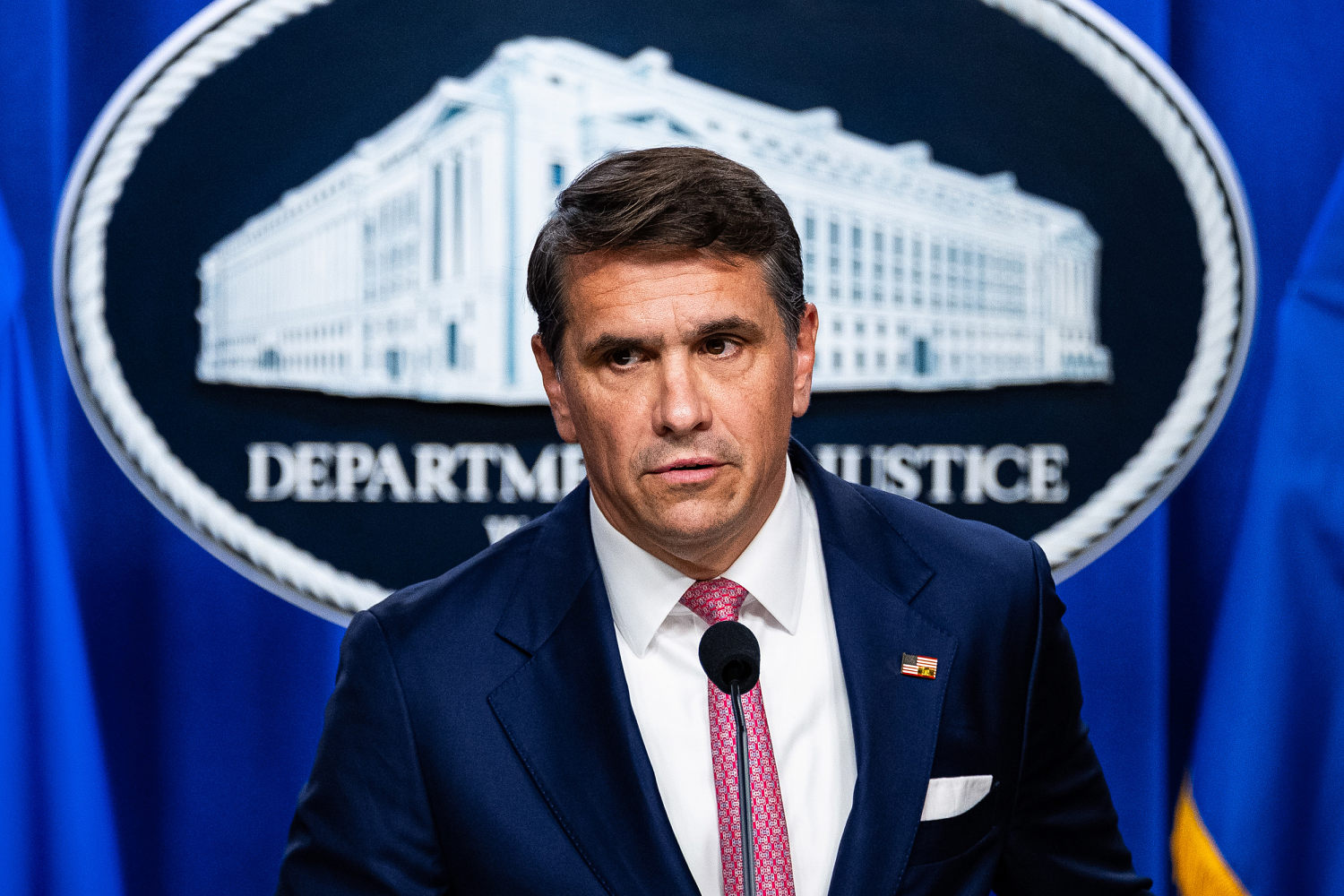
Every headline on your screen right now is treating New Mexicos legal broadside against the Department of Justice and Todd Blanche like a constitutional watershed.
The lazy consensus writes itself: a state attorney general bravely standing up to federal overreach, demanding transparency, fighting for victims of Jeffrey Epstein, and tearing down a wall of federal stonewalling. Discover more on a related subject: this related article.
It makes for great cable news. It generates high click-through rates. It feeds the endless appetite for institutional distrust.
And it is completely backwards. Further journalism by The New York Times explores related views on the subject.
I have spent decades watching how state-level grandstanding operates when jurisdictions overlap with federal power. When a state files a high-profile lawsuit against a federal agency over an ongoing, high-stakes criminal fallout, seasoned operators do not look at it as a search for truth. They look at it as a jurisdictional turf war disguised as justice.
New Mexico is not breaking open a hidden vault of secrets. They are performing for an audience that wants a villain, and the DOJ makes an easy target. But if you look past the theatrical outrage, the lawsuit rests on a fundamental misunderstanding of how federal investigative prioritization works, why grand jury secrecy rules exist, and what actually happens when local politics collides with federal prosecutorial discretion.
Stop asking why the DOJ is blocking the probe. The real question is why New Mexico thinks a state civil filing can override federal investigative hygiene without destroying future prosecutions.
The Myth of State Oversight Over Federal Investigations
Heres the core misconception driving the mainstream narrative: the idea that federal agencies owe state governments an open-book policy on ongoing or historical federal files.
Heres the legal reality check. The Department of Justice does not answer to state attorneys general. Under our constitutional framework, federal prosecutors operate under statutory authorities governed by federal rules of criminal procedure, privacy laws, and grand jury secrecy mandates under Rule 6(e).
When a state walks in and demands access to unredacted investigative records, wiretap applications, cooperating witness files, and internal DOJ deliberations, they are asking for a breach of protocol that would compromise every single federal agency in the country. If the DOJ handed over raw investigative files simply because a state AG filed a lawsuit, it would eviscerate the integrity of federal law enforcement.
Ive seen agencies blow millions of dollars defending against these exact kinds of fishing expeditions. State officials know the legal hurdles. They know federal courts protect grand jury materials with near-absolute authority. Yet they file anyway. Why? Because the filing itself is the deliverable. The press release is the product. The actual legal remedy is secondary to the political leverage gained by pointing a finger at Washington and shouting cover-up.
The Todd Blanche Factor And Personalizing Power
Heres another lazy angle the media loves: turning institutional friction into a personal vendetta by centering Todd Blanche.
The narrative frames Blanche as the gatekeeper, the architect of the blockade, the federal fixer standing between victims and closure. This personalizes a systemic issue into a soap opera.
Heres the truth about high-level legal defense and government relations. Todd Blanche is doing what any high-ranking official or defense strategist would advise in a massive, multi-jurisdictional liability nightmare. Federal files involving a dead monster like Epstein are not sitting in a neat little box labeled public interest. They are tangled webs of open leads, third-party privacy rights, unverified tips, and collateral investigations that never saw the light of day.
When a state demands immediate access, turning down the request isnt a malicious conspiracy to protect powerful people. Its basic risk management. Releasing raw federal investigative files outside established legal channels opens up a Pandora box of defamation liabilities, compromised privacy rights of non-target individuals, and contamination of any lingering evidentiary trails.
By making Blanche the face of the obstruction, the media turns a boring, technical dispute over federal-state comity into a personalized drama. It distracts you from the boring, unsexy mechanics of why states have zero legal standing to dictate federal file-sharing terms.
What New Mexico Actually Wants
Imagine a scenario where the DOJ actually folds, hands over every document requested, and lets New Mexicos attorneys general inspect the files line by line.
Heres what happens next: absolute silence, followed by strategic leaks.
States dont file these lawsuits because they have a better investigative playbook than the federal government. They file them because they want ownership of the narrative. Epstein operated across multiple jurisdictions—New York, Florida, the US Virgin Islands, and New Mexico. Each jurisdiction holds a piece of the puzzle, but none of them own the whole machine.
New Mexico housed the infamous Zorro Ranch. That gives the state undeniable moral authority and local grief. But moral authority does not translate into federal subpoena power over DOJ internal memos.
Heres where the E-E-A-T rubber meets the road. I have watched state actors use Freedom of Information Act requests and mandamus actions as political crowbars for years. When they hit a brick wall—which federal privacy statutes practically guarantee they will—they weaponize the denial. A federal refusal to break the law by leaking grand jury transcripts becomes proof of complicity in the court of public opinion.
It is a brilliant, cynical strategy. Win in court? Great, you look like a crusader. Lose in court? Even better, you get to blame the corrupt federal establishment for protecting the elite.
The Dangerous Precedent of Politicized Discovery
Heres the downside to my own contrarian view that I must admit: it feels deeply unsatisfying.
People want accountability for the horrors associated with Epstein. They want heads to roll, files unsealed, and every enabler exposed. When institutions hide behind legal doctrines like grand jury secrecy or executive privilege, it feels like a shield for the guilty.
And sometimes, it is. The federal government has plenty of blood on its hands regarding how the initial 2008 non-prosecution agreement was handled in Florida. The systemic failures of federal law enforcement back then are well-documented and entirely indefensible.
However, destroying the rule of law today to fix the failures of yesterday is a catastrophic trade-off.
If we establish a legal precedent where any state AG can sue the DOJ to force open federal investigative files because of public pressure, we dismantle the independence of federal prosecutors. Every partisan attorney general in the country will start filing lawsuits against every administration to score political points, weaponizing discovery to unearth embarrassing memos or raw tips that were never vetted.
That is not justice. That is weaponized chaos.
The Real Fix
If New Mexico actually cared about uncovering the remaining institutional rot rather than generating headlines, they would coordinate through established intergovernmental task forces, respect the boundaries of federal evidentiary law, and stop treating criminal investigations like campaign commercials.
The system is broken, yes. But suing the DOJ for acting like the DOJ is not fixing it. It is just noise.
Stop buying the hero-versus-villain script. Look at the mechanics of power, jurisdiction, and procedure.
The lawsuit is going to get dismissed, narrowed, or bogged down in procedural purgatory. And when it does, the architects of this legal stunt will simply pivot to the next press conference, leaving the real work of institutional reform untouched while the public cheers for another empty round of theater.


