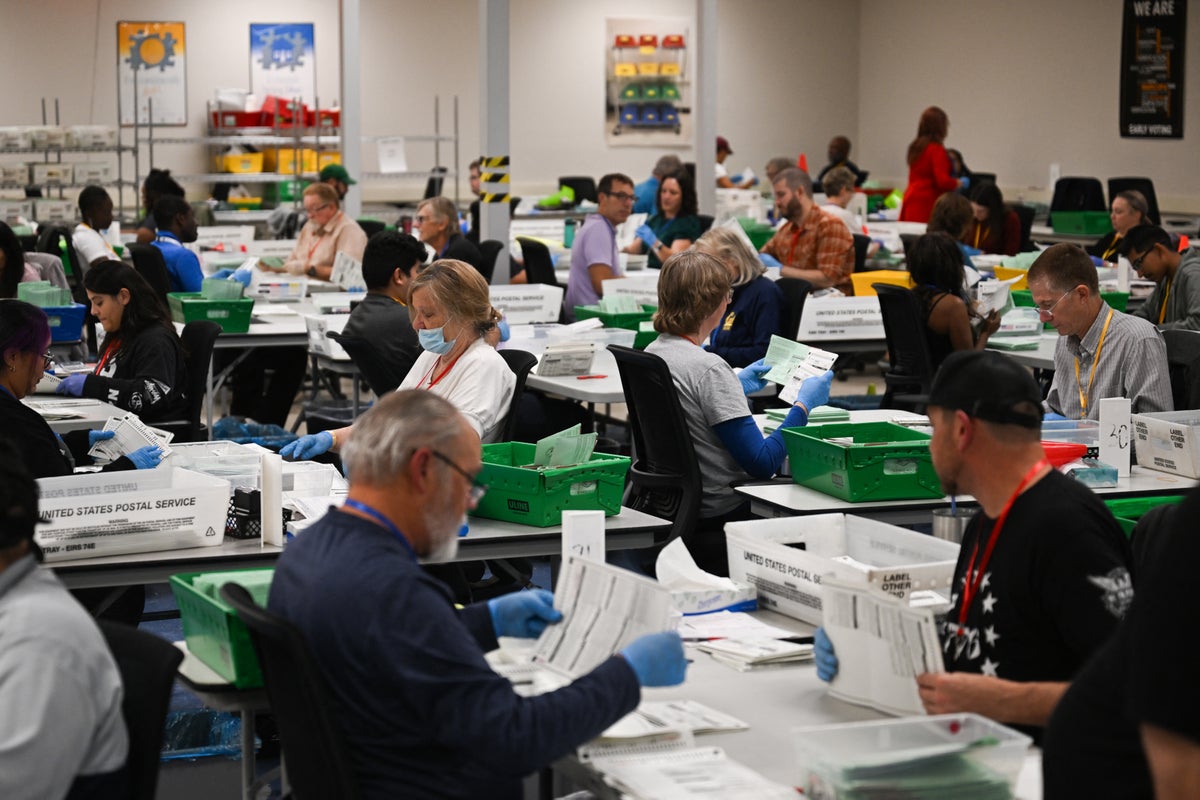
The federal government is building a database of every adult citizen in the country, and state election officials will get their hands on it long before you can check if your name is even on it.
A newly leaked Department of Homeland Security memo reveals that the first phase of this massive federal voter list project will be operational by June 30, 2026. The plan is part of an executive order aimed at overhauling how mail-in voting works across the country. The White House wants to stop the U.S. Postal Service from delivering mail-in ballots to anyone who isn't on an approved federal citizenship registry.
But there's a glaring flaw. The infrastructure to let everyday people log in and fix database errors won't be ready when the state governments get the data. This means state bureaucrats will be scrubbing, matching, and shifting voter rolls based on highly flawed federal records while you're left completely in the dark.
The Secret Timeline of the National Voter List Project
The core issue comes down to a classic case of bad planning and rushed execution. According to the June 8 memo from Homeland Security, the administration is on track to finish building its state-facing data portal by the end of this month. This portal compiles records from the Social Security Administration, the State Department, and U.S. Citizenship and Immigration Services.
State officials will use this database to cross-reference local voter registration files. The goal is to flag anyone whose citizenship status looks questionable. The problem is that the public portal—the website where you could theoretically log in, see your file, and submit a correction—is delayed. The government explicitly admitted in the memo that building a citizen-facing portal by June 30 isn't feasible. They hope to roll it out later this year, but they haven't set a hard date.
Think about what that actually means for a second. State officials will have weeks or even months to look at data that might say you aren't a citizen, even if you've lived and voted here your entire life. You won't know there's a problem until your mail-in ballot simply fails to show up, or you get a notice saying you've been purged from the voter rolls.
Why Federal Databases Make Terrible Voter Rolls
The administration claims this system is necessary to prevent noncitizens from voting. But election experts and data scientists have pointed out for years that federal databases are riddled with old, incomplete data that was never meant to be used this way.
Take the Systematic Alien Verification for Entitlements program, often called SAVE. The administration wants states to use this system to verify voter eligibility. But SAVE was built to check if legal immigrants qualify for government benefits like Medicaid or food stamps. It was never intended to act as a comprehensive directory of every single born-and-raised American citizen.
Federal records are notoriously slow to update. If you recently got naturalized, it can take months for the different branches of the federal government to sync up your files. Data gaps are incredibly common. Past attempts by states like Texas and Florida to use federal databases to clean up their voter rolls resulted in massive disaster. Thousands of perfectly legal citizens were wrongly flagged as noncitizens because the federal data didn't reflect their current legal status.
The Battle in the Courts Is Moving Fast
Pro-voting groups and the Democratic Strategic Campaign Committee didn't wait around for the system to go live. They sued the administration almost immediately after the executive order was signed back in March.
So far, the legal challenge has hit a wall. U.S. District Judge Carl Nichols declined to halt the order in late May. His reasoning was simple: because federal agencies hadn't actually started sharing the lists yet, any claim of harm was premature. He noted that while the system might have flaws and omit specific people, courts couldn't block a policy that hadn't been implemented yet.
That landscape shifted with the release of the June 8 memo. Now that the government has a concrete June 30 deadline for phase one, the D.C. Circuit Court of Appeals has fast-tracked the case. Voting rights lawyers argue that waiting until people are already blocked from voting is a recipe for mass disenfranchisement right before the midterm elections.
Local Officials Are Bracing for Chaos
While judges debate the Constitution, local election workers are panic-reading the new guidelines. For over two centuries, states have run their own elections. The U.S. Constitution leaves the time, place, and manner of elections up to individual state legislatures, not the president.
Introducing a mandatory federal registry introduces what local administrators call a logistical nightmare. The new rules imply that if a state doesn't comply with the federal citizenship list or fails to provide its mail-in voter data to the Postal Service, the USPS might just stop delivering that state's ballots altogether.
Some states are already pushing back, refusing to cooperate with the database system due to privacy laws and cybersecurity concerns. The administration has responded by suing a majority of U.S. states to force them to hand over their local voter registration databases. It's a massive, unprecedented legal tug-of-war over who controls the ballot box.
How to Protect Your Right to Vote Right Now
You can't log into the federal portal yet, but you don't have to sit around and wait to get purged either. Taking a few proactive steps can save you a massive headache this fall.
First, check your local voter registration status immediately. Don't wait until the fall registration deadlines. Go to your official state or county election website and verify that your name, address, and party affiliation are exactly correct. If you've moved recently, update your information right away so your local records are flawless.
Second, consider tracking your ballot. Many states offer free services like "Where's My Ballot" that send text or email notifications when your mail-in ballot is printed, mailed, and received. If the federal rules disrupt the postal delivery of your ballot, these tracking systems will give you an early warning that something is wrong.
Third, know your backup options. If your mail-in ballot never arrives because of these database matching errors, find out if your state allows early in-person voting or if you can cast a regular ballot at your polling place on election day. If you show up to vote and find your name has been removed, ask for a provisional ballot. Every eligible voter has the right to cast a provisional ballot if their registration is questioned at the polling place.
Keep a close eye on your local news over the next month as the June 30 deadline passes. The rules around mail-in voting are changing rapidly, and staying informed is the only way to make sure your voice actually gets counted.


