Every semiconductor journalist on the beat just swallowed the same press release hook, line, and sinker.
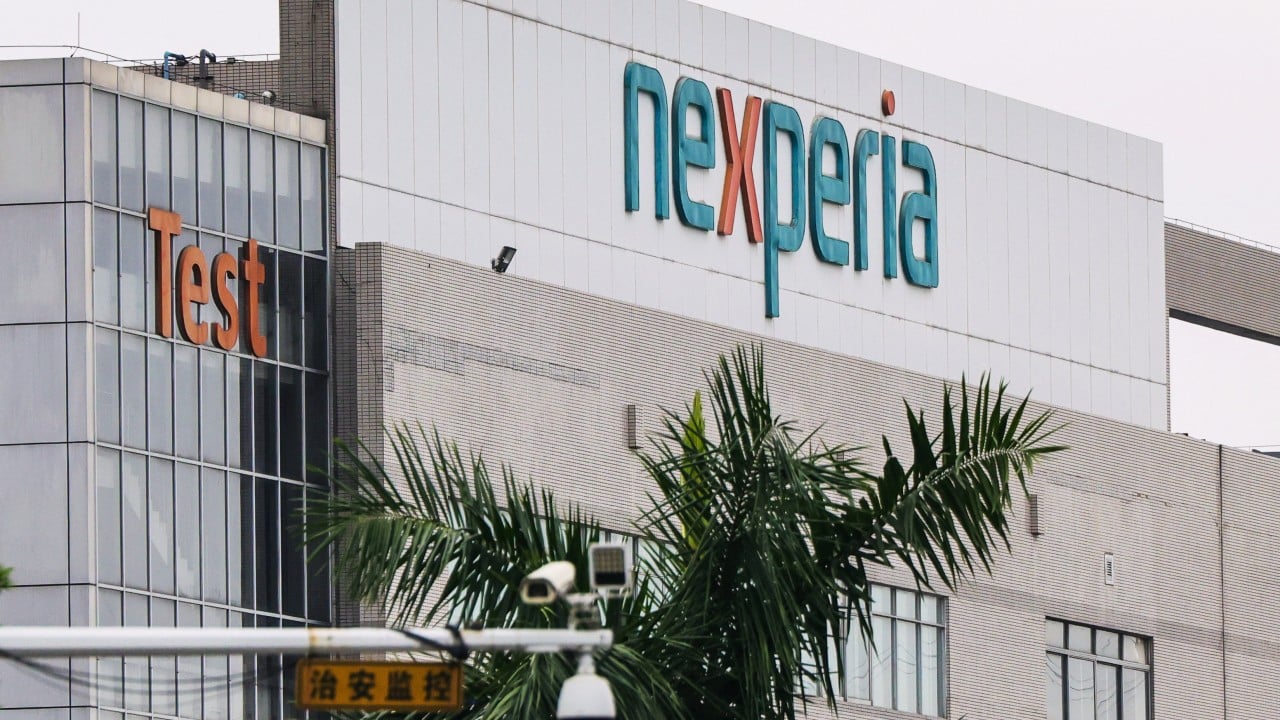
The headline writes itself: Nexperia’s Chinese unit claims full supply chain "localisation" while its rift with its Dutch parent company deepens. Cue the hand-wringing op-eds about permanent decoupling, the death of European chipmaking, and Beijing’s unstoppable march toward semiconductor autarky. If you found value in this article, you should look at: this related article.
It is lazy consensus. Worse, it is fundamentally wrong about how power semiconductors actually get made.
If you believe a discrete component packaging facility in Guangdong suddenly severed its umbilical cord to European wafer fabrication and global raw materials just because a corporate PR team used the word "localisation," I have a bridge in Shenzhen to sell you. For another perspective on this event, check out the latest coverage from The Motley Fool.
The real story isn't that Nexperia China achieved independence. The real story is how corporate governance fractures force subsidiaries to weaponize supply chain jargon for domestic survival—and why procurement teams who panic-buy based on these headlines are about to burn millions of dollars.
The Anatomy of a Corporate Divorce
To understand the noise coming out of Nexperia, you have to look at the structural absurdity of its ownership.
Nexperia spun out of NXP Semiconductors in 2017. Two years later, Chinese firm Wingtech Technology acquired it. For a brief moment, the marriage looked brilliant on paper: Dutch engineering heritage and high-volume European wafer fabs (Hamburg and Manchester) paired with massive Chinese assembly, testing, and packaging (ATP) scale in Guangdong, alongside massive access to China’s booming electric vehicle market.
Then geopolitics crashed the wedding.
Western governments—led by the UK forcing the divestment of Newport Wafer Fab and Dutch export control tightening—made it clear that Chinese ownership of strategic European silicon assets would no longer fly. Regulatory walls went up. Governance firewalls hardened. Suddenly, the Dutch headquarters in Nijmegen and the Chinese operational arm weren't operating as a unified global enterprise; they were behaving like estranged spouses fighting over custody of the customer base.
When Nexperia’s Chinese unit boasts about "localisation," they aren't announcing an engineering breakthrough. They are executing a defensive corporate maneuver. They are telling local EV giants like BYD and Geely: "Do not drop us from your bill of materials. Even if The Hague or Washington sanctions our Dutch parent, our Chinese factories will keep shipping."
It is survival marketing disguised as industrial strategy.
Why "Localisation" in Discrete Semiconductors Is Mostly a Myth
Let’s strip away the geopolitical drama and look at the actual physics and economics of the business. Nexperia isn't making 3-nanometer AI processors for Nvidia. They dominate the unglamorous, hyper-essential world of discretes, logic devices, and MOSFETs—the diodes, transistors, and ESD protection chips that go into every car door, smartphone charger, and industrial motor on earth.
These components sell for fractions of a cent. Margins are won and lost on yield, scale, and utilization rates, not bleeding-edge lithography.
When Nexperia China claims a "localized" supply chain, what does that actually mean on the factory floor?
- Back-End Packaging Is Not Front-End Fabrication: Nexperia’s Guangdong facility is a monster of assembly and testing. Putting silicon dies into plastic packages and testing them is capital-intensive, yes, but it is the back end of the chain. You cannot package a wafer you cannot fab. While China has poured billions into mature-node foundries (28nm and above) through players like SMIC and Hua Hong, transitioning an entire automotive-grade MOSFET catalog from a specialized European fab like Hamburg to a local Chinese foundry takes years, not months.
- The Automotive Qualification Bottleneck: You do not swap a wafer source in an automotive supply chain overnight. Every single component requires AEC-Q101 qualification. Tier-1 automotive suppliers like Bosch and Continental demand exhaustive reliability testing, thermal cycling, and failure analysis before approving a process change notification (PCN). If Nexperia China truly swapped out all foreign silicon for local wafers without telling customers, they would be violating every master supply agreement they hold.
- Substrates and Chemicals Still Cross Borders: Even if a wafer is etched in Shanghai and packaged in Dongguan, where did the ultra-pure polysilicon come from? Where were the specialty photoresists, lead frames, and molding compounds sourced? Japan, Germany, Taiwan, and the United States still hold choke points over high-purity semiconductor chemicals and specialty alloys. Calling a final assembly loop "100% localized" ignores the Tier-2 and Tier-3 bill of materials sitting underneath it.
I have sat in war rooms with automotive procurement directors who spent seven figures qualifying "localized" secondary sources in Asia, only to discover during a logistics freeze that both their primary European supplier and their "independent" Chinese backup were buying their raw copper lead frames from the exact same mill in Malaysia.
That is the dirty secret of semiconductor localization: most of the time, it is just assembly-level relabeling.
What Everyone Gets Wrong About the Nexperia Split
When news breaks of internal rifts between a Western tech subsidiary and its Chinese parent or unit, industry observers immediately ask the wrong questions. Let’s dismantle the three biggest misconceptions dominating boardrooms right now.
Misconception 1: Nexperia is splitting into two completely independent companies.
The Reality: Neither side can afford a clean break. Nexperia’s Dutch headquarters relies heavily on the cash flow and sheer volume absorption of the Chinese market, which accounts for roughly a third to half of global discrete demand depending on the quarter. Conversely, the Chinese unit relies on the Dutch parent’s intellectual property, legacy automotive qualifications, and global distribution channels. If they truly sever ties, the Dutch side loses its biggest growth engine and high-volume packaging capacity, while the Chinese side becomes just another domestic commodity chipmaker fighting a brutal price war against local rivals like Yangjie Technology and China Resources Micro.
Misconception 2: "China-for-China" supply chains protect buyers from geopolitical shocks.
The Reality: Creating a bifurcated supply chain actually doubles your operational fragility. Instead of one unified global inventory pool that can flex when demand spikes in Europe or drops in Asia, you now have two rigid, suboptimal silos. If you are a global electronics manufacturer building products in Vietnam, Mexico, and Hungary, a "China-for-China" Nexperia unit does nothing for you—in fact, it forces you to qualify two separate part numbers for the exact same electrical function, bloating your inventory costs and engineering overhead.
Misconception 3: Localizing mature-node chips is easy because the technology is old.
The Reality: Mature nodes (40nm to 180nm and discrete power devices) are deceptively hard to replicate at automotive quality levels. Making a diode is easy. Making ten billion diodes with a defect rate measured in parts per billion—so an airbag sensor never fails in a Siberian winter or a Death Valley summer—requires decades of institutional process knowledge baked into specific fab equipment. You cannot buy that off the shelf with state subsidies.
The Financial Reality Behind the Rhetoric
Look at the balance sheet, not the press release.
Wingtech Technology took on massive debt to acquire Nexperia. For years, Nexperia was the crown jewel keeping Wingtech’s financials afloat while its smartphone ODM (original design manufacturer) business suffered from razor-thin margins.
When Western regulators began boxing Wingtech out of European semiconductor M&A—most notably forcing the sale of the UK's Newport Wafer Fab at a steep discount—Wingtech’s leadership faced an existential crisis. If European regulators decided to ring-fence Nexperia’s Dutch headquarters entirely, Wingtech risked losing operational control over the very asset it mortgaged its future to buy.
Viewed through that lens, the "localisation" announcement from the Chinese unit makes total sense. It is a valuation defense mechanism. Management is signaling to domestic investors and state-backed lenders that the Chinese operations retain standalone value regardless of what European regulators do in Nijmegen or Hamburg.
How Smart Supply Chain Leaders Should Respond
If you run hardware engineering, sourcing, or supply chain strategy, do not treat this news as a signal to rip Nexperia off your approved vendor list. And definitely do not fall for the marketing claim that their Chinese unit is now a self-contained island immune to Western export controls.
Instead, execute these three moves immediately:
- Audit down to the fab and ATP level, not the corporate logo. Stop tracking risk by company name. Require your component suppliers to disclose the exact country of origin for both front-end wafer fabrication (diffusion) and back-end assembly/test for every critical SKU. If a single part number crosses between Hamburg and Guangdong, flag it as a cross-border chokepoint.
- Lock in drop-in pin-for-pin alternatives now. Discrete components are the easiest parts on your PCB to dual-source—if you do the engineering work before a crisis hits. Qualify non-Chinese-owned equivalents from ON Semiconductor, Infineon, STMicroelectronics, or Diodes Incorporated while lead times are normal. Never rely on a single corporate entity claiming it has "two separate regional chains."
- Exploit the price war. When a Chinese subsidiary aggressively pushes "localisation" to defend market share, it almost always comes with aggressive pricing to keep domestic factories running at high utilization. If you build products in Asia for Asian markets, use this internal friction to negotiate 10% to 15% cost reductions on non-critical discrete components—just keep a non-Chinese backup qualified in the background.
The Uncomfortable Truth About Decoupling
There is a catch to my skepticism, and it would be dishonest to ignore it: intent eventually becomes reality.
Right now, Nexperia China’s claim of full supply chain localization is mostly aspirational rhetoric designed to soothe nervous customers and investors. The underlying silicon, specialty chemicals, and automotive certifications remain deeply entangled with Europe and the broader global ecosystem.
But give Beijing’s industrial policy five years and unlimited capital, and today’s PR exaggeration becomes tomorrow’s baseline fact. Every regulatory block from The Hague or Washington accelerates the exact technological independence Western policymakers claim they want to prevent.
Just don't confuse the press release with the finished product. Until you see independent, AEC-Q101 qualified automotive power MOSFETs rolling off 100% domestic Chinese wafer fabs using domestic photoresists and domestic substrates at competitive yields, "localisation" is just a buzzword meant to keep you from looking behind the curtain.
Check your bills of materials, qualify your backups, and stop letting corporate PR departments do your risk management for you.