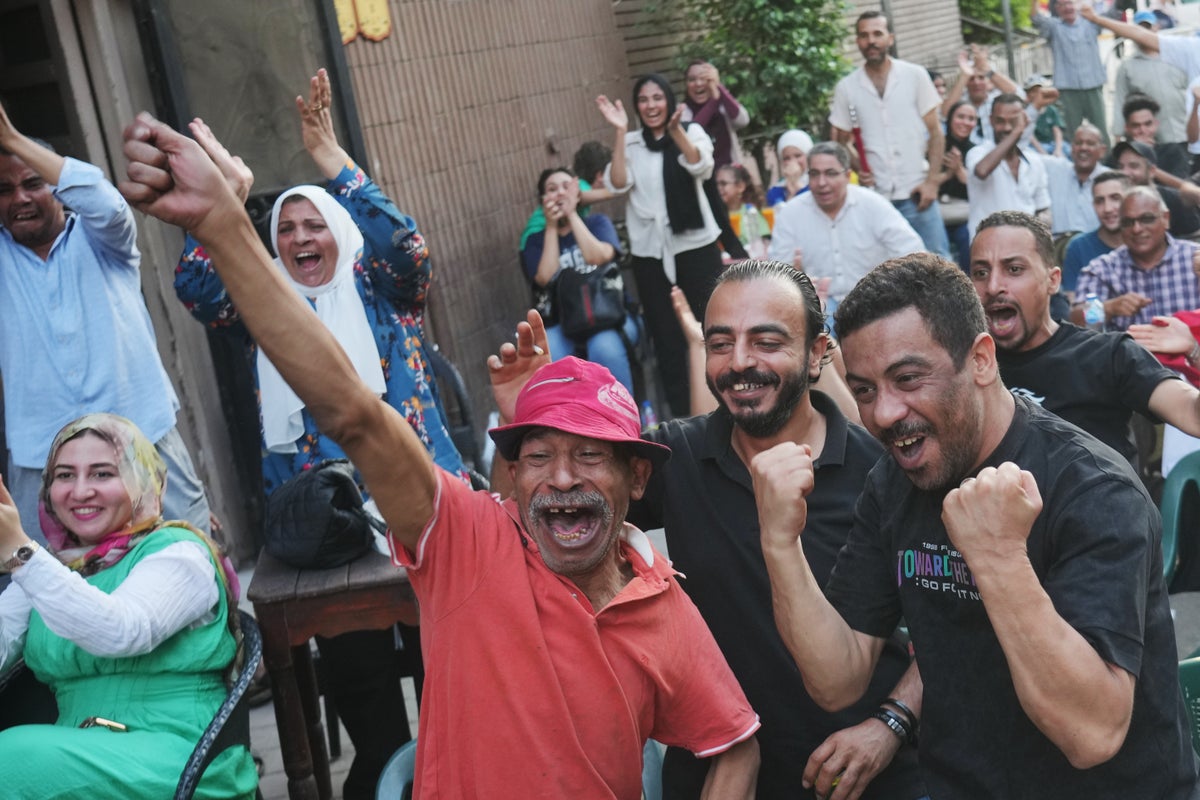
The air inside the Ahwa was thick with the scent of roasted coffee beans, charred fruit tobacco, and the collective sweat of eighty men packed into a space built for thirty. Outside, the Cairo night was unusually still. The usual chaotic symphony of car horns along the Nile had faded into an eerie, expectant hush. Everyone was inside. Everyone was looking at the same flickering television screen mounted precariously on a weathered wooden beam.
Tarek adjusted his grip on his cold glass of mint tea. His fingers left a slick trail of condensation on the glass. He hadn't taken a sip in twenty minutes. Next to him, an old man whose face was a map of deep-set wrinkles clutched a string of prayer beads, his thumbs moving in a frantic, silent rhythm. They didn't know each other’s names. In Cairo, on a night like this, names did not matter. Belonging did.
Egypt was playing Argentina. It was the World Cup knockout stage, a sentence that still felt surreal to utter aloud. For decades, football here had been a beautiful torment, a cycle of near-misses, generational heartbreaks, and the agonizing phrase "next time." But tonight, next time was right now.
The Anatomy of an Ahwa
To understand what happened next, you have to understand the Cairo coffee house—the ahwa. It is not a place where you buy a five-dollar latte and sit with a laptop blocking out the world. It is an extension of the Egyptian living room, a communal theater where life is debated, laughed at, and endured. The plastic chairs are always pushed too close together. The smoke from the water pipes forms a low-hanging cloud that catches the glow of the television.
When the national team plays, these spaces transform into secular temples. The match isn't just entertainment; it is a mirror reflecting the country’s anxieties, its desperate desire for recognition, and its fierce, stubborn pride.
The game started with the kind of suffocating tension that makes your ribs ache. Argentina, draped in their iconic sky-blue and white stripes, moved with a terrifying, rhythmic precision. Every pass felt like a scalpel cutting through the Egyptian midfield. On the screen, superstars whose faces adorned billboards from Tokyo to New York glided across the grass.
Egypt countered with something else. Grit. Desperation. A defensive line that functioned less like a tactical system and more like a human wall willing to take a ball to the face if it meant saving a goal.
Every time an Egyptian defender slid into a tackle, the ahwa erupted in a synchronized shout of approval. Men leaned forward, their chairs scraping against the tiled floor. The old man’s prayer beads clicked faster. Tarek found himself holding his breath every time the ball drifted near the Egyptian penalty box.
Then, the impossible happened.
The Explosion
It was the forty-third minute. A loose ball in midfield. An Egyptian winger, fueled by nothing but raw adrenaline, chased down a lost cause. He intercepted a lazy back-pass, turned his defender with a desperate twist of his hips, and lofted a cross into the box.
Time slowed down.
In the ahwa, eighty pairs of eyes tracked the arc of the ball. A hypothetical observer looking from the outside might have just seen a piece of leather flying through the air, but to the people in that room, that ball carried the weight of every economic hardship, every political frustration, and every collective disappointment of the last ten years. It was a missile of pure hope.
The Egyptian striker rose. He didn't jump; he seemed to suspend himself in the air by sheer force of will. His forehead met the ball with a sharp, clean crack that echoed through the stadium speakers.
The net bulged.
Cairo exploded.
It was not a normal cheer. It was a primal, seismic release of tension that had been building for generations. Men threw themselves into the arms of strangers. Tarek found himself lifted off his feet by a giant of a man he had never seen before. Tables flipped over, spilling tea and scattering dominoes across the floor. Someone ignited a red flare out on the sidewalk, casting a bloody, triumphant glow over the ecstatic faces inside.
The ahwa keeper, a man who usually moved with the slow, deliberate pace of someone who had seen it all, was jumping on top of a plastic table, waving a stained dish towel like a flag. For those few minutes, the score dictated reality. Egypt 1, Argentina 0.
We were winning. We were beating the giants of the world. In that moment, every man in that coffee house felt invincible. The systemic struggles of daily life faded into insignificance. They were no longer just onlookers in global history; they were writing it.
The Longest Forty-Five Minutes
The second half was an exercise in psychological torture.
Argentina came out like a team insulted by the audacity of their opponents. They dominated possession, weaving a web of passes that left the Egyptian players chasing shadows. The atmospheric pressure inside the ahwa shifted. The joyous singing died down, replaced by a tense, heavy silence.
The sensory details shifted too. The sweet smell of tobacco now felt suffocating. The heat in the room rose as eighty bodies tensed in unison.
Consider what happens to the human heart rate during moments of extreme collective stress. Doctors have long documented spikes in cardiovascular events during major football matches. It sounds absurd to those who don't care for the sport, but the link between national identity and eleven men on a pitch is a profound psychological reality.
Every ticking second on the match clock felt like an hour. Egypt’s goalkeeper made a fingertip save, tipping the ball over the bar. The ahwa gasped in unison, a collective intake of breath that seemed to suck the oxygen out of the room.
"Just twenty minutes left," Tarek muttered to no one.
"Don't look at the clock," the old man snapped, his voice trembling. "The clock is the enemy."
The Egyptian team was visibly fracturing. Players were cramping, their legs heavy, their jerseys soaked through with sweat. They were defending with their souls, but against a team of Argentina’s caliber, soul is a finite resource.
The Silence
The equalizer didn't come from a moment of genius. It came from a cruel, ordinary mistake.
A deflected pass. A heavy touch in the Egyptian box. A sudden, sharp whistle from the referee.
Penalty.
A collective groan, deep and guttural, rippled through the coffee house. It was the sound of a dream hitting a concrete wall. The referee didn't even consult the video monitors. The decision was final.
The Argentine talisman stepped up to the spot. On the television screen, his face was a mask of cold, unblinking focus. In contrast, the Egyptian goalkeeper looked agonizingly young, his shoulders slumped under the impossible weight of a hundred million expectations.
The referee blew his whistle. The striker ran up. A sharp strike.
The ball went left. The goalkeeper went right.
1-1.
The ahwa didn't scream. It didn't curse. It just went silent.
It was the kind of absolute silence that you only find in places where a profound tragedy has just occurred. The sudden absence of sound was louder than the explosion of joy had been an hour earlier. The smoke from the water pipes drifted lazily through the air, no longer a celebratory mist but a shroud.
The old man stopped moving his prayer beads. They hung limp from his fingers, resting against his faded traditional robe. Tarek finally took a sip of his tea. It was warm, bitter, and flat.
There were still ten minutes left in the match, but everyone in the room knew the truth. The energy had been drained from the space. The psychological dam had broken.
When Argentina scored their second goal five minutes later—a brilliant, undefendable curling shot into the top corner—the reaction in the ahwa was almost nonexistent. A few men quietly stood up, paid their bills in silence, and walked out into the cool night air. They didn't want to watch the corpse of their dream be paraded around the pitch.
The Walk Home
When the final whistle blew, sealing Egypt’s elimination, there were no tears in the coffee house. There was only a profound, exhausted numbness.
The match was over. Reality, which had been so politely waiting outside the door for ninety minutes, came rushing back in. Tomorrow, the prices of bread would still be high. The traffic would still be unbearable. The daily grind would resume without the glittering distraction of a World Cup run to soften the edges.
Tarek stood up and nodded to the old man. The old man nodded back. A silent acknowledgment of shared trauma.
Walking out onto the streets of Cairo, the silence was staggering. The city, usually so vibrant and loud at midnight, felt hollowed out. The flags hung limp from apartment balconies.
But as Tarek walked past another ahwa down the block, he saw the owner already stacking the plastic chairs, sweeping away the discarded sunflower seed shells from the floor. A television on the wall was already playing highlights of a local league match scheduled for the following week.
The dream had died, but the machinery of hope was already resetting itself. That is the true burden and beauty of this place. The heartbreak is guaranteed, but so is the return to the plastic chairs, the bitter tea, and the absolute certainty that next time, things will be different.