Elections in America rarely whisper; they usually arrive like a heavy iron door slamming shut in an empty hallway.
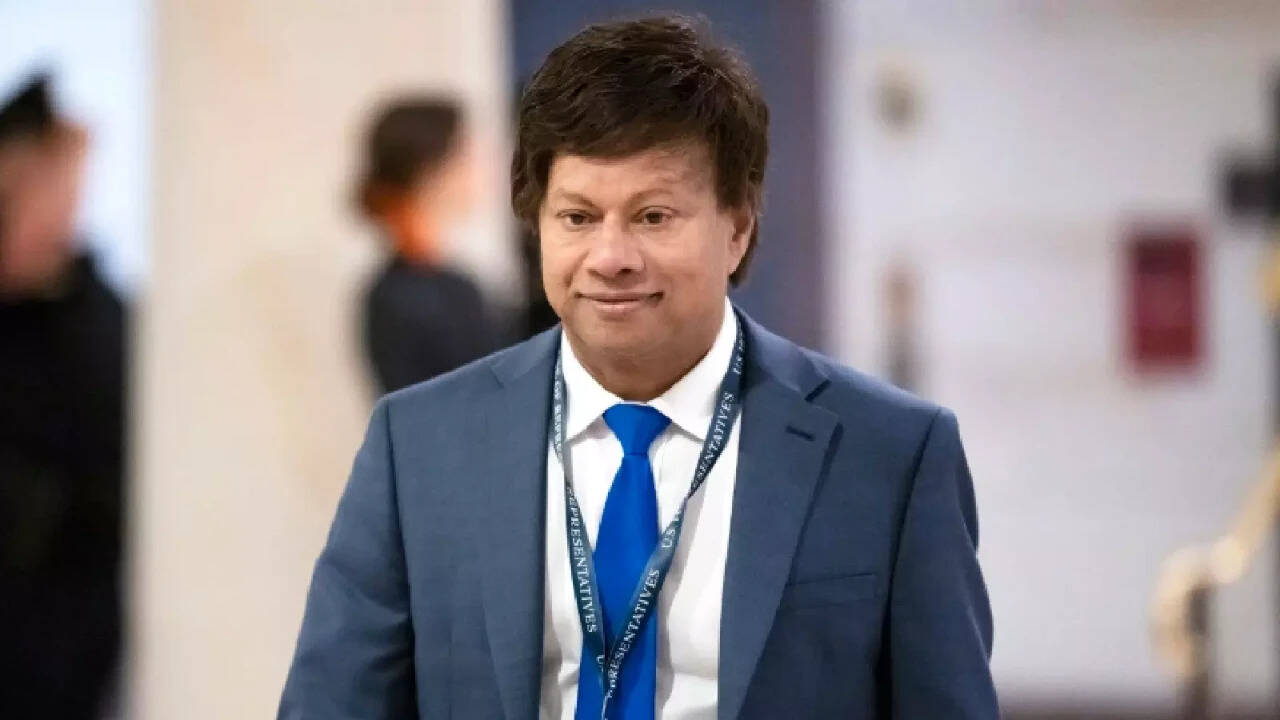
On a humid Tuesday evening in Michigan, that sound echoed across the 13th Congressional District. When the ballots were finally tallied and the Associated Press projection crossed the newsrooms, U.S. Representative Shri Thanedar stood on the other side of an irreversible arithmetic. State Representative Donavan McKinney had captured roughly 52 percent of the vote, edging out the incumbent by a decisive four-percentage-point margin.
For Thanedar, a self-made multimillionaire chemist who immigrated from India with little more than ambition and a student visa, it marked a sudden halt to a congressional tenure built on self-funding and sheer ubiquity. For Detroit, it was something else entirely. It was the reclamation of a narrative.
To understand why this primary mattered beyond the borders of Wayne County, you have to look at the geometry of representation in a majority-minority district where the pulse of the city beats against the concrete of its neighborhoods. When Thanedar first won the seat in 2022, he did so in a fractured nine-way primary where a crowded field of Black candidates inadvertently split the local vote, leaving a city with a rich history of Black political leadership temporarily without a Black voice in its congressional seat. That structural friction lingered. It sat quietly in barbershops, church pews, and block club meetings across the city.
Enter McKinney, a 34-year-old lifelong Detroiter, a product of public schools, and a state lawmaker backed by high-profile progressives including Senator Bernie Sanders and Representative Rashida Tlaib. McKinney did not just run a campaign; he ran a mirror. He spoke directly to the economic exhaustion of families watching their grocery bills climb while federal dollars flowed overseas. He leaned heavily into the policies championed by the Democratic Socialists of America, pushing a platform centered on universal healthcare, aggressive climate investments through a Green New Deal, and a hard stop to unconditional military funding for foreign conflicts.
The clash laid bare a widening fault line within the modern Democratic Party. On one side stood the traditional establishment apparatus—figures like House Minority Leader Hakeem Jeffries, who lent his endorsement to Thanedar. On the other side stood an ascendant, restless progressive wing that views incrementalism as a luxury the working class can no longer afford.
Thanedar’s political evolution had always been uniquely mercurial. Once aligned with progressive organizing circles, he distanced himself from the Democratic Socialists of America following ideological fractures over foreign policy, chose to self-fund large portions of his bids, and occasionally rankled party leadership with unilateral moves like introducing long-shot articles of impeachment against former President Donald Trump. While he retained institutional backing from select congressional colleagues, he struggled to build deep roots within the grassroots fabric of the district he served.
The mathematics of primary nights can often feel cold, reduced to bar charts and percentage points on cable news tickers. But behind those numbers were thousands of individual choices made by people tired of feeling invisible. When the race was called, Thanedar acknowledged the changing tide with characteristic candor, pointing directly to the organized movement that swept through his district just as it has in other urban centers across the country.
For the broader political landscape, the result serves as another data point in an ongoing nationwide reckoning. Incumbency is no longer an impenetrable shield. Name recognition, digital ad blitzes, and heavy personal bank accounts can be outmatched by a candidate who embodies the physical and emotional reality of the streets they wish to represent.
As the autumn air begins to turn in Michigan, the political map shifts forward. Because the 13th District leans overwhelmingly blue, McKinney moves on as the heavy favorite for the general election in November, stepping into a Washington hall that is slowly, unevenly, and often painfully being reshaped by a new generation.
And Thanedar, reflecting on a journey that took him from a impoverished childhood in India to the floor of the United States Congress, faces the quiet closure of a chapter. The campaign signs will come down from the utility poles along Woodward Avenue. The phone banks will go silent. But the underlying pressure of what ordinary citizens demand from power remains entirely unresolved, humming just beneath the surface of American life.