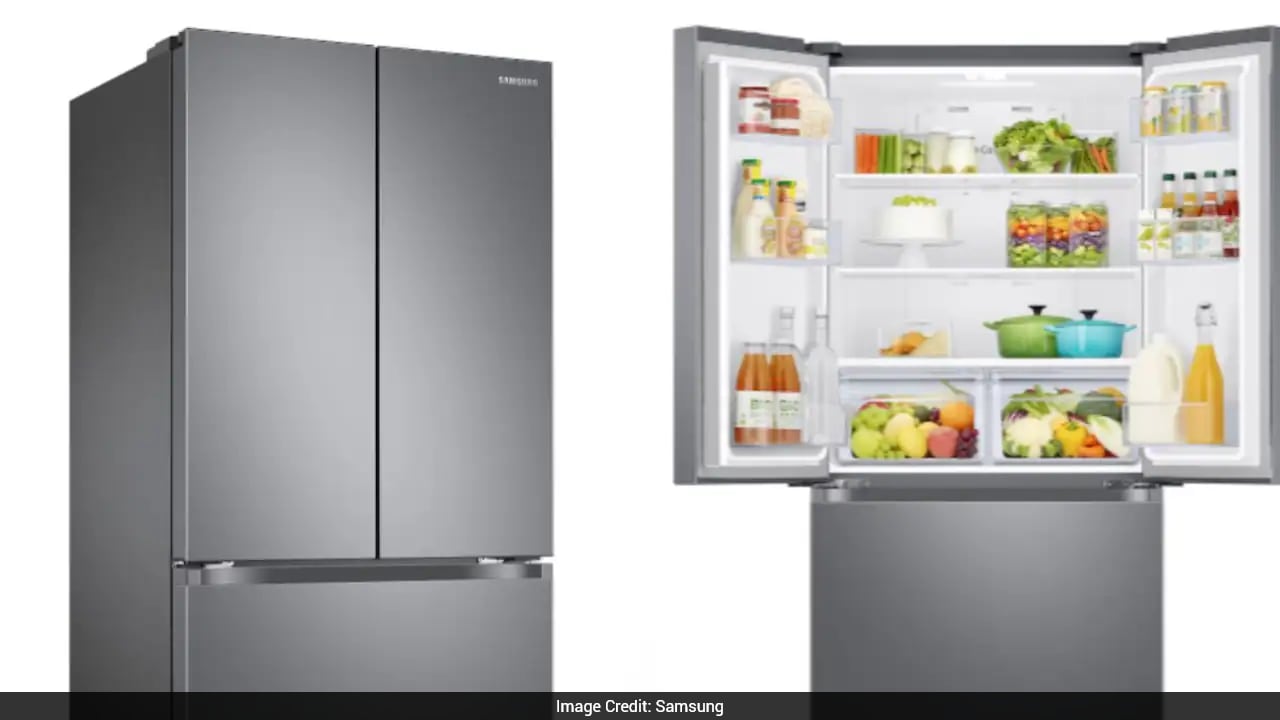
The coffee maker still hummed. The toaster remembered its routine. But the refrigerator—the gleaming, titanium-clad center of gravity in a modern Seoul kitchen—had simply stopped caring.
Picture Min-jun standing in the dim light of a Tuesday morning, staring at a blank glass touch panel. Inside that silent steel box, five hundred dollars’ worth of fresh groceries, carefully organized meal prep, and the fragile rhythm of a working family’s week are drifting toward spoilage. There is no error code. There is no flashing red warning light to negotiate with. There is only a black screen and a rising, quiet panic.
Across South Korea, thousands of homes experienced this exact brand of modern vertigo following what was supposed to be a routine software update. An automated patch, beamed invisibly through the ether to smart home appliances designed to make life easier, instead reduced them to expensive, insulated cupboards.
We built our homes to think, and then we forgot what happens when they lose their minds.
The Promise We Bought
It started with a simple, seductive pitch. Your refrigerator should know when your milk is expiring. It should order eggs before you run out. It should sync your grocery list with your smartphone while you are stuck in traffic on the Gangbyeon Expressway.
We welcomed these machines into our kitchens because we were tired. Modern life leaves very little margin for error, and the promise of automation was a promise of sanctuary. We traded dumb, mechanical reliability for smart, connected convenience. A traditional compressor and a mechanical thermostat have been keeping food cold for nearly a century without needing a Wi-Fi password. They do one thing, and they do it stubbornly well.
But the modern smart refrigerator is not an appliance anymore. It is a computer with a cold box attached to it.
Consider what happens when that distinction blurs. When a manufacturer pushes a firmware update designed to optimize energy efficiency or add a new recipe-browsing feature, it bypasses the physical reality of the kitchen. It assumes a pristine, uninterrupted digital ecosystem. It does not account for a dropped packet during a server handshake, a corrupted boot sector, or the sheer vulnerability of living inside a home where technology has become the invisible floorboards holding everything up.
When the update failed in South Korea, it did not just break a feature. It broke trust.
The Anatomy of an Invisible Crisis
To understand why a software glitch in a kitchen appliance feels so uniquely violating, you have to look at how we inhabit our spaces.
For decades, domestic technology was governed by a quiet contract: you buy it, you plug it in, and it fades into the background. It becomes part of the architecture of your daily life. A refrigerator is supposed to be backdrop, not protagonist. When it demands your attention by failing entirely, it shatters the illusion of safety we construct around our homes.
In homes from Seoul to Busan, owners faced a surreal bureaucratic nightmare. These were not machines that could be fixed with a wrench or a reset button. Bringing them back to life required technician visits, manual firmware rollbacks, and, in many cases, days of waiting while dairy soured and vegetables went limp.
Imagine explaining to your grandmother, who used the same refrigerator for thirty years without a single software patch, why your high-end smart hub has bricked itself because of a midnight data transmission across the Pacific.
The absurdity of the situation highlights a blind spot in our technological ascent. We are rushing to digitize every physical touchpoint of human existence without securing the exits. Every smart device we adopt is a new point of failure, a new tether tying our daily survival to remote servers and lines of code we cannot read, audit, or control.
The Cost of Convenience
There is an economic calculus to all of this that rarely makes it into the marketing brochures.
When a standard refrigerator breaks down, it is a mechanical failure. Parts wear out; compressors fail. It is a known, measurable risk of ownership. But when a smart appliance fails because of software, the failure is systemic, widespread, and entirely outside the owner's agency. You cannot open the hood and solder a loose wire. You are entirely dependent on the manufacturer to reverse whatever invisible mistake they beamed into your kitchen while you were sleeping.
This creates a strange new power dynamic between consumer and corporation. You own the metal, the glass, and the compressor, but the software—the soul that animates the machine—belongs to someone else. And if their update goes sideways, your kitchen goes down with it.
We are sleepwalking into a world where everyday objects possess kill switches managed by distant corporations. Today it is a refrigerator failing to boot after a bad patch. Tomorrow, what happens when the subscription lapses, or the server is retired, or the company decides your model is too old to support the next security protocol?
Coming Back to Earth
There is a quiet rebellion happening in kitchens everywhere, even among those who love gadgets. It is the sudden, sharp appreciation for things that just work.
When the smart screens went dark in South Korea, owners were forced to confront the fragility of their hyper-connected lives. They had to throw away food not because of nature, but because of code. They had to wait for engineers to fix a box that was supposed to make them independent.
Progress is relentless, and we are never going back to the era of ice boxes and rotary dials. Nor should we. The conveniences afforded by modern technology are real, and they free up cognitive space for the things that actually matter.
Yet, the recent crisis serves as a sharp, necessary jolt. It reminds us that our homes are sanctuaries, not beta-test environments. True innovation does not make our lives more fragile; it makes them more resilient.
The next time a glowing screen invites you to connect your toaster to the cloud, or your stove to an app, pause for just a moment. Look at the old analog world waiting quietly just outside the digital boundary.
Sometimes, the best thing a machine can do for you is stay offline, keep quiet, and just keep things cold.