Silence.
That is the first thing you notice in a small Mississippi Delta diner at six in the morning, right before the coffee pots start hissing and the screen door begins its rhythmic, metallic slapping against the frame. It is not the peaceful silence of a Sunday morning, though. It is the heavy, pressurized quiet of people who have spent decades swallowing their frustrations because they were told, by pundits in Washington and neighbors across the street, that their votes were merely ceremonial gestures cast into a predetermined void.
For more than three decades, the political math in Mississippi was treated like a law of physics. You did not argue with gravity, and you did not bet on a Democrat winning a statewide U.S. Senate seat in Jackson. Since 1989, when Trent Lott took his oath of office, the Republican Party held an unbroken, ironclad lock on both of Mississippi’s seats in the upper chamber. Generations grew up, went to work, raised children, and retired without ever seeing a Democratic senator represent their state.
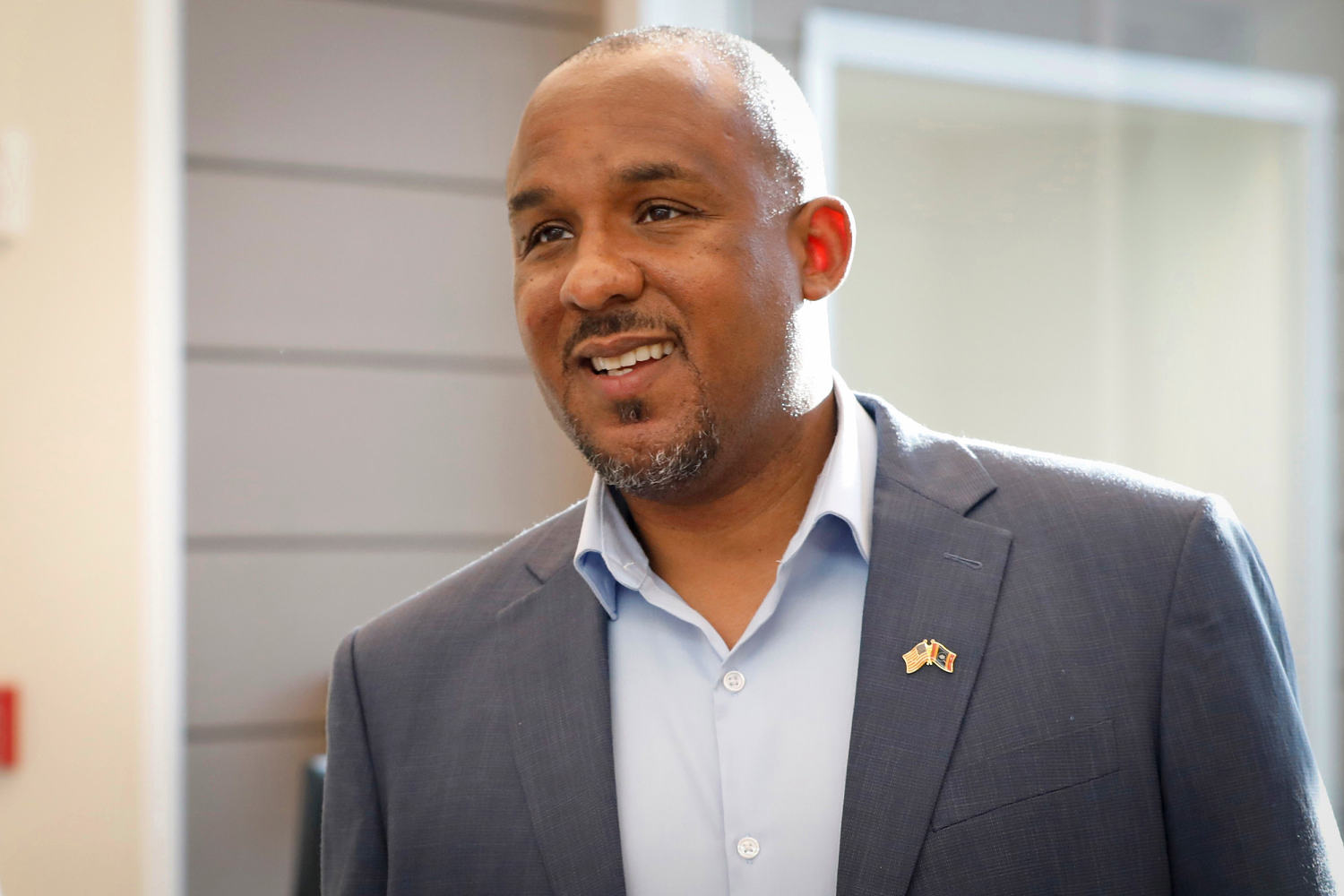
Then came November 2026. And according to election returns certified across the state's eighty-two counties, District Attorney Scott Colom did what every national forecaster said could not be done. He won.
To understand what happened when Colom broke that thirty-seven-year streak, you cannot look at a spreadsheet of precinct returns in isolation. Spreadsheets do not smell like humid pine needles after a late-autumn rain. Spreadsheets do not capture the exhaustion of a rural nurse driving forty-five miles to the nearest emergency room because her county hospital shut its doors three winters ago. To grasp the real story, you have to step onto the red clay and look at the invisible stakes that finally tipped the scale.
The Weight of a Foregone Conclusion
Consider a hypothetical voter—let us call her Evelyn—living in a mid-sized town along the Highway 82 corridor. Evelyn is a retired schoolteacher who has voted in every single election since Jimmy Carter was on the ballot. For years, her participation felt like pouring water into a bucket with no bottom. National campaign committees wrote off her zip code before the primaries even ended. Television ads bypassed her local stations in favor of swing states a thousand miles away.
When a state is labeled "safe" by both major political parties, a quiet rot sets in. Accountability evaporates. If the incumbent knows the general election is already decided, why hold town halls in counties that did not vote for you? Conversely, if the challenger knows the national party will never fund a serious ground game, why knock on doors in neighborhoods where registration rolls look unfavorable?
This is the psychological trap of one-party dominance, and it affects everyone—Republicans, Democrats, and independents alike. Think of it like a thermostat stuck on a single setting for thirty-seven years. Even when the weather outside shifts dramatically, the machinery inside the walls refuses to adjust because no one believes the dial actually turns.
For decades, Mississippi’s political observers pointed to demographic ceilings and polarized voting habits as proof that the dial was welded shut. Yet beneath the surface of those predictable electoral maps, pressure was building. Rural healthcare access was shrinking. Infrastructure along secondary highways was crumbling. Young college graduates from Starkville, Oxford, and Hattiesburg were packing their bags for Atlanta, Nashville, and Dallas because local economic opportunities felt stagnant.
People were not necessarily looking for an ideological revolution. They were looking for someone who would simply show up and argue their case as if their lives depended on it.
A Prosecutor in the Court of Public Opinion
Scott Colom did not enter the 2026 Senate race as a celebrity politician or a self-funding billionaire. His background was rooted in the gritty, unglamorous work of the 16th Circuit Court District, where he served as District Attorney covering Lowndes, Oktibbeha, Clay, and Noxubee counties.
In a courtroom, you cannot win a jury over with abstract national talking points. You have to build a record, piece by piece, speaking plainly to people from wildly different backgrounds who share the same community. Colom, who had previously seen a federal judicial nomination stalled in the Senate by partisan opposition—most notably blocked through the blue-slip process by Republican Senator Cindy Hyde-Smith—knew firsthand how Washington gridlock could reach down and stall a career in Mississippi.
That personal history mattered. When Colom stood in front of crowds in Columbus, Tupelo, or the Gulf Coast, he did not sound like an outsider reading from a consultant's script. He sounded like a neighbor who had been told "no" by the establishment and decided to take his appeal directly to the people.
Critics and Republican strategists, however, viewed his candidacy through a sharply different lens. Throughout the campaign, GOP leaders and conservative commentators argued that Colom’s platform aligned too closely with national Democratic priorities on federal spending, social policy, and regulatory oversight—positions they maintained were fundamentally out of step with Mississippi's conservative values and economic interests. Republican messaging emphasized the state's recent economic recruitment wins, lower tax burdens, and judicial conservatism, warning voters that sending a Democrat to Washington would hand leverage to a national party agenda that rural Mississippians had consistently rejected.
Both narratives collided in a campaign that quickly stopped looking like a polite formality and started feeling like a genuine referendum on the state's future.
How the Map Actually Moved
If you ask ten political analysts how a Democrat wins in a state that Donald Trump carried comfortably in previous presidential cycles, nine of them will start talking about turnout percentages. And they are partly right. Numbers do tell part of the truth, provided you know what those numbers represent in human terms.
Historically, Mississippi elections have operated like two separate rivers running parallel without ever meeting—one predominantly white, conservative, and rural or suburban; the other predominantly Black, Democratic, and concentrated in the Delta, Jackson, and college towns. Because white voters made up a larger share of the active electorate, Republicans could rely on predictable margins to carry statewide races without needing to win over crossover voters.
Colom’s victory did not happen because one river suddenly dried up. It happened because the banks overflowed in three distinct places at once.
First, turnout surged in historically Democratic strongholds where voter apathy had previously dampened participation. Organizers spent months registering voters not through glossy digital ads, but through church basements, barbershops, and community centers—places where trust is earned face-to-face.
Second, suburban counties around Jackson, DeSoto County near Memphis, and the Gulf Coast showed subtle but decisive shifts. Independent and moderate voters, frustrated by rising healthcare premiums and local infrastructure delays, proved willing to split their tickets. Think of this like a grocery shopper who has bought the same brand of coffee for thirty years, only to notice the price jumping while the can gets smaller. Eventually, habit gives way to a willingness to try the label sitting right next to it on the shelf.
Third, Colom campaigned relentlessly in rural, majority-white counties where Democrats had barely bothered to put up yard signs in recent cycles. He did not win those counties outright, nor did he need to. By shaving five or six percentage points off the traditional Republican margin in places like Monroe, Lee, and Rankin counties, he denied his opponent the cushion needed to absorb surges in Hinds, Leflore, and Oktibbeha counties.
The Human Ledger Behind the Ballots
It is easy, especially from a distance, to treat an election night upset as a sporting event. Pundits love winners and losers, upsets and dynasties. I remember watching election returns in southern newsrooms years ago, watching reporters refresh county-by-county spreadsheets with the detached adrenaline of traders watching stock tickers.
But when you step outside the newsroom into the humid night air, the stakes stop being theoretical.
Consider another hypothetical scene—this one in a small clinic in the Delta where a physician assistant is reviewing charts at the end of a twelve-hour shift. For years, debates over Medicaid expansion and federal hospital funding were treated in Jackson and Washington as ideological chess pieces. To that physician assistant, however, federal policy is not an abstraction. It is the difference between keeping the maternity ward open or telling an expectant mother she has to drive an hour and a half down a two-lane highway in labor.
Republican lawmakers and conservative economists have long argued against expanding federal healthcare programs in Mississippi, contending that state budgets cannot sustain long-term matching costs and that market-driven reforms offer more durable solutions without growing government dependency. Supporters of expansion, including Colom, countered that leaving billions in federal funds on the table was actively starving rural communities of both medical care and high-paying jobs.
When voters stepped into the booth in November 2026, they were weighing those competing philosophies against their own lived realities. They were asking themselves whether the status quo was protecting their way of life or quietly pricing them out of it.
Why Washington Misread the Room
National political coverage often suffers from a fatal blind spot: it assumes that voters in deep-red or deep-blue states are caricatures of cable news panels. Reporters fly into Jackson for forty-eight hours, interview a handful of party operatives at a hotel bar, and fly out convinced they understand the electorate.
That caricature misses the complexity of everyday life in Mississippi. It misses the deep sense of hospitality and mutual aid that defines small towns when a tornado tears through a county. It misses the pragmatism of farmers, teachers, small-business owners, and factory workers who care far less about partisan labels than they do about whether their roads are paved, their schools are funded, and their senators actually return their phone calls.
Even more importantly, national observers underestimated the quiet power of fatigue.
When one party holds uninterrupted control for nearly four decades, it inevitably inherits ownership of every unresolved problem. Voters begin to ask a simple, devastating question: If you have had complete authority for thirty-seven years, why are we still at the bottom of so many national rankings?
Republican leaders pointed to national headwinds, inflation, and federal regulations as the primary culprits holding back faster growth, urging voters to stay the course with conservative leadership that aligned with the state's cultural traditions. Yet for enough voters across the state, the argument for patience finally ran out.
The Morning After the Streak Broke
When the final precincts reported in the early hours after Election Day, the reaction across Mississippi was not a chaotic celebration. In many places, it was something quieter and far more profound—a stunned realization that the rules of gravity had changed.
For Republicans in the state, the loss immediately triggered an urgent reckoning. A party accustomed to treating general elections as victory laps suddenly faced the reality that no seat is permanently guaranteed when local grievances go unanswered. Party strategists quickly noted that winning back the seat would require sharper candidate recruitment, stronger turnout operations in rural strongholds, and a more direct response to pocketbook anxieties.
For Democrats, Colom’s victory proved that competitive campaigns are possible even on steep terrain, provided the candidate speaks the language of the state rather than importing rhetoric from coastal media markets. Yet winning an election is only the opening chapter; governing from a deeply divided state means Colom will walk a tightrope on every major vote in Washington, knowing that millions of his constituents voted against him and will judge his tenure not by party loyalty, but by tangible results delivered back home.
Out along the Tombigbee River, the morning fog lifts slowly off the water as barges push south toward Mobile. The red clay roads are still muddy from yesterday's rain, the diner coffee is still strong, and the hard work of fixing clinics, bridges, and schools has not miraculously solved itself overnight.
Only one thing is different as the screen door slaps shut behind the morning regulars: nobody in that room is whispering anymore that their vote doesn't count.


