Silence.
In a district built on the electric hum of a million simultaneous conversations, the sudden absence of noise feels like a physical weight pressing against your eardrums. I stood at the edge of the Shibuya Scramble in Tokyo on the last night of October, watching thousands of sneakers scuff across the white-painted asphalt without a single cheer, a single clink of a tallboy can, or a single improvised dance circle breaking out under the glowing billboards. For years, this specific intersection was the beating, chaotic heart of an unofficial global street party—a place where office workers shed their gray suits for anime wigs and tourists toasted strangers under the watchful gaze of the Hachiko statue.
Now, the statue was hidden behind a fortress of white tarpaulin and steel barricades.
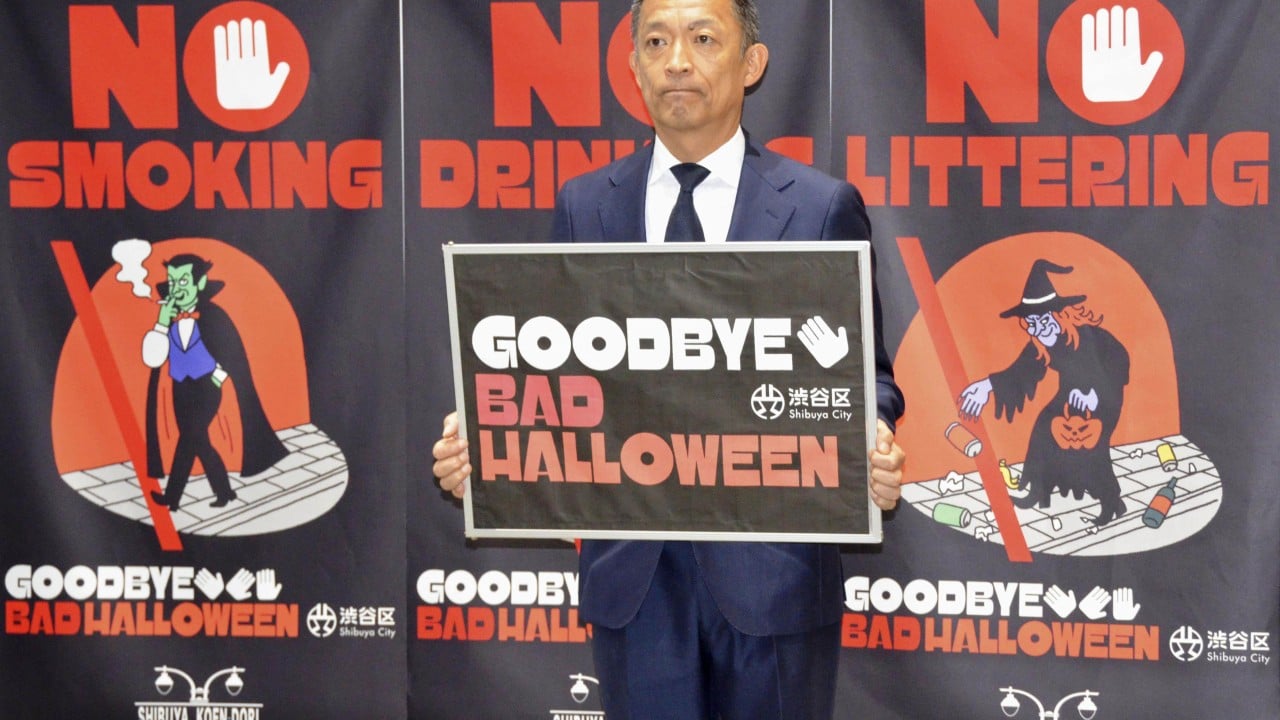
If you only read the municipal press releases, the story sounds simple, almost bureaucratic. Tokyo’s Shibuya Ward, alongside major entertainment hubs like Shinjuku’s Kabukicho, has enacted strict year-round and seasonal bans on street drinking, backed by hundreds of riot police, private security guards, and metal crowd-control fences. Officials call it a necessary measure to prevent overcrowding, litter, and public disorder during Halloween.
They are telling the truth, of course. Every statistic on their clipboards is accurate. Yet, standing in that sea of brightly lit, eerily quiet pavement, you realize the headlines miss the real story entirely. This isn't just about confiscating cans of cheap convenience-store chuhai or keeping the sidewalks clear for commuters. It is a high-stakes tug-of-war over the soul of public space in one of the safest, most densely packed cities on earth—a story about what happens when an unwritten social contract finally snaps under the pressure of viral fame.
The Anatomy of an Unspoken Agreement
To understand why a single aluminum can of lemon sour became a municipal threat, you have to understand how Tokyo actually works.
Think of the city’s public spaces not as empty concrete, but as a meticulously choreographed ballet. Every morning at 8:30 AM, millions of people flow through train stations like Shinjuku—the busiest transit hub on the planet—without colliding, shouting, or dropping a single gum wrapper. Nobody passes laws telling commuters which side of the escalator to stand on or how to fold their wet umbrellas before stepping onto a train. The system runs on kuuki wo yomu—literally, "reading the air." It is a shared, unspoken instinct to prioritize the collective harmony over individual impulse.
For decades, public drinking in Japan existed comfortably inside that invisible boundary. Unlike in the United States or parts of the United Kingdom, where open-container laws make sipping a beer on a park bench a misdemeanor, Japan never banned street drinking at the national level. You could buy a cold draft from a vending machine on a quiet residential corner, walk home after a twelve-hour shift, and nobody blinked. The social contract held: You are free to drink, so long as you remain invisible to the convenience of others.
Then came the smartphone, the inbound tourism boom, and the accidental birth of Shibuya Halloween.
Consider a hypothetical character—let’s call him Kenji, a twenty-six-year-old graphic designer living in a tiny apartment twenty minutes down the Den-en-toshi Line. For Kenji, October 31st used to be the one night of the year when the invisible walls of Tokyo’s rigid social etiquette dissolved. He didn’t go to clubs, and he didn’t buy expensive tickets to private parties. He walked out of Shibuya Station, bought two cans of beer at a FamilyMart on Center Gai, and spent four hours talking to strangers dressed as traffic cones, horror movie villains, and salarymen with fake axes protruding from their skulls. Nobody owned the street, yet everyone belonged to it.
That freedom was fragile, because it relied on an illusion of scale. When ten thousand people show up to an impromptu street gathering, the city bends. When a hundred thousand show up—fueled by cheap convenience-store alcohol and livestreaming their antics to millions of followers—the math turns lethal.
The Ghost of Itaewon
The turning point didn’t happen in Tokyo. It happened across the Sea of Japan, in a narrow, sloping alleyway in Seoul, South Korea.
On October 29, 2022, a massive, unpoliced Halloween crowd surged into the nightlife district of Itaewon. Without crowd-control barriers, one-way pedestrian routing, or proactive dispersal, the density reached a critical threshold where human bodies ceased to act like individuals and began behaving like fluid dynamics. One hundred and fifty-nine people died in a crowd crush that unfolded in minutes, broadcast in real time on social media.
I remember watching the news reports in Tokyo the following morning. The grief was immediate, followed quickly by a cold, terrifying realization among Japanese urban planners and police officials. Look at the topography of Shibuya’s Center Gai or Shinjuku’s Golden Gai: narrow, labyrinthine alleys branching off massive transit hubs, flanked by concrete walls and crowded storefronts. Look at the numbers: before the pandemic, Shibuya Halloween routinely drew well over a hundred thousand people into an area roughly the size of a few football fields.
Suddenly, the overturned light truck that made international headlines during Shibuya’s chaotic 2018 Halloween—an incident where intoxicated revelers flipped a kei truck onto its side, resulting in multiple arrests—stopped looking like an isolated drunken prank. It looked like a warning flare.
By 2023, Shibuya Mayor Ken Hasebe took an unprecedented step, holding a press conference aimed directly at international travelers and domestic partygoers alike. His message was blunt: Do not come to Shibuya for Halloween.
By 2024 and beyond, the warning hardened into permanent law. Shibuya Ward expanded its ban on street drinking from a temporary Halloween restriction to a year-round prohibition between 6:00 PM and 5:00 AM across the station’s core entertainment zones. Neighboring Shinjuku followed suit, banning public alcohol consumption in the streets of Kabukicho during the Halloween period, explicitly citing the twin threats of crowd crushes and the mountains of trash left behind by street drinkers.
Inside the Containment Zone
Walk through Shibuya on Halloween night now, and you are walking through a masterclass in defensive urban design.
The transformation begins before you even exit the ticket gates. Overhead speakers repeat announcements in Japanese, English, Korean, and Chinese, reminding passengers that drinking on the street is prohibited and loitering near the station exits will not be tolerated. Step outside, and the visual landscape has been completely re-engineered.
To understand what the police are doing, imagine a highway engineer trying to stop a flash flood. You don't try to catch the water in buckets; you build channels that keep it moving so fast it never has time to pool.
Officers in dark blue uniforms stand shoulder-to-shoulder along the curbs, holding illuminated red batons like orchestra conductors. Elevated command posts—known locally as "DJ Police" platforms—rise above the crowd, where articulate officers use calm, rhythmic banter over loudspeakers to nudge pedestrians forward before a bottleneck can form. "Please keep walking," a voice calls out smoothly over the hum of the traffic. "Stopping to take photos blocks the flow behind you. Keep moving forward."
Meanwhile, the supply chain of the street party has been quietly severed. Convenience stores—the legendary konbini that serve as Japan’s unofficial living rooms—voluntarily pull alcohol from their shelves or close their liquor cases entirely during the peak evening hours. Without easy access to three-dollar cans of highballs, the financial barrier to getting intoxicated rises sharply. If you want a drink, you have to go inside a bar, pay a cover charge, sit in a chair, and operate under the watchful eye of a bartender.
For a hypothetical visitor—say, Elena, a twenty-nine-year-old traveler from London who booked her autumn flight to Japan specifically hoping to experience the famous Tokyo Halloween she saw in travel vlogs—the reality is jarring. She arrives at Shibuya Crossing wearing a carefully packed costume, expecting a carnival. Instead, she finds herself funneled down a fenced sidewalk, unable to pause for a selfie without a whistle blowing three feet from her ear. She ducks into a 7-Eleven for a celebratory drink, only to find the beer coolers covered in brown kraft paper with bilingual signs explaining the local ordinance.
Elena isn’t a troublemaker. She doesn't litter, and she wouldn't dream of climbing a streetlight. Yet she is caught in the exact net designed to stop the minority who do.
The Invisible Stakes of the Ban
It is easy to applaud the crackdown when you look at the morning after.
In the years before the alcohol ban and heavy policing, November 1st in Shibuya looked like the aftermath of a natural disaster. Volunteer cleanup crews arrived at dawn to find alleys carpeted in broken glass, vomit, discarded costume props, and thousands of crushed aluminum cans. Local shopkeepers spent hours scrubbing graffiti off shutters and repairing damaged signage, absorbing the financial losses of a party they never consented to host. Since the strict bans took effect, municipal reports show dramatic drops in street litter, noise complaints, and alcohol-related emergency calls. The streets are clean by sunrise. Nobody gets crushed.
Yet, when you talk to people who live and work in these neighborhoods, a quiet ambivalence surfaces beneath the relief.
In Shinjuku’s Kabukicho, the problem of street drinking didn't magically evaporate when the ordinances passed; it simply migrated. Long before Halloween became an issue, the area around the Toho Building—famous for the giant Godzilla head peering over the street—had become a gathering spot for disaffected youth, often referred to in Japanese media as the Toyoko Kids. Many of them are teenagers escaping abusive homes or crushing academic pressure, finding a fragile sense of community on the concrete plazas outside the theaters. When police tighten the perimeter in one block, the crowds splinter into darker, less visible alleys a few hundred meters away, or spill onto residential trains heading toward the suburbs.
There is also a deeper cultural cost that rarely makes it into police briefings. Tokyo’s magic has always lived in its friction—the miraculous coexistence of hyper-order and sudden, joyful eccentricity. The same city that demands flawless punctuality on the Yamanote Line also gave the world Harajuku street fashion, subterranean jazz kissa, and late-night ramen stalls where executives and construction workers elbow each other over steaming bowls of broth.
When a city decides that public space is too dangerous to be spontaneous, it trades vitality for predictability. The metal barricades don't just keep drunk tourists from climbing scaffolding; they subtly rewrite the psychology of the street. They turn citizens from active participants in a shared civic life into passengers on a conveyor belt, permitted to transit from point A to point B, spend money inside licensed establishments, and go home.
Navigating the New Reality
If you are planning to visit Tokyo—or any major Japanese city—during Halloween or major holiday weekends, the rules of engagement have permanently changed. Understanding them isn't just about avoiding a lecture from a patrol officer; it’s about respecting the delicate balance that allows millions of people to live together peacefully.
First, treat street drinking in central Tokyo as a relic of the past. While Shibuya’s year-round evening ban carries administrative penalties and strict enforcement, police across Shinjuku, Ikebukuro, and even Osaka’s Dotonbori district aggressively disperse outdoor drinkers during peak dates. If you want to celebrate, book a table at an izakaya, a karaoke box, or a ticketed club event well in advance.
Second, leave the bulky props and replica weapons in your hotel room. Carrying anything resembling a blade, firearm, or heavy blunt object—even if it is clearly made of foam or plastic—will draw immediate attention from patrol units tasked with preventing both panic and real security threats.
Finally, pay attention to the rhythm of the crowd. If you find yourself in a dense pedestrian corridor where you can no longer see the pavement ahead of you, step out into a side street or duck into a building lobby until the wave passes. In a city of thirty-seven million people, spatial awareness isn't paranoia; it is basic courtesy.
The Last Train Home
Around midnight on that quiet October night in Shibuya, the barricades finally began to come down.
Teams of municipal workers loaded the steel fences onto flatbed trucks with practiced efficiency. The DJ Police stepped down from their platforms, their voices slightly hoarse from four hours of gentle persuasion. Down in the subway concourse, tired office workers mingled with disappointed vampires and weary superheroes, all rushing to catch the last train before the shutters rolled down for the night.
I walked past the Hachiko statue one last time as workers peeled away the white tarpaulin, revealing the bronze dog sitting patiently in the cool autumn air, waiting for a master who never came back.
The streets were spotless. Not a single broken bottle glinted under the streetlights. The order that makes Tokyo one of the most livable cities in the world had held firm, unbroken and undeniable. Yet as the neon billboards flickered off one by one, leaving the massive intersection bathed in the pale, ordinary glow of streetlamps, the air felt strangely empty—clean, safe, and entirely silent.