The air inside the ballroom always smells of expensive hairspray, wet wool from the autumn drizzle outside, and the faint, unmistakable tang of anxiety.
It is the Washington correspondents' dinner. A bizarre ecosystem where the people who write the first rough draft of history sit shoulder-to-shoulder with the subjects they are sworn to hold accountable. They clink crystal glasses. They force polite smiles across white tablecloths. They pretend, for the space of a single evening, that the knives are not hidden just beneath the linen. Recently making headlines in this space: The Final Drive That Never Ended.
I remember the hum of that room. The rhythmic clinking of silver against china. The low, buzzing frequency of a thousand conversations happening at once, all of them calculated, none of them entirely honest.
Then, Donald Trump walked in. Additional details regarding the matter are detailed by Associated Press.
He did not glide. He did not slip through a side door. He arrived with that peculiar, heavy-footed momentum that defines him, flanked by a security detail that parts crowds like an icebreaker through thin lake ice. The room shifted. Not dramatically, not all at once, but with the subtle, sickening lurch of a ship taking on water. Heads turned. Conversations died mid-sentence. A collective breath hitched in hundreds of throats.
You have to understand the theater of it.
To the cameras outside, it looked like high-society pageantry. Black tie. Gowns that cost more than a used car. Flashes blinding the eyes. But on the inside, the gravity of the room bent entirely toward one man. He took his seat at the head table. He did not look abashed. He did not look out of place. He looked like an apex predator who had wandered into a vegetarian convention, entirely amused by the nervous twitching of the herbivores.
Comedians had roasted him there before. Years earlier, Seth Meyers and Barack Obama had taken turns flaying him under those blinding lights, turning his grand architectural ambitions and reality-television persona into punchlines. Some people in the room—historians, analysts, insiders—still believe that night was the catalyst. They argue that the public humiliation was the exact friction that sparked a fire, turning a billionaire playboy's persistent political flirtations into a grim, unstoppable vengeance mission.
Whether that psychological theory holds water is a matter for debate. But the reality of his presence that night was undeniable.
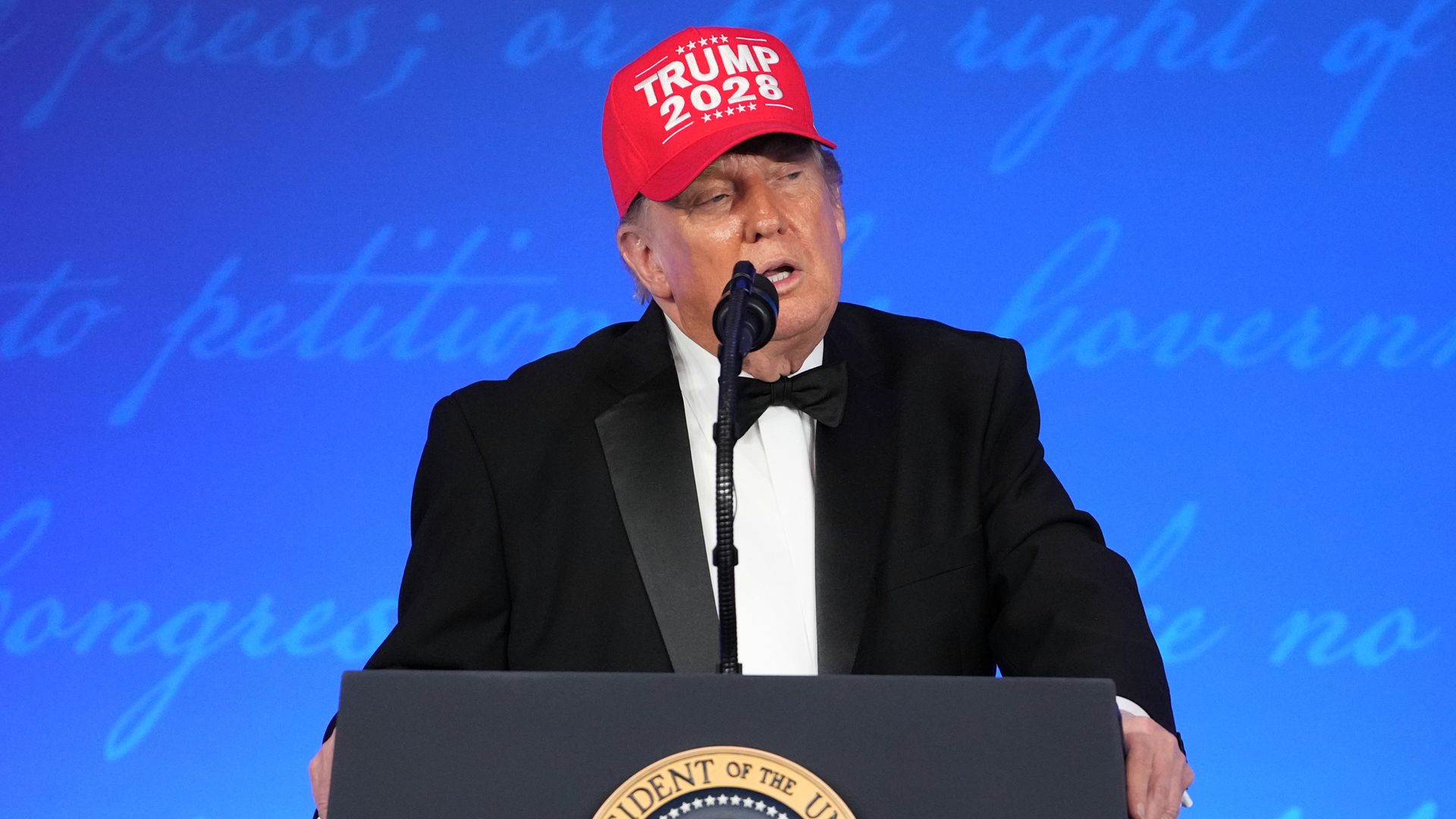
He stood at the podium eventually. The lights hit his hair with that strange, halogen halo.
The strategy was classic Trump. Disarm with a self-deprecating quip, then twist the knife with a calculated grievance. He delivered punchlines about his own real estate ventures, drawing reluctant, nervous chuckles from people who spent their days editorializing his downfall. It was bizarre. It was surreal. It was a masterclass in hijacking the microphone.
Laughter is a strange defense mechanism. It is the sound people make when they do not know whether to run or surrender. The journalists laughing at the jokes were acutely aware of the irony. They were laughing at the man they had spent column inches dismantling, the man who treated truth not as a destination, but as a flexible tactical asset.
And then, the tone shifted.
The jokes dried up. The room went unnervingly still. You could hear the ice shifting in water glasses twenty tables away.
He didn't yell. He didn't pound the podium. He simply leaned into the microphone, his shoulders hunched slightly, and delivered the sentence that hung in the air long after the banquet hall cleared out.
He was going to run for president again.
Not as a rumor. Not as a cheeky tease on a morning talk show. It was a gauntlet thrown directly onto the polished floor of the media establishment's annual prom.
Consider what happens next in the human mind when a paradigm shatters.
In that instant, every political reporter in the room stopped tasting their dessert. Their minds were already racing, calculating word counts, drafting push notifications, texting editors in dark newsrooms across the city. The professional skepticism melted away, replaced by a cold, hard realization. The circus was not leaving town. The circus was building a permanent, fortified stadium.
We live in an era that treats politics like a spectator sport, a series of episodic dramas designed to keep us scrolling, arguing, and consuming. But inside that room, it felt less like a sport and more like an omen.
The core of Trump's appeal has never been about policy papers or legislative nuance. It is entirely emotional. It is about grievance. It is about standing in front of a crowd of people who feel forgotten, overlooked, and mocked by the cultural elites, and telling them out loud that their rage is justified. When he stood at that podium and made his intentions clear, he was not just addressing the journalists in the room. He was projecting a signal through the television screens into millions of living rooms across America. A signal that said: They thought they beat me. They were wrong.
History is rarely made in grand, sweeping battlefields. Often, it is made in hotel ballrooms under the glow of chandeliers, amid the clinking of cheap champagne flutes and the sound of forced laughter.
The dinner ended. The lights came up. The guests put on their heavy coats, stepped out into the damp Washington air, and climbed into waiting town cars. They went back to their newsrooms, their offices, and their suburban homes, trying to find the right words to capture a moment that defied normal categorization.
They wanted to treat it as an anomaly. They wanted to file it away as another bizarre chapter in an already chaotic political story.
They were looking the wrong way.
The man in the red tie was not an interruption of the system. He was the system's mirror, reflecting back an ugly, compelling truth about a country deeply divided, hungry for conflict, and entirely tired of the old rules.
The ballroom is empty now. The tables have been cleared. But the sound of that room going quiet—the terrifying, electric silence of a collective realization—still echoes in the dark.