Fog does not roll into San Francisco so much as it swallows the edges of the map, turning the steep Victorian staircases of the Castro and the concrete avenues of the Richmond into isolated islands. For nearly forty years, those islands shared a single, unmistakable voice in Washington.
Nancy Pelosi was not merely a congresswoman. She was an institution carved into the political granite of the Pacific coast, a master tactician who held the Speaker’s gavel twice and kept the city’s progressive conscience tethered to the hard realities of national power.
Then came the announcement that she would not seek another term, triggering the most consequential succession battle in modern California history. And now, the dust has settled.
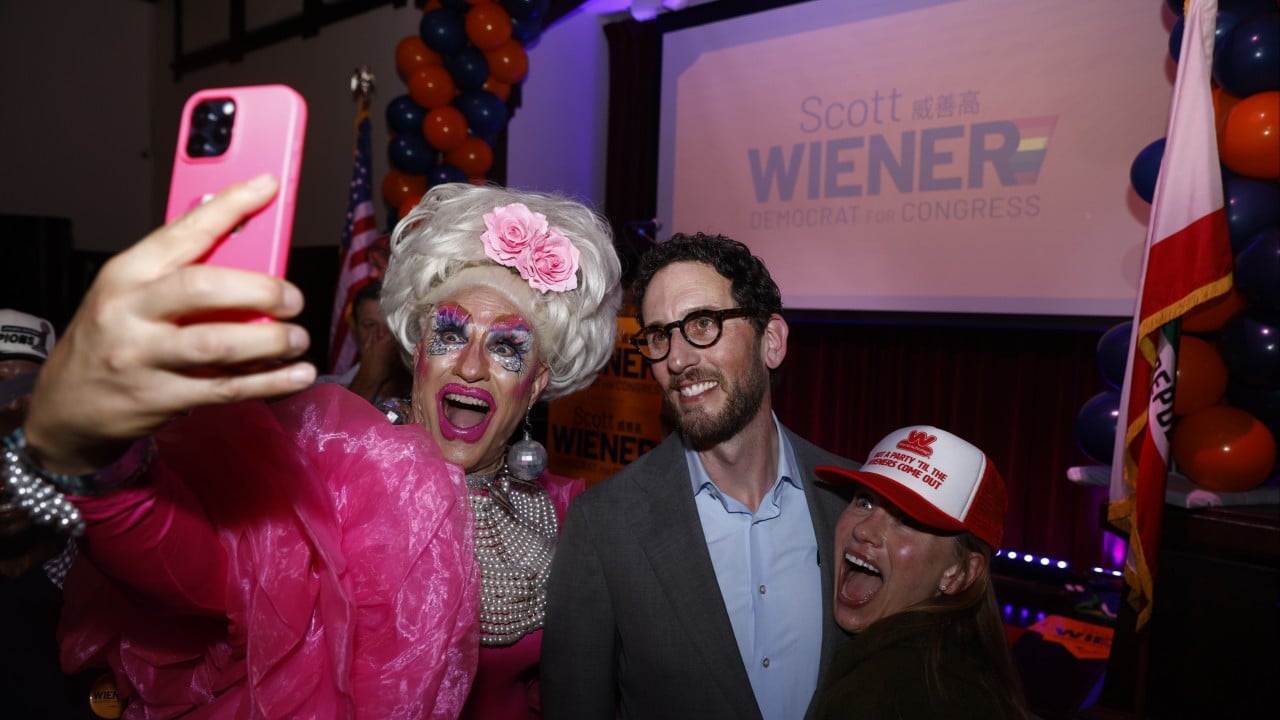
Connie Chan has conceded. Scott Wiener is going to Congress.
To an outsider glancing at a standard wire report, the outcome looks like an ordinary changing of the guard inside a deep-blue stronghold. One Democrat steps down, another steps up. Nothing to see here.
That reading misses the earthquake entirely.
A City Divided by Two Visions of Survival
To understand what just happened between the Pacific Ocean and the bay, you have to stand on a corner in the Inner Sunset at seven in the morning, watching a twenty-eight-year-old software engineer step around a row of tents to catch the N-Judah train, while an eighty-year-old retired teacher peers through lace curtains at a proposed six-story apartment building across the street.
Both of them love San Francisco. Both of them are terrified of losing it.
For the past decade, the city has been locked in a quiet, exhausting civil war over a deceptively simple question: how do you save a place that everyone wants to live in, without destroying the very soul that made them come?
Consider a hypothetical family—let us call them the Moraleses—who bought a modest two-bedroom home near Golden Gate Park in 1994. For thirty years, they watched their neighborhood stay largely frozen in amber. The corner bakery stayed the same. The eucalyptus trees grew taller. Meanwhile, their two children grew up, graduated from college, and discovered they could not afford to rent a studio apartment within forty miles of their childhood bedroom.
That tension is the beating heart of this election.
Connie Chan, the District 1 supervisor representing the Richmond District, stepped into the race as the fierce defender of the neighborhood shield. Backed by labor unions, tenant advocates, and the city’s traditional progressive wing, Chan spoke directly to the anxieties of longtime residents who felt bulldozed by rapid change, corporate tech wealth, and top-down state mandates. Her pitch was rooted in protection: guard local control, scrutinize market-rate developers, and keep the city from becoming a playground exclusively for the ultra-rich.
Scott Wiener, the towering, relentless state senator who has spent a decade rewriting California’s housing and transit laws from Sacramento, offered the exact opposite prescription.
He offered a hammer.
The Architecture of Frustration
If you have lived in San Francisco over the last ten years, you know the sensory texture of its gridlock. It is the metallic screech of a delayed Muni subway car stuck inside the Twin Peaks tunnel. It is the sight of a paper notice taped to a chain-link fence around an empty, weeds-choked lot—a notice detailing years of environmental reviews, neighborhood appeals, and discretionary hearings over whether a laundromat can legally be turned into apartments.
San Francisco became a museum of good intentions where nothing could actually be built.
I remember sitting in a cramped community room off Market Street a few winters ago, listening to three hours of public comment over a modest residential project. Speaker after speaker approached the microphone with genuine emotion, arguing over shadows cast on a park bench at four in the afternoon, while outside the window, the median home price crept past one and a half million dollars. It was surreal, heartbreaking, and completely paralyzed.
Scott Wiener built his entire political identity on breaking that paralysis.
As a state senator, Wiener became the patron saint of the YIMBY—"Yes In My Backyard"—movement, authoring landmark legislation like SB 35 and SB 423 to strip away local red tape and force cities across California to approve housing when they fall behind their state-mandated goals. To his admirers, he is the rare politician willing to do the unglamorous, arithmetic-heavy work of fixing a broken supply chain. To his critics, he is an uncompromising technocrat who steamrolls neighborhood voices and hands too much power to private developers.
When Nancy Pelosi’s seat opened up, the race immediately transformed from a local personality contest into a high-stakes referendum on the future of American urbanism.
Why This Race Mattered Far Beyond the Bay
You might wonder why a congressional primary between two San Francisco Democrats carries weight in Ohio, Texas, or New York.
Look closely at the national map. Across the United States, major cities governed by Democrats are facing a demographic and moral reckoning. Housing costs in coastal metros have spiraled so far out of reach that working families are fleeing toward the Sun Belt, taking congressional seats and electoral votes with them. At the same time, visible street homelessness and sluggish public transit have eroded public trust in the basic competence of progressive governance.
Think of San Francisco as a canary inside a gilded coal mine. Whatever crisis hits the Bay Area first inevitably arrives in Seattle, Boston, Denver, and Austin five years later.
During the campaign, both candidates argued that they knew how to rescue the city’s reputation and deliver for working people. Chan leaned heavily on her roots as an immigrant from Hong Kong, a former city staffer, and a champion for working-class families who feared being priced out by luxury high-rises. She painted Wiener as an ally of real estate interests whose policies failed to produce enough deeply affordable units for low-income residents.
Wiener countered with a stark, undeniable reality: you cannot subsidize your way out of a shortage of hundreds of thousands of homes. You have to build.
The race grew bruising, expensive, and deeply personal. Outside spending poured into the district, turning mailboxes into battlegrounds of glossy attack flyers and competing endorsements. Voters were forced to choose between two distinct philosophies of compassion—one focused on shielding existing communities from disruption, the other focused on opening the doors wide enough for the next generation to enter.
The Anatomy of a Concession
Elections rarely turn on a single speech. They turn on accumulated exhaustion.
By the time ballots were counted and the numbers solidified, the electorate had delivered a clear, unmistakable verdict. Facing an insurmountable deficit as returns continued to favor Wiener, Connie Chan did what all seasoned public servants eventually must do when the math becomes irreversible: she stepped forward and conceded.
Her concession was gracious, acknowledging the grassroots volunteers, union members, and neighborhood families who had poured their weekends into knocking on doors across the foggy avenues of the west side. In conceding, she reminded the city that the people she fought for—the service workers, the seniors on fixed incomes, the immigrant shopkeepers—are not going anywhere, and neither is their demand to be heard.
Yet the victory belongs to Wiener, and with it comes a seismic shift in how San Francisco will speak to the rest of the country.
For nearly four decades, Nancy Pelosi operated as the ultimate legislative coalition-builder, keeping a delicate peace between the city’s fiery activist left and the pragmatic center of the national Democratic Party. She brought billions of federal dollars back to the Bay Area for transit, seismic retrofits, and AIDS research, all while commanding the national stage.
Nobody replaces Nancy Pelosi. You do not fill a forty-year footprint overnight, and Wiener will enter the House of Representatives as a freshman member rather than a presiding giant of congressional leadership.
What changes immediately, however, is the ideological signal sent from the Golden Gate to Capitol Hill.
What Happens When the Builder Goes to Washington
To grasp the shift, use a simple analogy. For years, San Francisco treated its housing and urban infrastructure like a fragile heirloom porcelain vase—something to be locked behind glass, protected from every bump, and preserved exactly as it was in 1975. The problem is that a city is not a vase. A city is a living organism, and when you stop an organism from growing, it begins to decay from the inside.
Wiener’s elevation to Congress marks the formal triumph of the "abundance" wing of the Democratic Party inside the very city that once invented modern neighborhood preservationism.
In Washington, Wiener is expected to take the exact blueprint he tested in Sacramento and scale it to the federal level. That means pushing for massive federal investments in public transit operations, tying federal infrastructure grants to local zoning reforms, and treating housing construction not as a local zoning squabble, but as a national economic emergency.
It is an ambitious, risky bet.
There is genuine uncertainty here, and pretending otherwise would be dishonest. Deregulating housing markets does not automatically lower rents overnight; interest rates, construction labor shortages, and material costs remain stubborn, unforgiving obstacles. Many working-class residents in the Mission, Chinatown, and the Tenderloin still harbor deep, legitimate fears that rapid development will accelerate displacement before affordable units ever materialize.
If Wiener’s abundance agenda fails to deliver visible relief—if cranes go up along the transit corridors while teachers and nurses still cannot afford to live near their jobs—the political backlash will be swift and merciless.
The View From the Hill
Yet for a city that has spent far too many years apologizing for its dysfunction, choosing a builder over a gatekeeper feels like a sharp intake of breath.
Walk out onto the eastern slope of Twin Peaks just after sunset, when the fog begins its nightly push through the Golden Gate. Below you, the city stretches out in a glittering grid of warm amber streetlights and cold blue office towers, hemmed in on three sides by dark, unforgiving water.
There is nowhere left to sprawl. Every future this city will ever have must be built right inside the borders already drawn.
For decades, San Francisco’s leaders stood on that ridge and promised to protect the view. Tonight, as the campaign signs come down from the windows and the concession speeches fade into the archive, the city has chosen someone who intends to change the skyline.