The sea does not care about your itinerary. It does not care about the polished brass railings, the damp scent of duty-free perfume drifting through the carpeted corridors, or the soft hum of the air conditioning keeping the Mediterranean humidity at bay. Saltwater is indifferent to luxury.
When the cruise ferry began to list off the coast of Cyprus, the transition from comfort to chaos did not happen with a cinematic explosion. It happened quietly. A shudder through the hull. A sudden, unnatural tilt of the dining room chairs. The sound of silverware sliding off tables and crashing against tiled floors.
For the passengers aboard, the illusion of invincibility shattered in seconds. We build these massive floating hotels out of steel and hubris, convincing ourselves that tonnage translates to safety, that sheer size is a shield against the ancient, mercurial moods of the ocean. But history is littered with the rusted ribs of things we swore were unsinkable.
Consider what happens next in the dead of night.
Darkness amplifies terror. Without the horizon to anchor the eyes, the rolling swell becomes an invisible monster, shoving the vessel deeper into its distress. Alarms begin to shriek—a mechanical heartbeat cutting through the panic. Crew members trained for the unthinkable spring into motion, their faces pale under emergency lighting, shouting instructions over the roar of rushing water and groaning metal.
Maritime disasters are rarely sudden vanishings; they are agonizingly slow unravelings.
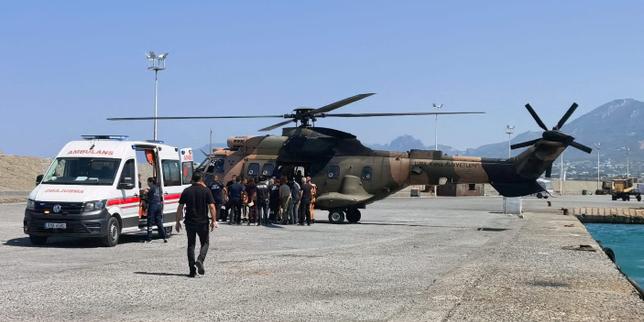
The ferry, designed to carry hundreds of souls across the serene blue expanse between islands, found itself fighting a losing battle against the elements. Reports would later confirm the cold, hard statistics of the event: coordinates logged, distress signals broadcasted to the Joint Rescue Coordination Center in Larnaca, and the rapid mobilization of nearby cargo ships and naval assets. Coast guard vessels sliced through heavy swells, their searchlights cutting white scars across the pitch-black water, hunting for life rafts bobbing like corks in a tempest.
Yet, numbers on a report tell us nothing of the human cost. They omit the mother clutching her sleeping child while strapping on an orange life jacket that smells of damp neoprene and old storage. They omit the deafening roar of the wind, stealing voices right out of the air. They leave out the profound, isolating fear of looking over the rail into a churning abyss that wants nothing more than to swallow you whole.
We rely heavily on technology to outsmart the sea. Radar, satellite positioning, automated bulkhead doors, advanced weather routing systems—we have engineered an entire ecosystem of prevention. Yet, the sea remains entirely wild. Every time a vessel goes down, it serves as a humbling reminder that our mastery over nature is merely an ongoing negotiation, one that we occasionally lose.
The evacuation was a masterclass in disciplined panic. Passengers guided one another down slick stairwells, hands gripping shoulders in a human chain. In moments of crisis, the superficial divisions that dictate our daily lives dissolve entirely. Wealth, status, and nationality vanish behind the reflective tape of a flotation vest. There are only survivors, clinging to each other and to hope.
As the rescue ships finally closed the distance, hauling shivering bodies from bobbing rubber dinghies onto the safety of steel decks, the crippled ferry finally gave up its fight. It slipped beneath the surface, leaving behind only a swirling vortex of white foam, floating debris, and a vast, empty expanse of water that looked as calm and undisturbed as it had hours before.
The sea closed over the wreck with terrifying ease.
Up on the deck of the rescue vessel, wrapped in thermal blankets with saltwater drying stiffly on their skin, the survivors watched the horizon. They listened to the rhythmic thrum of the engines carrying them away from the dark water. They were safe, but they were fundamentally altered. They had looked over the edge and seen the truth we spend our entire lives trying to forget.
The world is vast, deep, and profoundly indifferent. And the margin between our everyday comfort and the abyss is much thinner than we ever dare to imagine.