The sound of a college town at 2:00 AM is supposed to be a predictable symphony of bad karaoke, the rhythmic thud of bass from a basement party, and the high-pitched laughter of friends debating where to find the best late-night pizza. In Iowa City, that soundtrack is the heartbeat of the University of Iowa. It is the sound of safety, of youth, and of the blissful, temporary ignorance that comes with being twenty years old.
Then the rhythm stopped.
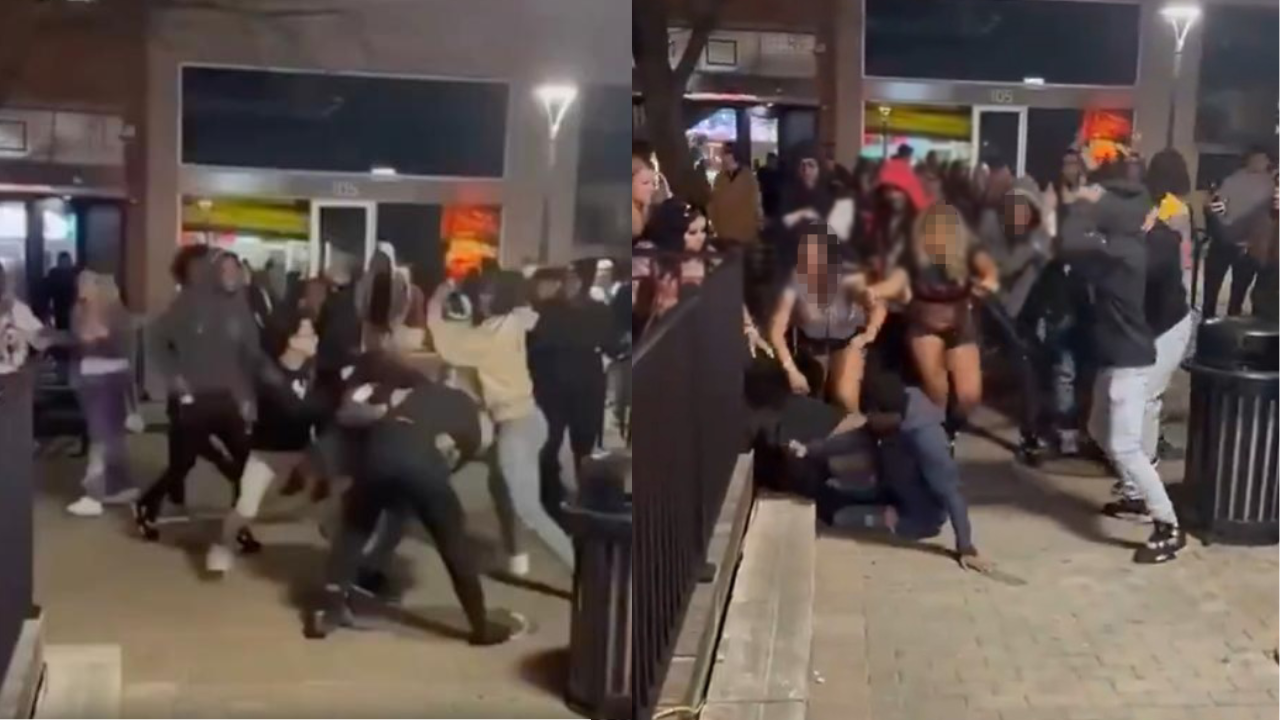
It started not with a bang, but with the scuff of sneakers on pavement and the jagged edge of raised voices. Near the intersection of Clinton and Burlington, just a stone's throw from the classrooms where these same students study ethics and biology, a brawl erupted. It was a chaotic, physical collision of bodies—the kind of friction that happens when ego and adrenaline meet in the dark.
But this wasn't just a fistfight. In an instant, the friction produced a spark. Gunfire.
The Weight of a Second
Blood on concrete has a specific, haunting quality under the orange glow of streetlights. It looks darker. More permanent.
When the police arrived at the scene just off-campus, they didn't find a faceless statistic. They found three young people whose lives had just been violently rerouted. Three students, carrying the hopes of their parents and the debt of their futures, were suddenly lying in the gap between "night out" and "emergency room."
We often talk about campus shootings as political flashpoints, but we rarely talk about the sensory terror of the immediate aftermath. Imagine being a bystander. One moment you are checking your phone for an Uber; the next, you are pressing your hands against a stranger's wound, feeling the warmth of their life leaking through your fingers. You realize, with a sickening jolt, that the person under your hands is wearing the same university sweatshirt as you.
The University of Iowa sent out the alerts. The phones in a thousand dorm rooms buzzed simultaneously. Hawk Alert: Shots fired. Seek shelter. That vibration is a modern ghost. It is the sound of a thousand hearts dropping at once. Parents hundreds of miles away woke up to vibrations on their nightstands, their breath catching as they waited for a text back—any text—to prove their child wasn't the one currently being loaded into an ambulance.
The Invisible Stakes of a Saturday Night
The facts are cold: three injured, transported to the hospital, expected to survive. The police are searching for the shooters. The "brawl" is the catalyst.
But look closer at the invisible stakes. Every time a sidewalk near a university becomes a crime scene, the geography of the campus changes. A walk to the library is no longer just a walk; it’s a calculation. Students begin to map their world not by where the best coffee is, but by which alleys have the best lighting and where the blue-light emergency phones are located.
Consider the hypothetical student—let’s call her Sarah—who was walking home from the library that night. She wasn't part of the fight. She didn't know the people involved. But she heard the pops. She saw the crowd scatter like a flock of birds hit by a stone. For Sarah, the University of Iowa isn't just a place of learning anymore. It is a place where the ground can give way at any moment.
The trauma of a shooting doesn't stop when the wounds heal. It ripples. It affects the roommate who can’t sleep because the room is too quiet. It affects the professor who looks at an empty chair on Monday morning and wonders if that student is in a hospital bed or simply too afraid to leave their house.
A Different Kind of Education
We are teaching a generation of students that violence is the period at the end of every sentence. A disagreement at a party? A shoulder bumped in a crowd? A heated argument on a corner? These used to end in bruises or bruised egos. Now, they end in trauma bays.
The shooters in these scenarios—often young men themselves—are making a bargain they don't understand. They trade their entire lives for ten seconds of perceived "respect" or "retribution." They pull a trigger and, in that mechanical click, they shatter the glass house of the university experience.
The University of Iowa is a place of incredible beauty, where the Old Capitol building stands as a sentinel of history. But history is being written in real-time on the pavement outside. This wasn't a mass shooting in the way we’ve come to expect from the news—a planned, calculated act of evil. This was a spontaneous combustion of anger and easy access to lethality.
That is, in many ways, more terrifying. It means the danger isn't a boogeyman in the woods; it’s the person standing next to you in the pizza line who hasn't learned how to walk away from a fight.
The Echo in the Hallway
The sirens eventually faded. The yellow tape was rolled up. The blood was washed away by the morning rain or a janitor’s hose. By Sunday afternoon, the intersection looked like any other street corner in America.
But the students know.
They walk a little faster when they cross that patch of concrete. They look at the "University of Iowa" branding on the signs and see something different than they did on Friday. They see a reminder of how thin the line is between a Saturday night and a lifetime of recovery.
Three students are in hospital beds today. They are surrounded by the smell of antiseptic and the steady beep of monitors. Their textbooks are sitting unopened in their rooms. Their laundry is half-finished. Their lives are paused, held in place by the lead that tore through the night air.
The rest of the campus moves on because it has to. Classes start. Exams loom. The cycle of the semester is relentless. Yet, in the quiet moments between lectures, the silence is heavier than it used to be. The university isn't just a collection of buildings; it is a social contract. We agree to come together to learn, to grow, and to be safe.
When that contract is torn, we are left staring at the pieces, wondering how to put them back together. We look at our classmates and wonder who among us is carrying a weight we can't see. We look at the streets and realize that the most dangerous thing on a college campus isn't a difficult test or a failing grade. It’s the moment we decide that a brawl is worth a life.
The lights are still on in the dorms, but the shadows in the corners are just a little bit darker tonight.