Silence rarely arrives quietly in the Middle East. It usually wears the heavy boots of anticipation.
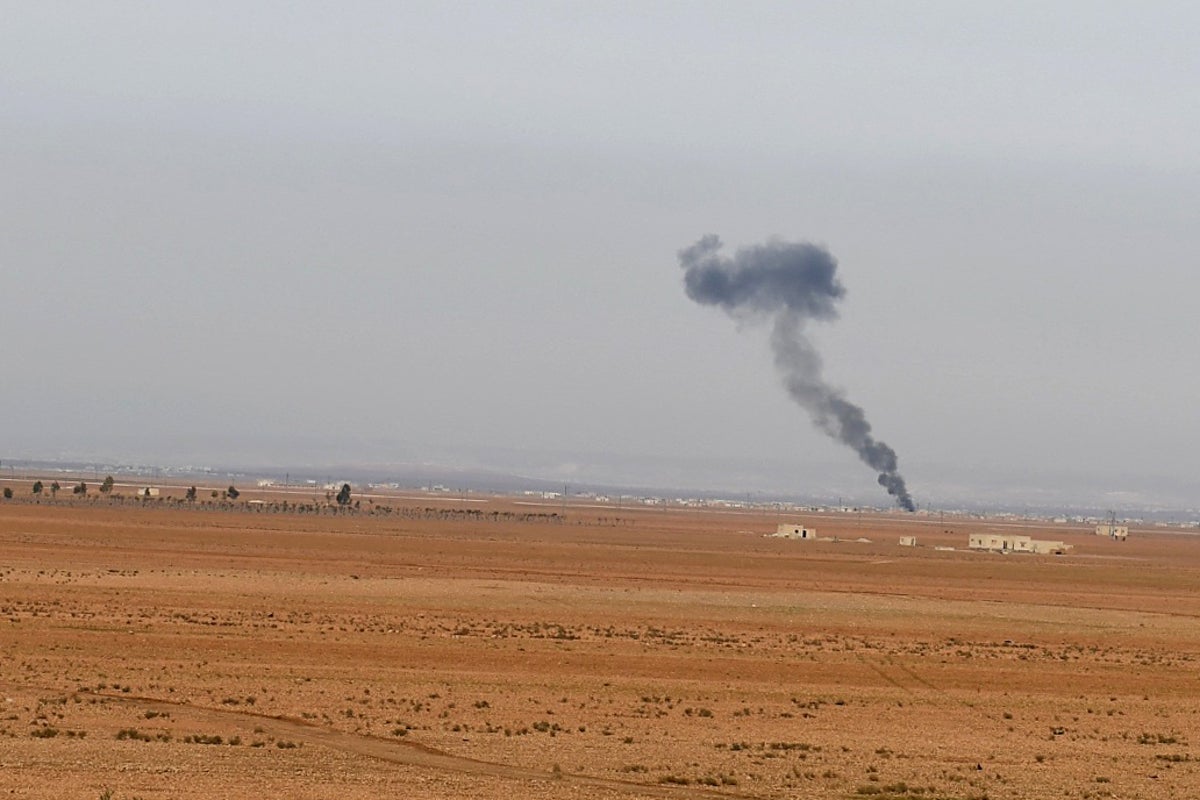
Hours before the streaks of fire tore across the Syrian night, the air in Damascus tasted of dust and unvoiced dread. People sat on balconies with cold cups of tea, watching the familiar crawl of traffic below, waiting for a shoe to drop that everyone knew was already falling. When the Israeli warplanes carved their paths through the dark toward a military airbase, the resulting concussions did not just rattle glass. They shattered the thin, fragile illusion that a regional war could somehow be kept neatly contained in a box.
The official bulletins came later, scrubbed of human pulse. The United States condemned what it called an unnecessary escalation. Cold words. Diplomatic boilerplate. They bounce off the concrete walls of international press rooms like rubber bullets. But back alleys and kitchen tables tell a different story.
Let us be honest about what escalation actually means. It is not a line on a geopolitical chart. It is an old man in a dim apartment wrapping masking tape across his windowpanes to catch the shockwaves. It is a mother counting the seconds between the flash and the boom, calculating whether the blast is close enough to matter.
Consider what happens next.
When an airbase burns, the smoke carries more than just military hardware into the troposphere. It carries messages of retaliation, whispered promises of vengeance, and the quiet tightening of screws in command bunkers thousands of miles away. The strike itself was precise. Clean, in the brutal aesthetic of modern air warfare. Missiles guided by constellations of satellites found their concrete nests. Jets turned home before the smoke had even begun to settle.
Yet precision in violence is a cruel illusion. It assumes that actions exist in a vacuum, that a blow struck here will not generate an invisible, shattering wave over there.
I have stood in cities where the horizon bleeds orange at midnight. You learn to read the rhythm of the air. You know the exact pitch of an engine that means you should step away from the glass. That visceral, cold knot in the stomach is something diplomacy cannot factor into its spreadsheets. Washington calls it an unnecessary escalation. The people living beneath the flight paths call it Tuesday.
The tragedy of these moments lies in their predictability. We have seen this script play out across decades of fractured earth and ruined masonry. One side acts to deter; the other reacts to save face. The cycle feeds itself, an insatiable engine that burns human lives for the sake of tactical calculus. Every missile launched is a vote against tomorrow. Every condemnation issued from a podium in a distant capital is an admission of helplessness disguised as authority.
The Syrian airbase was not just a collection of runways and radar dishes. It was a node in a vast, tangled web of proxy conflicts, a place where regional ambitions collide with international lines in the sand. When those assets go up in flames, the temperature of the entire region ticks upward. The margin for error shrinks until it vanishes entirely. A miscalculated trajectory, a nervous radar operator, a delayed communication—any of these could turn a localized strike into a wider conflagration that no superpower can manage.
We comfort ourselves with the myth that leaders are steering the ship. We look to Washington, to Tehran, to Jerusalem, imagining cool-headed strategists moving pieces on a mahogany board.
The truth is much darker. Nobody is steering. Everyone is merely reacting to the momentum of the last mistake.
The pilots who flew those jets home to their hangars have already taken off their helmets. They have washed the fuel smell from their skin. Somewhere in a quiet office, analysts are measuring crater depths and reviewing infrared footage, grading the efficiency of the destruction.
Meanwhile, down below, the tea has gone cold on the balcony. The dust settles on the olive leaves. And the dark hums with the terrible certainty that the next strike is already being planned.