The air always smells different before a storm like this. It grows heavy, tasting of ozone, damp concrete, and something ancient—the copper bite of a massive engine turning over in the deep dark of the Pacific.
When Typhoon Dolphin set its sights on eastern China, the meteorological models did not just print numbers; they drew a target. By the time the warnings began to broadcast across coastal televisions, the wind was already starting to howl through the alleyways of Zhejiang and Fujian.
Silence. Then, chaos.
Consider what happens when a million people are told to leave their homes.
We talk about mass evacuations in the abstract. We read headlines that flatten human beings into arithmetic. Over a million people displaced. A statistic. A bullet point in a morning briefing. But numbers do not pack suitcases. Numbers do not stand in a cramped kitchen at midnight, staring at a framed photograph of a grandfather, wondering if the walls will still be standing when the sun comes up.
A hypothetical resident, let us call him Chen, spends his final thirty minutes before the municipal sirens blare by taping plastic sheeting over his front windows. The glass is rattling already, humming a low, anxious frequency. He is not thinking about air pressure differentials or sustained wind speeds of over one hundred miles per hour. He is thinking about his mother's antique cedar chest and whether the neighborhood stray cat found a dry spot under the stairwell.
This is the human cost of a Category 4 beast clawing its way onto a crowded coastline.
Meteorologists track these storms with cold precision. They name them softly, almost affectionately, as if giving a moniker to a disaster makes it manageable. Dolphin was born out over the warm ocean water, feeding on invisible heat gradients, swelling into a swirling monster of cloud and fury. Satellite imagery showed it spinning lazily from space, a beautiful, terrifying pinwheel of destruction.
From orbit, it looks like art. From the ground, it sounds like a freight train that refuses to stop.
By the time landfall arrived, the eastern seaboard of China had transformed. High-speed rail lines were locked down, their bullet trains tucked safely into concrete bunkers like sleeping dragons. Flights were grounded. Ports that usually pulse with the frantic heartbeat of global commerce fell utterly still, crane arms locked against the sky like skeletal fingers.
Authorities mobilized with staggering speed. Over a million residents across vulnerable low-lying districts were shepherded into emergency shelters—schools, gymnasiums, and civic centers hastily converted into temporary homes. Cots were lined up row by row. Fluorescent lights buzzed overhead, casting a clinical glare over tired families, crying infants, and elders clutching small plastic bags containing their entire worldly identification and medicine.
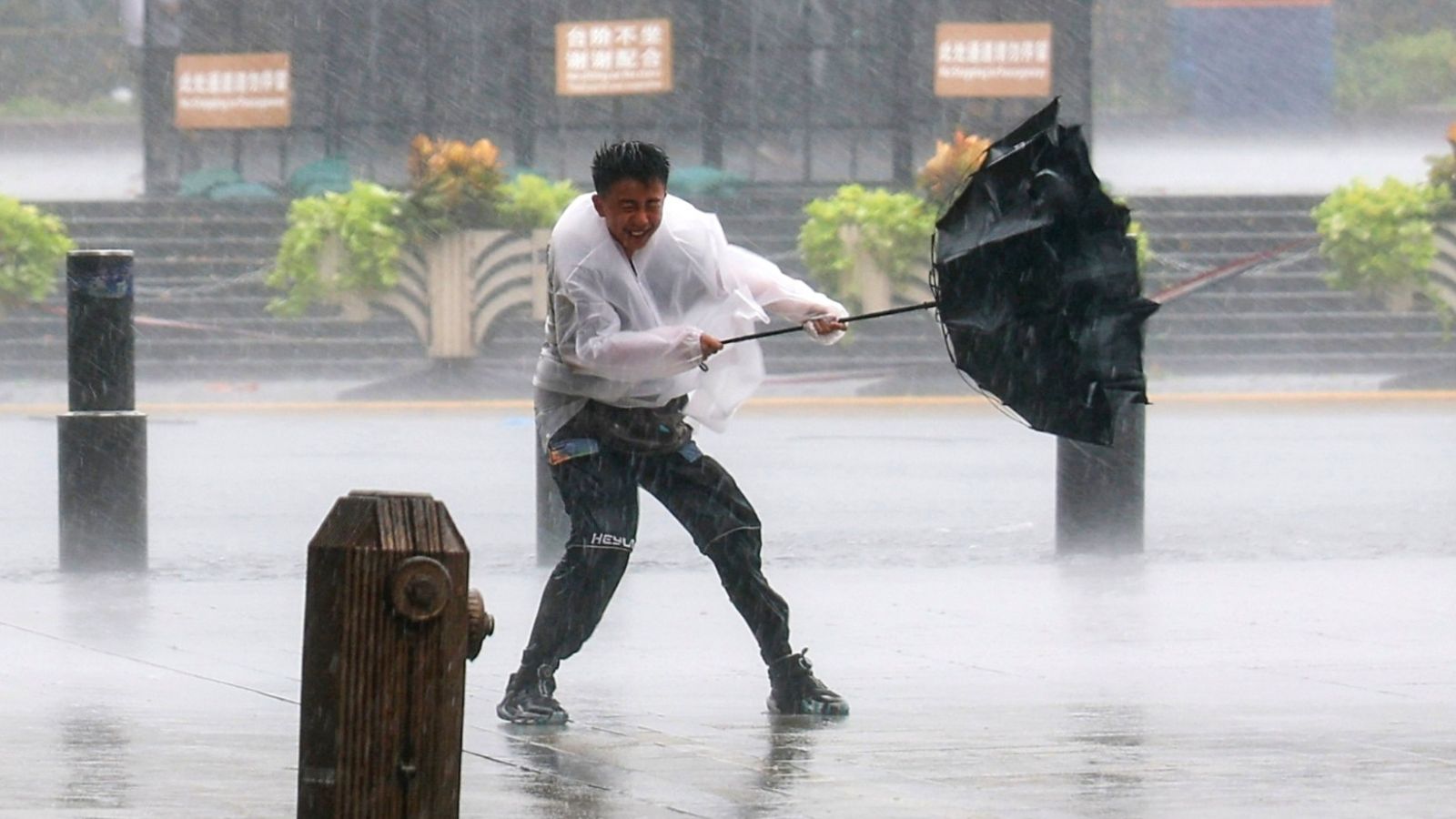
Rain fell in sheets. Not drops, but a solid wall of water that blurred the horizon until land and sky became a single, churning grey soup.
Power grids failed block by block. First a flicker, then the deep, heavy thud of a transformer blowing three blocks down, casting a neighborhood into sudden, absolute darkness. In that darkness, the true test of community begins. Flashlights cut yellow beams through living rooms. Neighbors check on neighbors. Doors that usually remained firmly locked suddenly swing open, trading candles, batteries, and whispered reassurances.
Typhoon Dolphin battered the coast for hours, unleashing torrential floods that turned asphalt streets into rushing rivers. Trees snapped like dry twigs. Advertising billboards were peeled from their steel skeletons and tossed into the air like loose paper.
Yet, beneath the noise of the wind and the rushing water, something remarkable persisted.
Resilience.
Emergency response teams did not wait for the storm to pass before they began their work. Rescue workers in rubber Zodiac boats navigated flooded intersections, plundering stranded vehicles and pulling trapped residents from rising waters. Medical personnel worked through power outages, relying on emergency generators and sheer willpower to keep monitors beeping and intravenous drips flowing.
The storm eventually lost its punch, dragging its weary, waterlogged body inland, downgrading from a roaring monster to a weeping depression.
The clouds parted the next morning.
Sunlight struck a landscape transformed. Puddles mirrored a blue sky that felt mocking in its sudden serenity. Mud caked the doorsteps. Sidewalks were littered with green leaves stripped violently from thousands of trees, alongside shattered tiles and tangled power lines.
Chen returned to his street hours later. His roof had sustained damage, and water had pooled across his living room floor, ruining the rug. But the walls were standing. The structural integrity of the building held. Across the city, millions of others were stepping out into the daylight, assessing the damage, sweeping away the debris, and beginning the long, quiet labor of putting life back together.
Dolphin left behind millions of dollars in structural damage and countless disrupted lives. But it also left behind a stark reminder of our fragility against the elements, and the fierce, quiet courage of ordinary people facing down the dark.
The wind dies down. The water recedes. The sun climbs high over a wet, steaming pavement.
And the work begins.