Water has a way of tricking you. On a cool London night, when the surface reflects the golden wash of streetlamps and Parliament's facade, the River Thames looks less like a tidal force and more like a mirror. It invites familiarity. It invites routine.
Then the tide shifts. Meanwhile, you can read similar events here: The Media Is Lying to You About Displacement Narratives.
Most people walking past the Houses of Parliament think of Westminster Bridge as a tourist landmark, a place to snap a selfie with Big Ben towering in the background. Few stop to consider the relentless weight of the water surging beneath its stone arches, or the men and women tasked with navigating that dark, unforgiving highway while the rest of the capital sleeps.
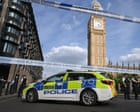
On a late-night patrol, five police officers were reminded of how fast routine transforms into emergency when their vessel struck the heavy masonry of Westminster Bridge. To understand the bigger picture, we recommend the recent article by BBC News.
Imagine the sudden, jarring shock of impact. One moment, the hum of engines and the familiar rhythm of river patrol. The next, the brutal crunch of steel against centuries-old stone, throwing bodies forward into hard surfaces, gear, and control panels.
The Hidden Violence of the River
To understand how a routine river patrol ends with five officers hospitalized, you have to understand the Thames itself. It is not a placid lake. It is a powerful tidal estuary with currents that swirl at speeds capable of overwhelming even experienced mariners.
Navigating beneath London's bridges requires precise timing, sharp spatial awareness, and constant adjustments for wind, tide, and wake. The gaps between stone pillars look wide from the embankment, but at speed, in low visibility, against a churning current, those gaps narrow instantly.
A split-second delay in steering. A sudden mechanical fault. An unexpected swell from a passing vessel.
Any single variable can shift a boat off its mark by just a few feet. At that point, physics takes over.
The Immediate Response
When a police vessel collides with a structure as massive as Westminster Bridge, the immediate concern isn't just the damage to the boat. It is the human toll inside.
Five officers sustained injuries ranging from severe bruising to fractures. On the water, an injured crew member presents a compound crisis. In a vehicle on land, paramedics can park alongside within minutes. On a damaged boat in the middle of a tidal river, evacuation requires immediate coordination among marine units, shore-based ambulances, and emergency rescue personnel.
Sirens echoed across Parliament Square as emergency services converged on the scene. Blue lights flashed off the dark water while crews worked quickly to stabilize the injured officers and secure the vessel before the tide could drift it further into danger.
Witnesses along the embankment described the scene as surreal. One moment, the quiet hum of London at night; the next, a coordinated, high-stakes medical rescue unfolding in the shadow of Britain’s seat of power.
The Invisible Risk of Maritime Policing
We often think of police work in terms of squad cars, foot patrols, and siren-filled city streets. The Metropolitan Police Marine Policing Unit operates in an entirely different world.
They guard 47 miles of the Thames, covering everything from search and rescue operations to anti-terrorism patrols and securing high-profile events. Their environment is dynamic and inherently hazardous.
When something goes wrong on the water, there are no hard shoulders to pull onto. There are no brakes that bring a vessel to an immediate stop.
Every maneuver is a calculation involving weight, water speed, and momentum.
When the news breaks that five officers were injured in a collision, it is easy to view it as a brief headline, a minor blip in the 24-hour news cycle. But behind that headline are five individuals who went to work expecting a standard shift and ended up in hospital beds.
It serves as a stark reminder that public safety work carries inherent danger, even in places where the public rarely looks.
What Happens When the Dust Settles
Investigators will examine every inch of the vessel, review navigational data, and assess environmental factors to determine precisely what went wrong under Westminster Bridge. Was it human error, mechanical failure, or a sudden, unpredictable shift in river conditions?
Those answers matter for protocol, training, and future safety.
But for the five officers recovering from their injuries, the immediate reality is physical recovery and the long process of returning to duty. And for the colleagues who continue to patrol the dark waters of the Thames every night, the bridge stands as a permanent reminder of the thin margin between a routine patrol and a catastrophic collision.
The river keeps moving, indifferent to the craft that cross its surface, holding its secrets beneath the black water.