The rain in New York doesn't wash the city clean; it just makes the pavement mirror the neon. On a Tuesday night that felt like any other damp autumn evening, a block in downtown Manhattan simply ceased to belong to the public. The barricades went up first. Then came the umbrellas—dozens of them, massive, black, held by men with earpieces who moved with the synchronized precision of Secret Service agents.
We have become immune to celebrity. We watch them through the pixelated glass of our phones, double-tapping their milestones between commercial breaks and subway stops. But some moments possess a gravity that bends the cultural landscape around them.
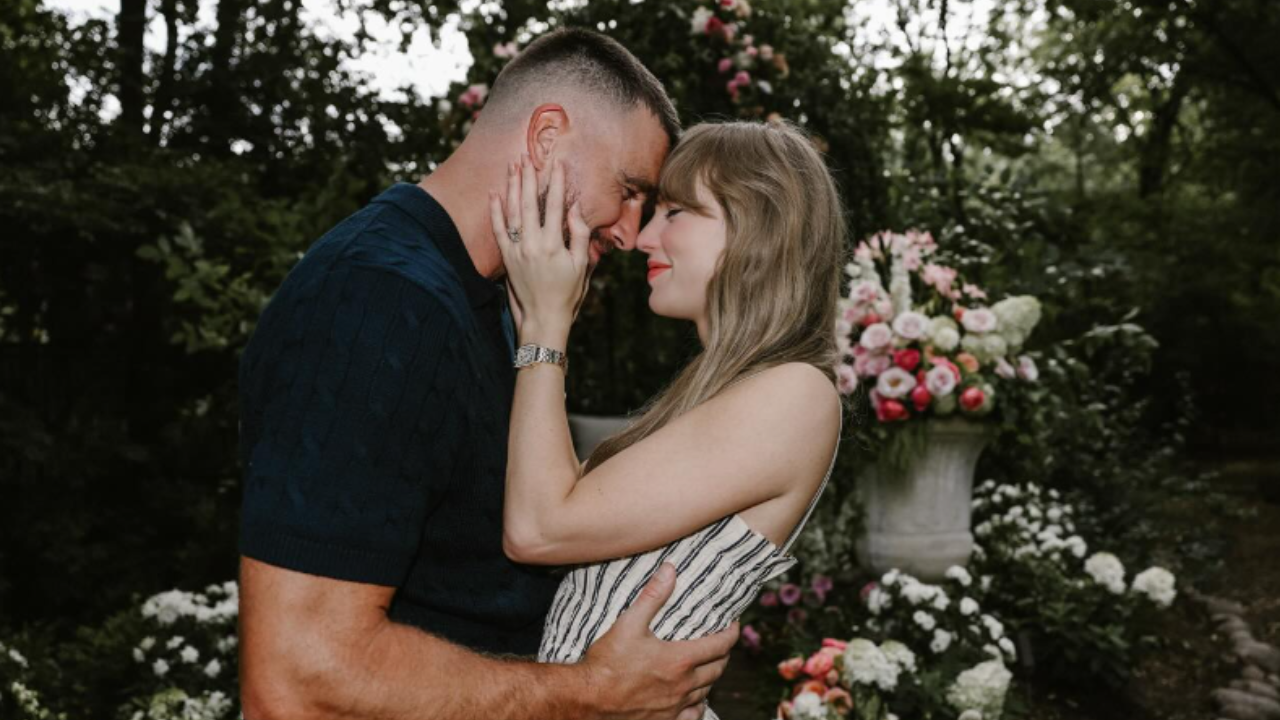
Taylor Swift and Travis Kelce got married.
The internet had predicted it, dissected it, and simulated it a thousand times over. Yet, when the flashbulbs finally caught the reflection of white silk through the tinted windows of a moving SUV, the noise of the city died down to a collective, sharp intake of breath. This wasn’t just another high-profile union. It felt like the series finale of a monoculture we all thought had died a decade ago.
The Architecture of an Arena Wedding
To understand the sheer scale of what transpired behind the closed doors of that historic Manhattan venue, you have to understand the mechanics of modern fame. For forty-eight hours, a space originally built for industrial shipping was transformed into a cathedral of private luxury.
Imagine trying to keep a secret in a city of eight million people where everyone carries a camera. The logistics alone resemble a military operation. Every vendor signed non-disclosure agreements that carried penalties steep enough to ruin a small business. Cell phones were collected at the door, sealed in specialized pouches that required a magnetic key to open.
Inside, the atmosphere shifted from the cold, rain-slicked streets to something impossibly warm.
The color palette bypassed the traditional pastels of spring weddings. Instead, the room glowed in deep burgundies, midnight blues, and brushed gold—a nod, perhaps intentionally, to the stadium lights and autumn afternoons that defined the couple's public courtship. The centerpieces weren't just flowers; they were towering installations of rare orchids and dark roses that seemed to isolate each table into its own private world.
The guest list read like the seating chart of a mythological pantheon. Pop royalty sat shoulder-to-shoulder with defensive linemen. Hollywood directors shared appetizers with tight ends from Cleveland. But stripped of their accolades, they looked remarkably like any other wedding party: slightly uncomfortable in their formal wear, whispering to their partners, waiting for the music to change.
The Invisible Stakes of a Public Romance
Pop music operates on the currency of heartbreak. For nearly two decades, the world tracked Taylor Swift’s life through the breadcrumbs left in her lyrics. Every track was a puzzle piece; every bridge was a confession. We grew up alongside her, using her anthems to nurse our own fractures.
That creates a strange, unspoken pressure. When a performer builds a career on the emotional architecture of longing and loss, finding peace becomes a creative risk.
Consider the vulnerability required to walk down an aisle when millions of people feel they own a piece of your narrative. The stakes weren't merely personal. They were industrial. A marriage at this level of visibility carries the weight of two massive economies colliding—the global machinery of pop music meeting the relentless, multi-billion-dollar enterprise of American football.
But when the music started—a stripped-back, acoustic arrangement that lacked the booming production of a stadium tour—the corporate scale vanished.
He stood at the altar looking uncharacteristically small. A man who makes his living crashing through human obstacles looked entirely defenseless in a classic tuxedo. When she appeared at the top of the aisle, the room didn't erupt in cheers. It went completely silent. That silence is the truest measure of awe. It is the moment where the spectacle ends and the reality of two human beings making a promise begins.
The Shift in the Cultural Rhythm
For the past few years, our collective attention has been fractured into a million tiny streams. We don’t watch the same shows. We don’t listen to the same songs. The concept of a cultural baseline—a single event that everyone knows about simultaneously—has largely disappeared.
This wedding broke that trend.
Outside the venue, despite the freezing drizzle, crowds gathered behind the police tape. They weren't there to see a performance. They couldn't hear the music. They couldn't see the ceremony. They simply wanted to be in the proximity of a moment that felt historic. Teenagers huddled under shared jackets next to older couples who had driven in from New Jersey, all of them staring at the glowing windows of a building they couldn't enter.
It revealed a lingering hunger in us. We still want to witness big, uncomplicated stories. In an era defined by cynicism, the sight of two arguably larger-than-life figures committing to something as ancient and ordinary as marriage carries a strange, reassuring power.
The Long Road to the Quiet Aftermath
The party lasted until the early hours of the morning. The bass from the speakers vibrated through the old brick walls of the venue, vibrating the puddles on the street outside. Hits from the seventies mixed with modern hip-hop, the sound muffled by the heavy velvet curtains draped over every exit.
Then, the lights came up.
The cleanup crews entered, moving through the remnants of the massive bash—discarded custom napkins, half-empty glasses of champagne, petals shaken loose from the massive floral arches. The guests slipped away into the waiting fleet of black cars, disappearing back into the gridlock of the city.
By dawn, the barricades were gone. The street opened back up to delivery trucks and commuters rushing to catch the morning train. If you walked past the venue at eight in the morning, you would never know that the epicenter of global pop culture had been located precisely on that corner just hours prior.
The true test of any wedding isn't the scale of the reception or the fame of the attendees. It is the quietness that follows when the music stops and the crowd goes home. As the sun broke through the grey New York clouds, two people woke up to a world that was exactly the same as it had been the day before—only now, they were facing it together.