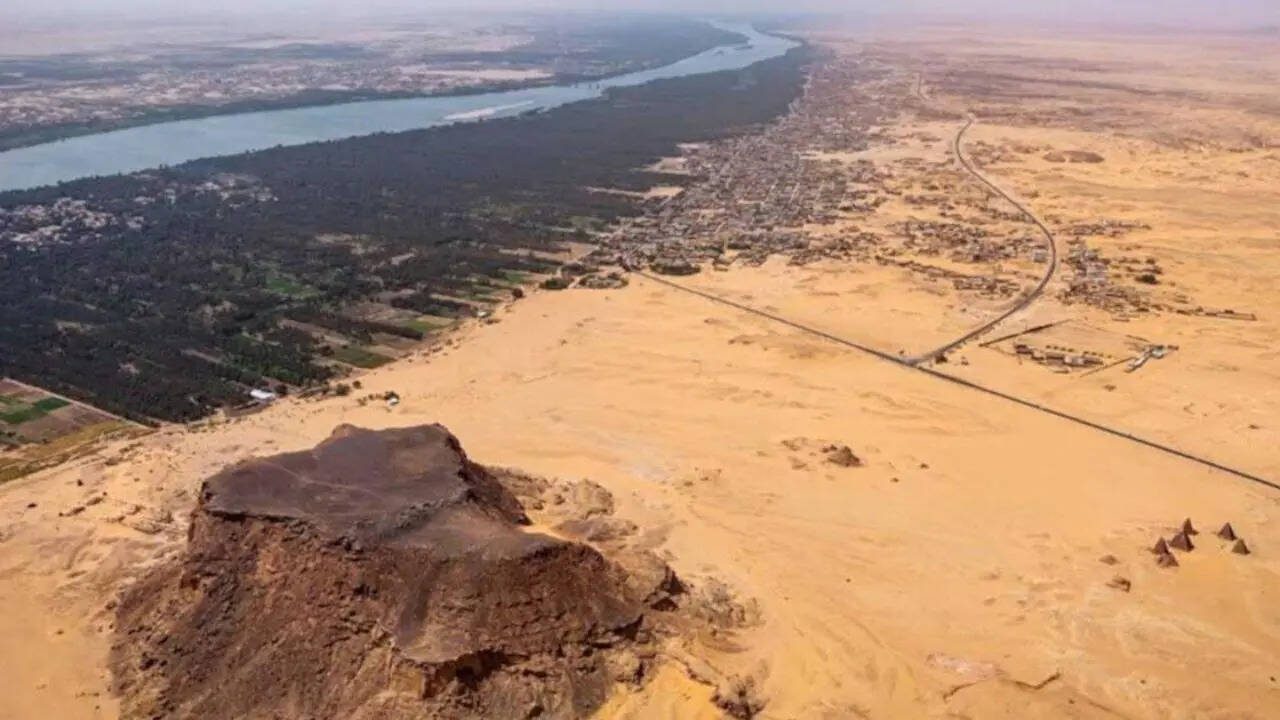
The Nile didn't just sit there while history happened around it. Most people think of the world's longest river as a static line on a map, a blue thread that stayed put while pharaohs rose and fell. That's wrong. New geological research shows us that the Nile was a shifting, living entity that literally moved its entire bed to keep an ancient civilization alive. We're talking about Napata, the capital of the Kingdom of Kush. If the river hadn't migrated exactly when it did, this powerhouse of African history might have been swallowed by the desert or left stranded miles from a water source.
I've always found it wild how we treat geography as a fixed stage. It isn't. The ground moves. The water wanders. In the case of Napata, located in modern-day Sudan, the Nile’s "hidden shift" over 4,000 years wasn't some slow, boring geological crawl. It was a lifeline. Recent studies using satellite imagery and sediment analysis prove the river moved significantly eastward. This shift didn't just provide water; it created a defensive barrier and a fertile corridor that allowed the Kushites to thrive even when their northern neighbors in Egypt were struggling.
Why the Nile’s migration changed Sudanese history
Ancient Napata sat at a strategic point near the Fourth Cataract. For a long time, historians wondered why the city was positioned exactly where it was. It seemed a bit off compared to where the modern river flows. Well, the river hasn't always been there. Over four millennia, the Nile’s main channel migrated. This wasn't a random accident of nature.
The river moved because of tectonic shifts and the massive accumulation of silt. As the Nile slowed down around the bends of the Dongola Reach, it dropped tons of sediment. This buildup eventually forced the water to find a new path. For the people of Napata, this was a goldmine. The shifting water created new floodplains. These weren't just patches of dirt. They were incredibly rich, silt-heavy fields that could support a massive population. Without this specific movement, Napata wouldn't have had the agricultural muscle to challenge Egypt and eventually rule it as the 25th Dynasty.
The mystery of the lost western channel
Archaeologists have found evidence of "paleochannels." These are basically ghost rivers. They're dried-up paths where the Nile used to flow. If you look at the area west of the current river near the Jebel Barkal mountain, you can see these traces.
Thousands of years ago, the river flowed much further west than it does today. If it had stayed there, the city of Napata would have been cut off from the main trade routes. Trade was everything. Gold, ebony, and incense moved down the Nile. When the river shifted toward the city’s location, it essentially brought the highway to their front door.
Researchers from the University of Southampton and other institutions have used heavy-duty tech to map these shifts. They aren't just guessing. They've used OSL (Optically Stimulated Luminescence) dating to figure out exactly when the sand in these old channels was last exposed to sunlight. The timing is uncanny. The river moved into its current position right as Napata was hitting its peak.
Geography as a weapon of the Kushite Kings
Think about the logistical nightmare of invading a city protected by a massive, unpredictable river. The shifting Nile didn't just give life; it offered a tactical nightmare for invaders. The Kushite kings, including famous names like Piye and Taharqa, knew their land. They used the changing riverbanks to build fortifications that were nearly impossible to breach.
The river's movement also created the "Island of Meroe" effect further south, but at Napata, it meant the city stayed "wet" while the surrounding desert grew harsher. Around 2,500 years ago, the climate in North Africa was drying out fast. The Sahara was claiming everything. While other settlements were abandoned because their wells ran dry, Napata’s move closer to the migrating Nile kept it relevant. It was survival by geography.
What this means for travelers and history buffs today
If you go to Sudan today to see the pyramids at Jebel Barkal, you're looking at a landscape that was shaped by this watery migration. The temples weren't just built near a river; they were built near a river that had basically "chosen" to be there.
There's a lesson here about climate adaptation. The Kushites didn't fight the river. They followed it. They moved their infrastructure to match the Nile’s new path. Today, we try to force rivers to stay in place with dams and concrete walls. The ruins of Napata suggest that maybe we should be more flexible.
When you stand at the base of Jebel Barkal, you can see how the temples align with the current flow. But if you look closely at the surrounding desert, you see the scars of the old Nile. It’s a reminder that nothing is permanent.
Next steps for exploring the history of the Nile
If you're interested in how geography dictates the rise and fall of empires, don't just read the standard Egyptian history books. They often treat the Nile as a constant. Instead, look into "fluvial geomorphology" in the Saharan context. It sounds dry, but it's basically the detective work of finding where water used to be.
- Check out the latest research from the Sudan Archaeological Research Society. They do the gritty work on the ground.
- Look up the Western Nile Paleochannel Project. It maps how these shifts affected early human migration.
- If you're planning a trip, aim for the winter months. Sudan is brutally hot, but the site of Napata is one of the most underrated historical spots on the planet.
Don't expect the river to be in the same place in another 4,000 years. The Nile is still moving, and the maps we use today are just a snapshot of a much longer, much more fluid story.