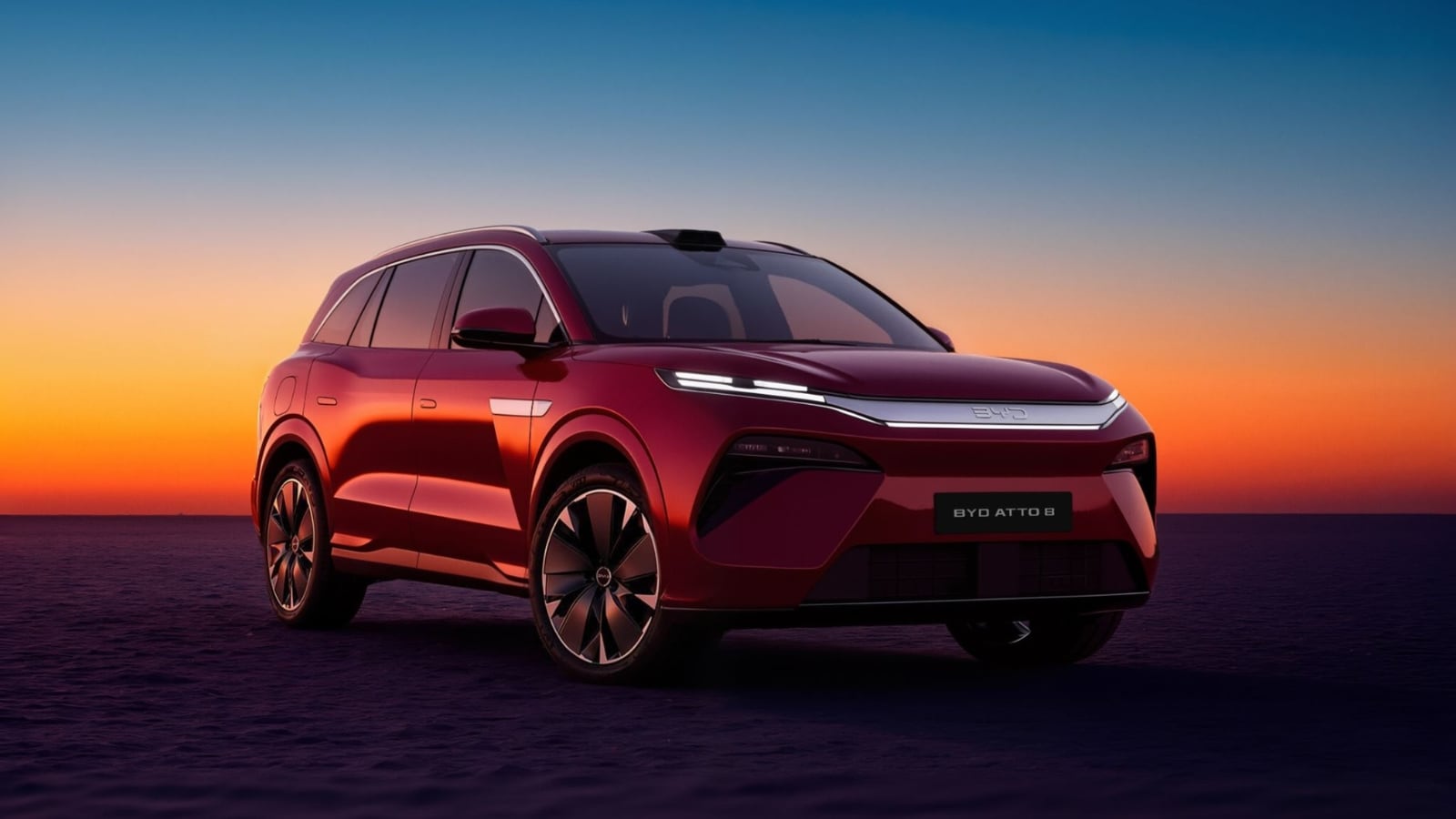
We spent a decade apologizing for the electric car.
We normalized the wait. Drivers became accustomed to pulling off the motorway, tethering themselves to thick, cold cables, and settling in for a forty-minute interval of forced immobility. We bought paperback books for charging stops. We mapped our holiday routes around the availability of a functioning stall behind a lonely service station. We told ourselves that patience was the price of progress, that trading petrol for electrons required a fundamental surrender of our most precious commodity: time.
Then a quiet industrial park in Paris changed the arithmetic.
Imagine standing in the damp chill of an autumn morning, watching a five-meter-long, three-row family machine swallow energy at a rate that feels almost defiant. This is the BYD Atto 8, a sprawling seven-seat electric flagship built not to whisper polite promises about sustainability, but to tear down the last psychological barrier keeping families tethered to combustion engines. Underneath its sleek floor sits a second-generation Blade battery packing a massive 115 kilowatt-hours of capacity. On paper, it delivers a staggering WLTP range of up to 405 miles. That is the literal distance from London to Edinburgh on a single charge.
Yet the range is merely the opening argument. The true disruption lives in the current.
Traditional electric vehicles treat high-voltage charging like filling a balloon with a leaking hose; the pressure drops drastically past eighty percent to protect the cells from thermal degradation. Drivers know the drill. You sprint to eighty percent in twenty minutes, then crawl agonizingly toward full. BYD looked at that bottleneck and engineered its way around it using proprietary FLASH Charging infrastructure.
The metrics sound like typing errors. Plug the Atto 8 into a specialized high-power stall, and the system surges from ten percent to seventy percent state-of-charge in five minutes. Four minutes later, the battery hits ninety-seven percent.
Nine minutes. Total.
That is not enough time to drink a coffee or wander into the service station shop to browse overpriced sandwiches. By the time you have checked your rear-seat passengers, stretched your legs, and wiped the autumn mist from the glass roof, the car tells you it is ready to cross continents again. Even when ambient temperatures plunge to a brutal minus thirty degrees Celsius, the penalty is a modest three extra minutes to reach near-capacity.
Consider what this means for human behavior. For years, the critics of electrification have pointed to the edge cases—the family of six packed tightly for an annual cross-country migration, screaming toddlers in the back rows, staring down a queue of stranded motorists at a congested public charger. Range anxiety was never really about the distance a car could travel; it was about the fear of helplessness. It was about losing control of your schedule to a piece of public hardware that might be broken, occupied, or unbearably slow.
By slashing the replenishment window down to the time it takes to pump an old-fashioned tank of diesel, the engineering narrative shifts from accommodation to equivalence.
Step inside the cabin, and the machine reveals a different kind of ambition. At over five meters long, the Atto 8 is designed to look after every occupant, not just the person gripping the steering wheel. In the Excellence AWD trim, a dual-motor setup churns out an eye-watering 764 horsepower, launching a three-row family hauler to sixty-two miles per hour in just 4.6 seconds. For those prioritizing distance over brute force, the rear-wheel-drive Design variant stretches the envelope to that headline-grabbing 405-mile threshold while still clearing the sprint in a respectable eight seconds.
Yet the luxury here is tactile and domestic. Second-row passengers command their own climate zones and touchscreens, while a built-in front refrigerator can plunge to minus six degrees or warm to fifty depending on whether you need chilled water or hot soup. With all seven seats deployed, there is still 270 liters of boot space; fold the rear rows flat, and the cavern expands to nearly 2,000 liters alongside a generous 136-liter front trunk. It is a spacecraft disguised as a school run vehicle.
Of course, a revolution comes with fine print. The nine-minute miracle relies entirely on access to BYD’s dedicated network of ultra-high-power chargers, with rollout targets aiming for thousands of stations across Europe. Plug this massive battery into an older, legacy public charger, and the physics of electricity reasserts itself; the car will wait at its own steady pace. The hardware is brilliant, but its superpower remains tethered to the map of where those heavy-duty cables eventually land.
The broader shift, however, is irreversible. For over a century, the internal combustion engine held a monopoly on convenience. It trained us to accept noise, emissions, and periodic mechanical complexity simply because we could refuel in minutes. Electric cars offered silence and clean air, but demanded patience in return.
The Atto 8 signals the collapse of that trade-off. It proves that electric mobility no longer requires compromise, dilution, or patience.
The cables are getting heavier, the chemistry is getting smarter, and the stopwatch is finally running out of excuses.