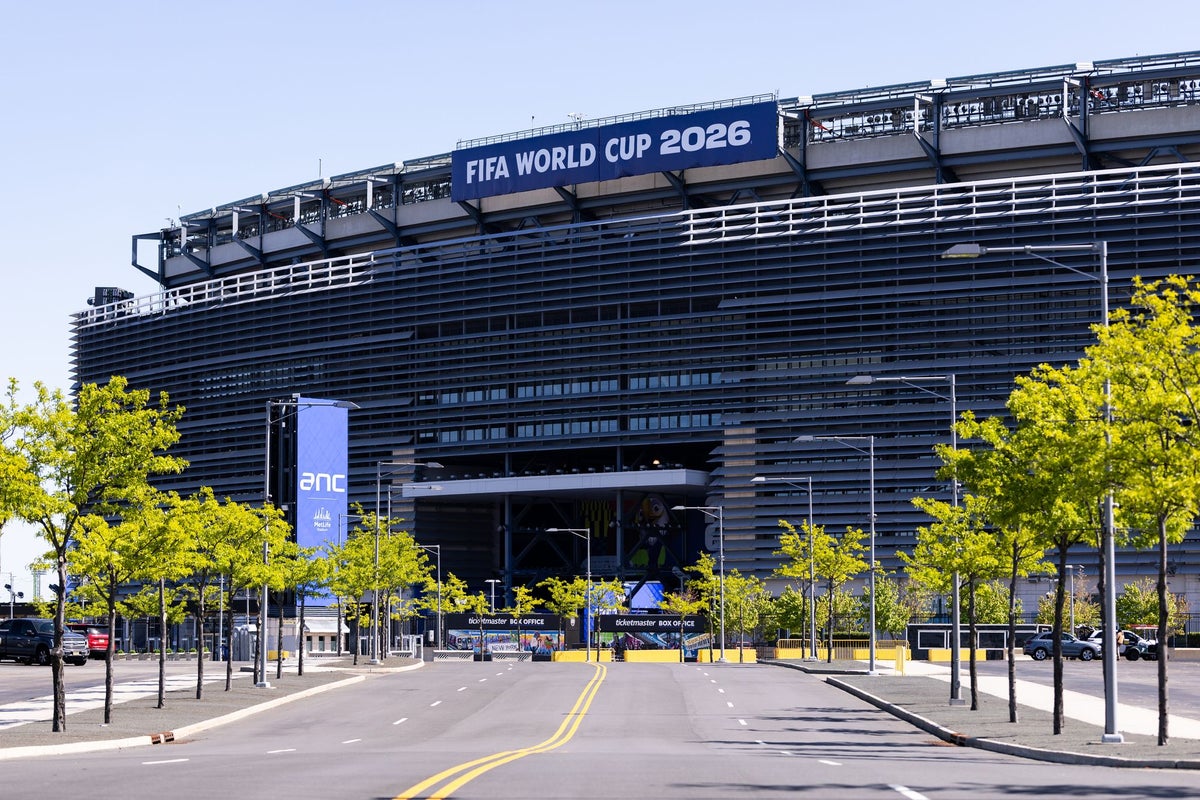
The smell of wintergreen rub and damp grass always hits first. It hangs heavy in the tunnel, a suffocating mix of chemical heat and anxiety. For an international footballer, this corridor is the last quiet place on earth. Outside, sixty thousand people are screaming in a language that feels like a physical weight pressing down on the stadium roof.
When the United States takes the pitch for their World Cup opener against Paraguay, the tactical whiteboards will mean absolutely nothing for the first five minutes.
Football at this level is not a game of charts. It is a psychological war disguised as a sport. For the Americans, this single match is a crucible. They carry the burden of an entire nation’s sporadic, demanding affection—a fanbase that ignores them for three years and then demands a golden generation every summer. For Paraguay, the stakes are different. They do not play for a market. They play for survival, carrying the fierce, chip-on-the-shoulder defiance of South American football where every inch of turf is contested like a border dispute.
To understand what will happen when the whistle blows, you have to look past the team sheets. You have to look at the invisible fault lines running through both squads.
The Ghost in the American Machine
There is a specific kind of panic that sets in when a high-press system fails.
Hypothetically, imagine a young American midfielder. Let’s call him Ethan. He is twenty-three, plays his club football in Germany, and possesses a engine that allows him to run twelve kilometers a game without breaking a sweat. In training, the system works beautifully. The coach talks about triggers, passing lanes, and high-intensity recovery.
Then the match starts.
Ethan looks across the line and sees Miguel Almirón. Almirón does not move like a European academy product. He moves like a man escaping a fire.
The American tactical plan relies on structure. But South American qualification forces teams like Paraguay to become masters of chaos. They do not mind if the game gets ugly. In fact, they prefer it. When the USMNT tries to establish their preferred rhythm—the patient, sweeping possession from back to front—they will find that Paraguay has turned the midfield into a meat grinder.
The tactical breakdown of this opener usually focuses on formations. Pundits debate whether a 4-3-3 or a 4-2-3-1 offers more stability. They miss the point. The real tension lies in the transition moments.
When the United States turns the ball over in the middle third, the system breaks. The fullbacks are caught high up the pitch. The center-backs are left isolated, running backward toward their own goal with eighty yards of terrifying, empty space behind them. It is a psychological trap. If the Americans hesitate for a fraction of a second, Paraguay’s counter-attack will punish them.
The Art of the Suffocation
Paraguay does not play to entertain. They play to win by a single, agonizing goal.
Historically, Paraguayan football is built on a foundation known as garra guaraní—a term that translates roughly to "Guaraní grit." It is a cultural DNA of stubbornness. They are comfortable without the ball. They will happily allow the United States to keep 65% possession, passing laterally across the backline while the clock ticks away.
This is where the frustration begins to fester.
The Americans will pass. And pass. And pass. To the casual viewer, it will look like dominance. But it is a false comfort. Paraguay’s defensive block is a living organism, shifting three yards to the left, four yards to the right, closing the gaps before they even form. They dare the U.S. to cross the ball into the penalty box, where their center-backs, battle-hardened in the brutal leagues of South America, eat crosses for breakfast.
Consider the physical toll of this defensive style. It requires a terrifying amount of discipline. Every tackle is delivered with a little extra weight. A trailing leg. A hand on the hip. A quiet word in the referee’s ear during a throw-in.
By the sixtieth minute, that constant friction changes a player’s psychology. The American attackers will stop looking for the open space and start looking for the next hit. The passes become safer. The creativity dries up. The stadium grows quiet, filled only with the rhythmic, anxious groan of a crowd watching a favorite team slowly run out of ideas.
The Weight of the First Goal
In a tournament like this, the opening match is a funhouse mirror. It distorts everything.
If the United States concedes first, the tactical game plan goes into the shredder. The pressure shifts from a sporting objective to an existential crisis. The media narratives are already written, waiting in the drafts: Is this team ready? Has the federation failed? Why can't we produce world-class creators?
The players know this. They feel it in the hotel lobbies. They see it on their phones.
To break Paraguay down, the U.S. cannot rely on athleticism alone. They have spent the last decade producing faster, stronger, more energetic athletes. But speed is useless against a low block that refuses to run with you. The Americans need arrogance. They need a player who is willing to try the ridiculous pass, the one that risks a counter-attack but opens up the stubborn Paraguayan defense.
They need to embrace the discomfort of the chaos.
The match will likely be decided in a moment that no coach can script. A deflected shot. A slipped footing on a greasy surface. A referee missing a subtle tug of the jersey on a corner kick.
When the final whistle sounds, the tactical analysis will resume. People will look at the expected goals (xG) statistics, the heat maps, and the possession percentages to explain what happened.
But the truth will have been decided much earlier, in the dark of the tunnel, when twenty-two men looked at each other and realized that for the next ninety minutes, there would be no room to breathe.