Water does not knock. It arrives.
First, it is a whisper against the threshold, a dark tongue licking at the bottom of a doorframe. Then, it is weight. It is furniture lifting off the floor, sliding lazily across the room like a sleeping animal waking up. It is the smell of mud and upturned earth rushing into spaces meant only for breath and dry paper. Read more on a related issue: this related article.
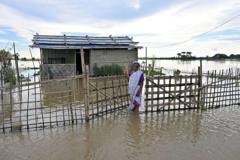
When the floodwaters climbed the walls of the small home in rural India, they brought with them a profound, terrifying silence. The power grid had already surrendered. The roads had dissolved hours before, swallowed by the relentless monsoon. There were no sirens left to wail because the batteries were drowned. There was only the rising dark.
Inside that house sat a man who had lived through nearly a century of changes. Wars had shifted borders across the globe. Governments had risen and fallen like sandcastles hit by the tide. Technologies had transformed the way humanity communicated, traveled, and fought. Yet, on this particular night, none of those centuries of progress mattered. Further reporting by Al Jazeera explores related views on the subject.
His name was Ramdas. He was ninety-seven years old.
Age at ninety-seven is a peculiar country. It is a land of brittle bones, of skin like old parchment, of memories that live closer to the surface than the present moment. To move quickly is a luxury left behind decades ago. To swim against a violent, debris-laden torrent is an impossibility.
When the water reached the level of the cot, the horizon of safety narrowed to a single point.
Panic is a poor navigator. It screams. It thrashes. It exhausts the body before the mind can find a foothold. But extreme old age, weathered by decades of hardship, sometimes breeds a strange, unbreakable calm. Ramdas did not flinch. He looked at the swirling brown expanse taking over his living room. He looked at the courtyard outside, now transformed into a churning tributary of the overflowing river.
He needed a boat. There were no boats.
He needed a savior. The emergency services were stretched thin across a vast, drowning district, boats navigating a maze of submerged rooftops elsewhere, unable to hear every desperate plea swallowed by the rain.
So he looked to the garden.
[Note: The events described here are drawn from documented accounts of severe monsoon flooding in rural India where elderly residents have had to improvise immediate survival tactics.]
Banana trees are generous giants. They are soft-wooded, heavy with moisture, and practically built from stacked layers of fibrous strength. In the deluge, a cluster of banana trunks had snapped under the weight of the wind and the saturation of the earth. They lay half-submerged in the courtyard muck.
To an engineer, it was debris. To a man with ninety-seven years of rural survival etched into his bones, it was a vessel.
With the help of younger family members who had rushed to his side as the waters breached, a makeshift raft began to take shape. This was not crafted from polished fiberglass or treated marine timber. It was hacked together from raw banana plant trunks, lashed hurriedly with whatever sturdy rope and cloth could be found in the collapsing darkness.
Consider the mechanics of it. A banana trunk is buoyant because of its spongy, air-filled cellular structure. It floats not because it is light, but because it captures air within its damp fibers. But it is notoriously unstable. It rolls. It slips. It offers no secure deck for a man whose balance is measured in tremors and cautious steps.
Placing a nonagenarian onto a bundle of floating vegetation during a flash flood sounds less like a rescue and more like an act of desperation bordering on madness.
Yet, necessity cares nothing for convention.
They hoisted him up. The old man’s hands, spotted with age and calloused by decades of working the soil, gripped the slick, green edges of the stalk. The water surged around them, cold and indifferent, smelling of rotting vegetation and industrial runoff. Every second brought new debris crashing against the walls—floating branches, stray household items, the ominous weight of hidden masonry.
He sat atop his green raft.
The journey out was not measured in miles. It was measured in inches. Every inch of water navigated was a gamble against an undercurrent strong enough to drag an ox. The family waded beside him, waist-deep, using their own bodies as breakwaters, shielding the fragile vessel from the larger hazards swirling through the courtyard.
People often romanticize survival. We imagine cinematic triumphs with swelling orchestral scores and flawless execution. Real survival is quiet, muddy, and profoundly unglamorous. It tastes like silt. It feels like cramping muscles and raw skin. It sounds like the ragged breathing of an old man refusing to let the water take the final chapter of his story.
Why does a man at ninety-seven care so deeply about one more sunrise?
To the young, time stretches infinitely forward, a horizon that never arrives. To the very old, time is a compressed treasure. Every additional day is a defiance of entropy. Ramdas had planted seeds that grew into forests. He had watched children grow, marry, and bury their own contemporaries. He had seen the world change its clothes a dozen times.
He was not ready to surrender his anchor to a flooded floorboards.
As the raft cleared the courtyard and drifted toward higher ground where rescue teams finally waited with dry blankets and hot tea, the banana stalks began to slowly absorb the water, their structural integrity quietly giving up the ghost. They had served their purpose. They had acted as bridge, hull, and lifeline.
When he was finally pulled from the makeshift craft onto the bed of a rescue truck, the old man did not weep. He did not issue a grand proclamation about the resilience of the human spirit. He simply adjusted his shawl, shivering slightly against the night chill, and looked back at the dark expanse of water that had tried to claim his history.
The floods would eventually recede. The mud would dry, turning to a pale, cracked crust across the floors of the village. Walls would be rebuilt. Memories would harden into folklore, retold over evening fires during future monsoons.
We spend much of our lives building fortresses against the inevitable. We buy insurance. We lay concrete foundations. We trust in steel and infrastructure. We imagine that safety is a manufactured product we can purchase and install around our lives.
Then the river rises.
And sometimes, when all the modern machinery fails, when the grid goes dark and the concrete crumbles, survival comes down to a few hacked-down stalks of green vegetation, a handful of rope, and a ninety-seven-year-old man who simply refused to sink.