The room where the truth is decided does not have a stage. It has no microphones, no spotlights, and no cheering crowds. It is a sterile, fluorescent-lit space in South Carolina, smelling faintly of pine disinfectant and cold steel. On the metal table lies what remains of a man who spent decades navigating the loudest rooms in America.
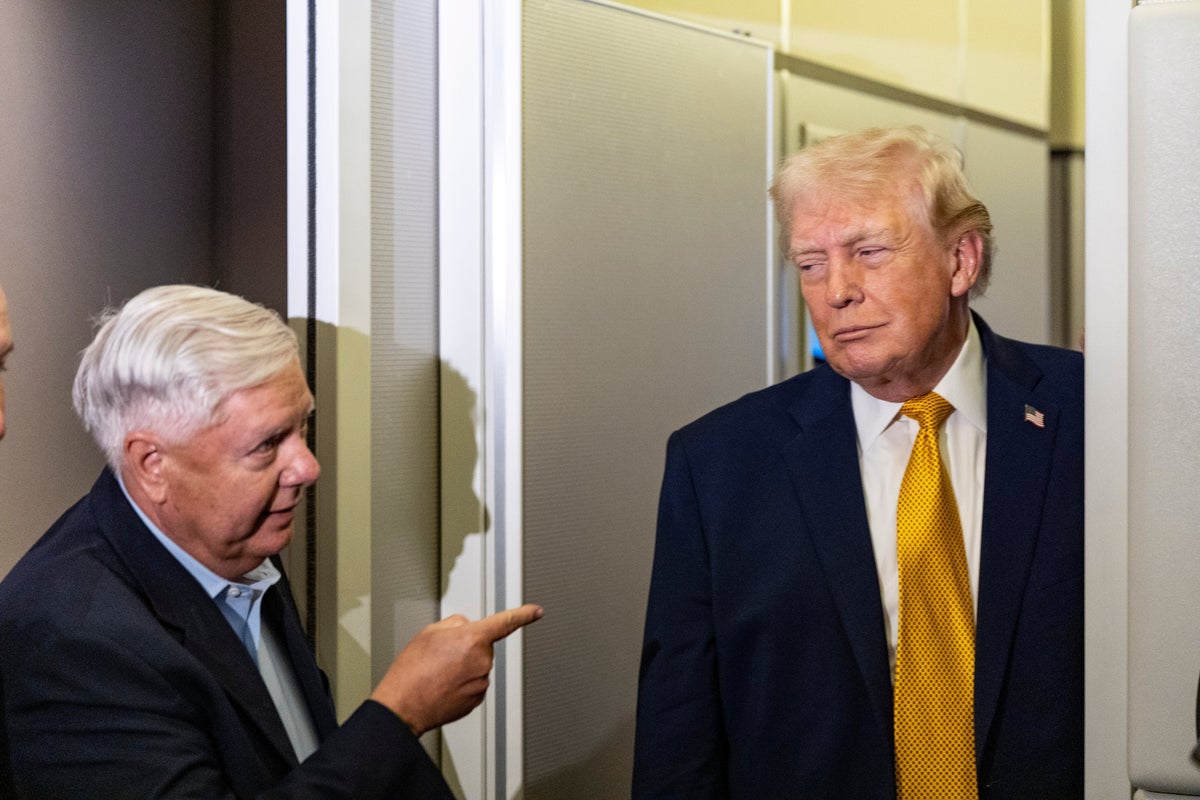
Senator Lindsey Graham. In other news, take a look at: How Gulf Leaders Just Outmaneuvered Trump on the Hormuz Shipping Fee.
For forty years, his life was defined by the clatter of Capitol Hill, the frantic whispers in marble corridors, and the constant hum of television cameras. But on this day, the only sound is the low, steady drone of a ventilation system and the occasional click of a surgical instrument.
Dr. Evelyn Vance—a hypothetical composite of the quiet professionals who do this work every day—stands over the body. She does not care about Senate filibusters, party loyalty, or upcoming primary elections. Her job is to listen to the silent testimony of tissue, bone, and blood. She measures the weight of the heart. She examines the arterial walls. She looks for the microscopic blockages, the quiet failures of biology that eventually claim every human being, regardless of their title. NBC News has provided coverage on this critical subject in extensive detail.
Her initial finding is straightforward. A sudden, massive cardiovascular event. Nature, in its indifferent way, simply turned off the lights.
It was a quiet end.
But quiet does not last long in modern America. Especially not when the silence is interrupted by a smartphone screen lighting up in the dark of Palm Beach, Florida.
The Speed of the Spin
Before the ink on the medical examiner’s initial report could even dry, the narrative was hijacked.
Donald Trump did not look at the medical data. He did not consult the pathology reports or speak with the doctors who spent hours examining the physical reality of Graham’s passing. Instead, he took to his social media platform to offer a different version of reality.
He claimed the medical examiner’s report was wrong. He asserted, with the supreme confidence of a man who has spent a lifetime bending the public’s perception to his will, that Graham’s death was not a simple matter of natural causes. He hinted at stress. He pointed fingers at political enemies. He suggested that the relentless pressure of Washington’s "witch hunts" had done the deed, effectively turning a medical event into a political assassination.
Suddenly, the cold, hard facts of the autopsy table were swept away by a wave of digital noise.
Consider what happens in this moment. The physical reality of a human being’s death is replaced by a political weapon. The family of the deceased, still trying to process the sudden absence of a brother, an uncle, a friend, is forced to watch as the private tragedy of grief is converted into public fuel for a political fire.
This is the new normal. It is a world where even the biological finality of death is subject to a counter-narrative.
The Autopsy of a Legacy
To understand why this contradiction matters so deeply, we have to look at the relationship between the two men. It was a partnership forged in the fires of political survival.
Graham had once been one of Trump’s most vocal critics, calling him a "jackass" and "unfit for office" during the 2016 primary campaign. But politics is a game of shifting sands. Within a year, Graham had transformed into one of Trump’s closest allies, a frequent golfing partner, and a fierce defender on the Senate floor.
It was a complex, sometimes baffling alliance that drew criticism from both the left and the right. Some saw it as pragmatism; others saw it as a capitulation. But to Graham, it was the price of relevance in a party that had been entirely remade in Trump’s image.
Now, in death, Graham’s final act is being written not by his family, nor by his long record in public service, but by the very man he chose to align with.
By contradicting the medical examiner, Trump isn't just disputing a cause of death. He is asserting ownership over the end of Graham’s story. He is ensuring that even in his passing, Lindsey Graham remains a character in the ongoing drama of Donald Trump.
The tragedy is not just that a politician died. The tragedy is that the truth of his death has been rendered secondary to its political utility.
The Quiet Erosion of Trust
What happens when we can no longer agree on the cause of death?
We are not talking about a complex policy debate or an interpretation of constitutional law. We are talking about the physical state of a human heart. If the word of a trained medical professional, backed by physical evidence and scientific protocol, can be dismissed with a single social media post, then nothing is solid.
Everything becomes a matter of opinion.
This is the invisible tax we pay for living in an age of constant outrage. It slowly eats away at the foundation of our shared reality. We begin to look at every institution—medical examiners, scientists, judges, journalists—not as keepers of objective facts, but as players in a partisan game.
If the medical examiner says it was a heart attack, but the leader of the movement says it was something else, whom does the follower believe?
The answer, increasingly, is the leader.
This shift is profound. It moves us away from a society built on empirical evidence and toward one built on tribal loyalty. In this tribal world, facts do not exist to inform us; they exist to defend us. And if a fact does not serve the defense, it must be discarded.
The Weight of the Unspoken
In the days following the announcement, the halls of the Capitol were quiet. Colleagues offered the standard, polished statements of condolence. They spoke of Graham’s wit, his decades of service, his love for his home state of South Carolina.
But behind the polite smiles and the black ribbons, there was a palpable tension.
Everyone knew about the post. Everyone knew that a line had been crossed, but no one wanted to be the first to say it out loud. To challenge Trump’s narrative was to risk the wrath of his base. To agree with it was to abandon the basic rules of human decency and scientific fact.
So, they chose silence.
They let the contradiction hang in the air, a toxic mist that drifted through the rotunda and into the committee rooms. It was a vivid demonstration of the power Trump still holds over his party—a power so absolute that it can silence the truth of a colleague’s death.
Dr. Vance, back in her South Carolina office, went back to work. There were other bodies, other files, other families waiting for answers. She did not release a statement defending her report. She did not go on cable news to argue with political commentators.
She let her work speak for itself.
But her work, no matter how meticulous, cannot compete with the volume of the megaphone. The quiet, detailed report sits in a digital archive, a monument to a truth that has been rendered irrelevant by the noise.
The Final Picture
A hot wind blows through the oaks of South Carolina, carrying the scent of ploughed earth and salt marsh. In a quiet cemetery, the soil is fresh. The mourners have gone home, leaving behind the floral arrangements and the fading echoes of a bagpipe’s lament.
Under the earth lies the body of a man who spent his life chasing influence, only to be consumed by it at the very end.
The cameras have moved on. The reporters have packed up their gear. The social media feed has updated, burying the posts about Graham under a fresh avalanche of grievances and pronouncements.
In the end, the noise did not change the physical reality. It did not restart the heart or clear the arteries. It only succeeded in robbing a family of their quiet grief, and a nation of a moment of shared respect.
The soil remains damp. The grave remains silent. And somewhere in the distance, the machinery of the next news cycle begins to roar.