Everyone is arguing about whether a single diplomatic phone call happened the way a newspaper described it. That is the wrong fight entirely.
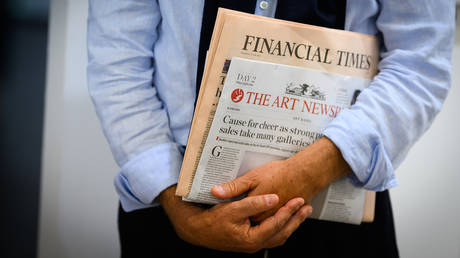
When the Financial Times rejected demands from Nordic officials to retract or correct its reporting on high-level European communications with Vladimir Putin, the media commentary followed a predictable script. Press freedom advocates cheered an outlet for refusing to bend to state pressure. Diplomatic observers criticized anonymous sourcing and accused the paper of overstating internal European fractures. Both camps are treating this as a binary battle between journalistic integrity and official accuracy.
They are both missing the real mechanism at work. In modern geopolitical reporting, a contested story is rarely an accidental error or a pure triumph of truth. It is a stress test of strategic ambiguity.
The Myth of the Neutral Diplomatic Readout
Most coverage of disputes between major newspapers and foreign ministries rests on a naive assumption: that official denials represent objective fact, and anonymous leaks represent either heroic whistleblowing or reckless speculation.
Anyone who has spent time around foreign desks and diplomatic press corps knows that official readouts and off-the-record briefings serve entirely different operational purposes. An official statement from a Nordic ministry is a legal and alliance-management document. Its job is to project unity, reassure NATO partners, and maintain deterrence posture. If a conversation took place in an informal channel, or if a leader tested an idea without formal cabinet authorization, an official spokesperson can truthfully state that "no official diplomatic initiative occurred" while leaving the underlying reality untouched.
Conversely, a publication like the Financial Times operates on a specific standard of verification—typically requiring multiple independent, senior sources with direct knowledge of the briefing or transcript before publishing sensitive diplomatic claims. When an editor refuses a formal correction demand from a sovereign government, it is almost never out of stubborn pride. In British media law and institutional journalism, refusing a correction from a state actor exposes the publisher to severe reputational liability unless their editorial board holds documentary corroboration or rock-solid multi-source confirmation that would survive an independent inquiry.
The lazy consensus assumes one side is lying. The reality is that both sides are operating under incompatible definitions of what constitutes an "official" truth.
Why Nordic Governments Demanded a Correction Anyway
If a government knows a major financial newspaper has enough backing to stand by its story, why issue a public demand for a correction that is almost guaranteed to be rejected?
Because the demand itself is the message.
In small, high-trust democracies—such as Finland, Sweden, Norway, and Denmark—domestic political legitimacy depends heavily on transparency and strict adherence to alliance consensus. Since the expansion of NATO in Northern Europe, Nordic foreign policy has been defined by unwavering alignment against Russian aggression. Any suggestion that a Nordic or allied leader engaged in uncoordinated dialogue with Moscow creates immediate domestic political blowback and raises quiet alarms in Washington, Brussels, and Warsaw.
By publicly demanding a correction from the Financial Times, officials achieve three immediate goals regardless of whether the paper complies:
- Domestic Inoculation: Voters and opposition parliamentarians see their government forcefully rejecting the narrative of unilateral backchanneling.
- Alliance Signaling: Neighboring Baltic states and major NATO allies receive an unambiguous public signal that the country has not broken ranks.
- Source Deterrence: A formal dispute triggers internal security reviews, reminding civil servants and diplomats that leaking sensitive readout details carries career-ending consequences.
The correction demand was never designed to edit the Financial Times. It was designed to manage the political fallout of the story existing in the first place.
The Editorial Calculus Behind Refusing to Blink
On the other side of the table, legacy business outlets face an existential threat if they allow governments to edit their reporting after publication.
Consider what happens when a financial publication alters a geopolitical story under diplomatic pressure without clear evidence of factual error. Institutional subscribers—sovereign wealth funds, macro hedge funds, central bank analysts, and corporate boards—do not pay thousands of dollars a year for press releases. They pay for early visibility into friction between what governments say publicly and what leaders discuss privately.
If the Financial Times capitulates to a soft correction—changing "held substantive talks" to "exchanged brief views" simply to appease a foreign ministry—it signals to every press secretary in Europe that aggressive pushback works. Within six months, every sensitive diplomatic scoop would be watered down into sterile bureaucratic language.
There is, however, a real downside to this institutional rigidity. When a newspaper digs in and refuses to clarify minor nuances alongside a major refusal to retract, it can inadvertently harden an incomplete picture. Diplomatic conversations are notoriously fluid. A five-minute exchange on the sidelines of a summit or a probing question during a crisis call can look like a major policy shift when stripped of tone and context by a leaker who opposed the call happening at all.
Who Actually Leaks These Stories—and Why
To understand why this specific dispute blew up, stop looking at the journalists and start looking at the factions inside European foreign ministries.
Leaks about sensitive calls with Moscow almost never come from the people who favored making the call. They come from internal rivals who want to kill the initiative in its cradle.
Imagine a scenario where a senior European official explores whether a backchannel with Moscow could de-escalate a specific regional friction point—say, maritime border incidents or airspace violations in the High North. Within the ministry or across the broader European security apparatus, hawkish officials view any unannounced contact as dangerous appeasement that hands Moscow propaganda leverage.
How do those internal opponents stop the outreach without openly mutinying against their own leadership? They brief a trusted reporter at a premier outlet.
Once the story hits the front page of the Financial Times, the political cost of continuing that backchannel skyrockets. The leader who made the call is forced onto the defensive, their press office demands a correction to save face, and the diplomatic channel is effectively dead. The leaker gets their desired policy outcome without ever putting their name on a memo.
What Readers Get Wrong About Anonymous Sourcing
Whenever a dispute like this surfaces, social media fills up with the same tired critique: If the sources aren't named, the story shouldn't be trusted.
That critique misunderstands how high-level diplomacy actually functions. In national security and foreign affairs, virtually no senior official is authorized to speak on the record about private leader-to-leader calls unless they are reading from an approved press statement. Requiring on-the-record attribution for every diplomatic scoop would eliminate roughly ninety percent of investigative reporting on foreign policy, intelligence, and trade negotiations.
The real test of an anonymously sourced story is not whether names are printed. It is:
- Specificity of Detail: Does the reporting cite exact sequences of events, specific policy objections, or direct reactions from named institutions?
- Institutional Track Record: Does the outlet enforce a strict chain of editorial sign-off where senior editors know the identities of the sources and have vetted their potential motives?
- The Nature of the Denial: Does the government issue a blanket, categorical denial of every single fact in the piece, or does it issue a carefully worded objection that disputes the "characterization" or "framing" of the events?
Look closely at how official pushback is phrased in almost every major diplomatic dispute. Spokespeople rarely say, "No phone call of any kind ever took place between these two individuals." Instead, they say the report "mischaracterizes the nature of the contact" or "inaccurately portrays our position." That linguistic gap is where the real story lives.
The Real Lesson for Evaluating Geopolitical News
Stop treating media-versus-government disputes as courtroom trials where one party must be declared innocent and the other guilty of fabrication.
When a premier financial newspaper stands by a story over the formal objections of a democratic government, you are witnessing two institutional mandates colliding in public. The government's mandate is strategic coherence and alliance stability. The newspaper's mandate is exposing the gap between public posture and private deliberation.
Read the initial report for the underlying mechanics—who is talking to whom, and what pressures are building beneath the surface. Read the official denial for the political boundaries—what the government cannot afford to be seen doing in public.
The truth of modern statecraft is rarely found in the correction column. It is found in the friction between what leaders do behind closed doors and what they are forced to deny once the doors are kicked open.