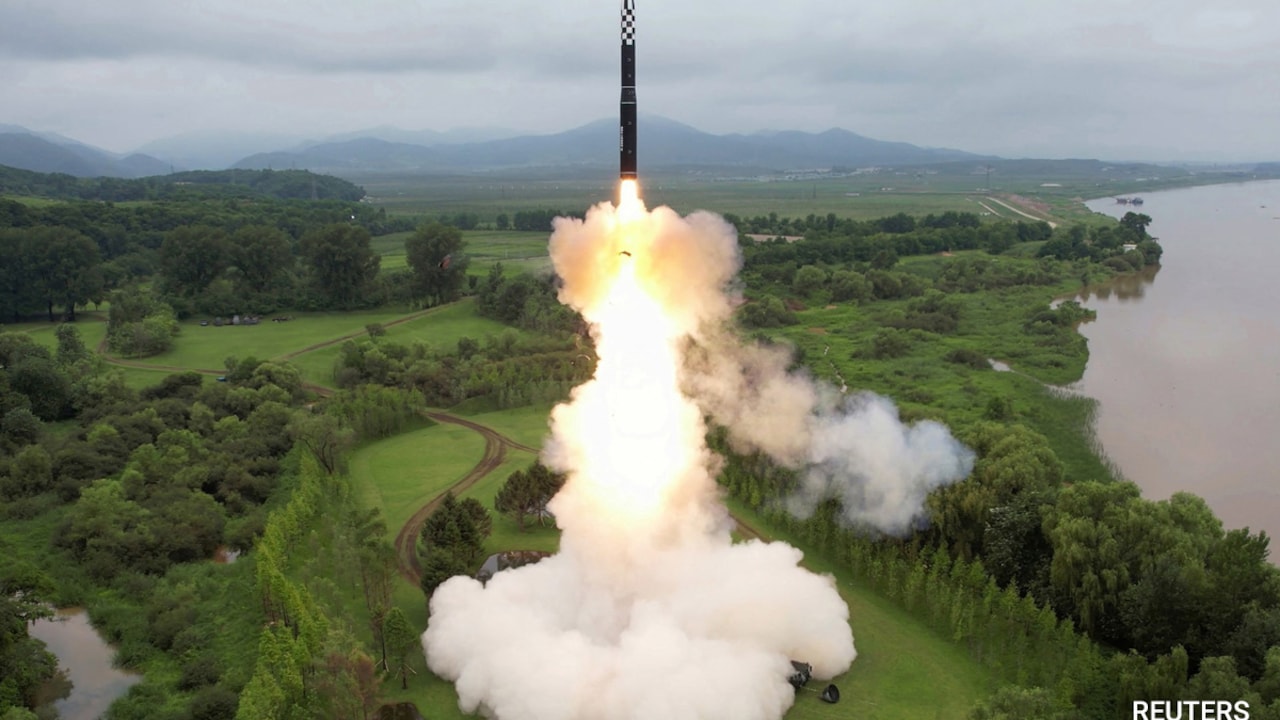
Pyongyang's latest missile tests aren't random noise. When North Korea fires ballistic projectiles toward the Sea of Japan, military planners in Seoul, Tokyo, and Washington pay close attention. But the casual news consumer often misses the underlying strategy.
Let's look past the alarming headlines. Why does Pyongyang keep staging these launches, and what do they actually achieve? Also making waves lately: The Last Conservative Standing.
The Strategic Reality Behind the Sea Launches
Most reports treat every missile test as an isolated panic. They aren't. North Korea operates an ongoing cycle of technological refinement and political signaling. When the Joint Chiefs of Staff in Seoul detect short-range ballistic missiles flying hundreds of kilometers into the East Sea, they are watching a regime stress-test its hardware.
Developing solid-fuel rocket boosters or hypersonic glide vehicles requires real-world telemetry data. Computer simulations only take an engineering team so far. You have to shoot hardware into the water to see if it survives high-velocity atmospheric re-entry. More details regarding the matter are covered by The Washington Post.
Geography dictates the direction. Firing inland is impossible, and sending projectiles south risks an immediate war. Launching eastward into the open waters of the Sea of Japan gives Pyongyang the safety margin it needs to test range and trajectory without triggering a direct kinetic conflict.
What Most Observers Get Wrong
People often ask if these tests mean a full-scale invasion is imminent. Usually, the answer is no.
Pyongyang times its provocations carefully. Tests frequently coincide with joint military exercises between the United States and South Korea, or diplomatic standoffs at the United Nations. It is a tit-for-tat escalation ladder. You run war games on our doorstep, and we drop hardware into the sea.
Another common misconception is that international sanctions completely halt these programs. They don't. Decades of economic isolation forced North Korea to build resilient domestic supply chains for missile production. Financial restrictions make life harder for ordinary citizens, but they haven't stopped the Munitions Industry Department from rolling out new tech.
The Technological Shift You Need to Notice
The nature of these tests has evolved. A few years ago, you mostly saw liquid-fueled Scud variants that took hours to fuel and prep. Today's launches heavily feature solid-fuel systems and maneuverable warheads designed to bypass regional missile defense batteries like the Patriot or Aegis systems.
These newer designs can pull unpredictable maneuvers in flight. That makes tracking them a nightmare for radar operators in Japan and South Korea. Every time a new variant arcs across the sky, military analysts have to update their defensive algorithms.
Reading Between the Lines of Regional Security
If you want to understand where the Korean Peninsula is heading, stop waiting for a diplomatic breakthrough. Look at the hardware instead. The frequency of these tests tells you that Pyongyang is prioritizing tactical readiness over diplomatic engagement. Until a new framework offers incentives that the regime values more than its nuclear deterrent, the cycle of launches into the sea will continue. Keep your eyes on the telemetry data, not the rhetoric.