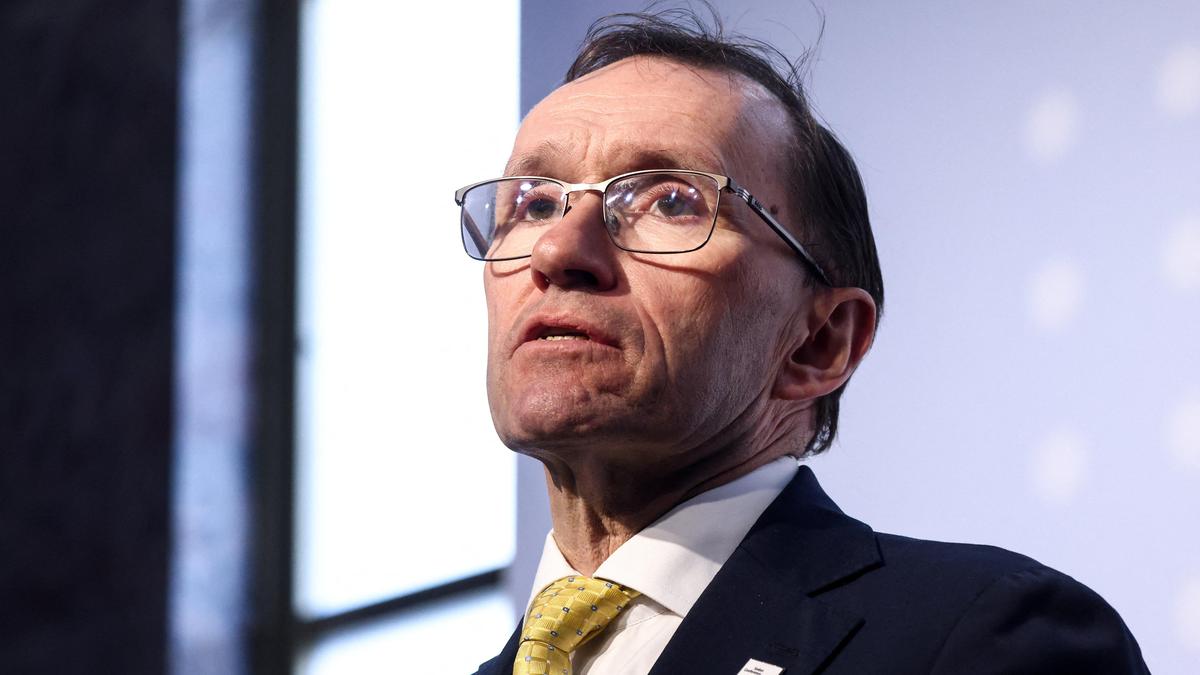
Selectivity is killing the credibility of global justice. When big powers break the rules, the world tends to look the other way depending on who holds the smoking gun. Norway is trying to change that narrative. Foreign Minister Espen Barth Eide has made it clear that the West cannot afford to hold a double standard if it wants the rest of the world to respect the international order.
Norway stands in a unique position. It is a staunch NATO member, a close ally of the United States, and historically a key player in Middle East peace diplomacy through the Oslo Accords. Yet, Oslo is openly criticizing its closest allies alongside its traditional adversaries.
This isn't just about scoring political points. It is a calculated, desperate attempt to save a crumbling rules-based system before it disintegrates completely.
The Crushing Weight of Western Double Standards
Many nations in the Global South see Western foreign policy as pure hypocrisy. They aren't wrong.
When Russia launched its full-scale invasion of Ukraine, Western nations rightly united to condemn the aggression. They slapped on sanctions, sent weapons, and invoked international humanitarian law at every turn. But when Israel launched its military campaign in Gaza, the response from Washington and several European capitals shifted from legal scrutiny to unconditional political shielding.
Norway refuses to play this game. Eide has repeatedly pointed out that if you defend international law in Ukraine, you must defend it in Gaza. You can't pick and choose which war crimes to care about based on your geopolitical alliances.
This consistency matters because the current global division isn't just a shouting match at the United Nations. It has real consequences. When Western nations demand that African, Asian, or Latin American countries isolate Moscow, those countries point directly to Gaza. They see a glaring double standard. By condemning international law violations uniformly, Norway wants to bridge this dangerous trust gap.
Dismantling the Violations Crime by Crime
To understand Norway's stance, you have to look at the specific legal frameworks being shattered by Russia, the US, and Israel. These aren't vague moral failings. They are direct breaches of treaties and conventions that these very states helped create.
Russia and the Destruction of Sovereignty
Russia’s actions in Ukraine represent the most blatant violation of the UN Charter since World War II. The prohibition of the use of force against the territorial integrity of another state is the bedrock of global stability.
- Targeting Civilian Infrastructure: The systematic bombing of Ukrainian power grids, heating plants, and residential buildings directly violates the Geneva Conventions, which forbid terrorizing civilian populations.
- Forcible Transfers: The deportation of Ukrainian children to Russia constitutes a war crime and an element of genocide under international law.
- Illegal Annexations: Holding sham referendums to absorb Kherson, Zaporizhzhia, Donetsk, and Luhansk into the Russian Federation violates the core principle that territory cannot be acquired by force.
Israel and the Collective Punishment of Gaza
Norway’s critique of Israel centers on the disproportionate use of force and the denial of basic human necessities to a captive population. While acknowledging Israel’s right to self-defense after the horrific October 7 attacks by Hamas, Oslo maintains that self-defense does not grant a blank check for civilian slaughter.
- Collective Punishment: Restricting food, water, medicine, and electricity to the entire population of Gaza violates Article 33 of the Fourth Geneva Convention.
- Proportionality and Distinction: The use of heavy unguided munitions in densely populated civilian areas fails the legal test of proportionality. The sheer volume of civilian casualties indicates a failure to properly distinguish between combatants and non-combatants.
- The Settlement Enterprise: Norway has long maintained that Israeli settlements in the West Bank are illegal under international law, acting as a direct obstacle to a two-state solution.
The United States and the Erosion of Accountability
The US rarely gets called out by its European allies, which makes Norway’s stance particularly bold. Washington’s violations are often more subtle, executed through political vetoes and extraterritorial overreach rather than direct territorial conquests.
- Shielding Allies from Accountability: The US has repeatedly used its veto power in the UN Security Council to block resolutions calling for immediate ceasefires or investigating alleged war crimes by Israel. This systematically undermines the authority of the UN.
- The Legacy of Unilateral Interventions: The shadow of the 2003 invasion of Iraq—conducted without UN Security Council authorization—still hangs over global politics. It set a precedent that powerful nations can ignore international law when it suits their domestic interests.
- Subverting International Courts: Washington’s historical hostility toward the International Criminal Court (ICC), including passing the American Service-Members' Protection Act (which authorizes military force to free Americans held by the court), weakens the global framework for prosecuting war crimes.
Why Small Nations Depend on the Rules
Why is Norway taking such a loud, risky stance? It's simple self-preservation.
Small nations don't have massive standing armies or global nuclear arsenals to protect themselves. They rely on the shield of international law. If the global order shifts to a system where "might makes right," small, wealthy nations like Norway become incredibly vulnerable.
If Russia can ignore the UN Charter in Europe, and the US can help its allies bypass the Geneva Conventions in the Middle East, then the rules cease to exist. They become mere suggestions, weaponized only against the weak.
Norway’s foreign policy traditionalists understand that defending these laws isn't an act of soft-hearted idealism. It is hard-nosed realism. They know that if the West completely loses its moral authority, it won't be able to rally global coalitions against future threats.
How to Move Past Geopolitical Hypocrisy
Fixing a broken international system requires more than just strongly worded press releases from Oslo. It demands a fundamental shift in how global powers operate.
First, the abuse of the UN Security Council veto needs to stop. The permanent five members use their veto power as a geopolitical shield for themselves and their proxies, paralyzing the global body when it is needed most. Supporting initiatives that restrict the veto during situations of mass atrocities is a necessary step forward.
Second, states must consistently support independent legal institutions like the International Court of Justice (ICJ) and the ICC. You can't praise the ICC when it issues an arrest warrant for Vladimir Putin, then threaten the court with sanctions when it investigates Western leaders or their allies. Consistency is the only currency that matters in international justice.
Finally, voter populations in Western democracies need to hold their own governments accountable. Demand transparency in arms export policies. Question why certain humanitarian crises receive billions in aid while others are ignored. Real change happens when citizens refuse to let their leaders preach values abroad that they abandon behind closed doors.



