Every time a headline screams about a shooting in a European tourist hub, the travel industry goes into predictable, performative panic. Bookings dip. Cancellations spike. Pundits flood cable news to debate whether the "safe European vacation" is officially dead.
They are asking the wrong question. And by reacting to breaking news as if it represents a statistical trend, travelers are actively making themselves less safe.
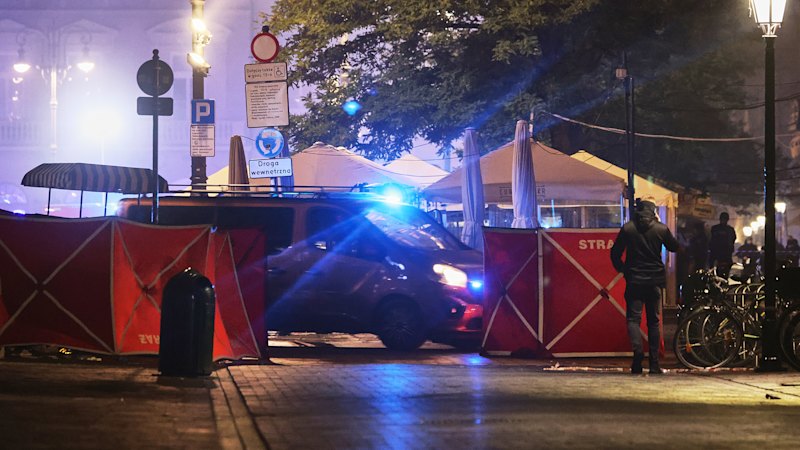
When an active shooter targets a crowded square—whether it happens in Krakow, Paris, or Prague—the immediate media consensus relies on emotional contagion. Outlets publish breathless accounts of chaos, followed by generic travel advisories telling tourists to "remain vigilant." This is lazy journalism designed to harvest clicks from fear. It completely ignores the fundamental mathematics of risk, the mechanics of European firearms policy, and the actual threats that ruin trips every single day.
If you cancel a trip to Central Europe because of a headline, you do not understand how probability works. Worse, you are letting availability bias dictate your life.
The Illusion of the "Safe" Destination
The first mistake travelers make is believing that safety is an absolute state rather than a probability curve.
Europe—and Poland specifically—consistently ranks among the lowest regions globally for intentional homicide and firearm-related deaths. According to data from the United Nations Office on Drugs and Crime (UNODC) and Eurostat, Poland’s homicide rate hovers around 0.7 per 100,000 inhabitants. Compare that to the United States, where the rate routinely sits above 6.0 per 100,000, and firearm-specific homicides alone account for the vast majority of those deaths.
Yet, human psychology does not process denominators. It processes vivid imagery.
Cognitive psychologists Daniel Kahneman and Amos Tversky documented this exact flaw decades ago as the availability heuristic. When a rare, catastrophic event dominates your news feed, your brain overestimates its likelihood simply because the memory is easy to retrieve.
I have spent over a decade consulting on international risk management and corporate travel security. I have seen Fortune 500 companies blow millions of dollars rerouting executives away from tier-one European cities after a single isolated incident, only to send those same employees into regions with catastrophic traffic fatality rates and rampant street crime. They traded a 1-in-10-million risk for a 1-in-5,000 risk because the former made the evening news and the latter did not.
Why European Gun Laws Actually Change the Threat Profile
To understand why panicking over a shooting in a Polish tourist district is misguided, you have to look at the mechanics of European firearms regulation.
Poland maintains some of the strictest gun control laws in the European Union. Under the Polish Act on Weapons and Ammunition, obtaining a firearm license requires a documented, legally recognized justification—such as sport shooting, hunting, or verified personal protection against an extraordinary, ongoing threat. It also mandates rigorous psychological evaluations, psychiatric clearances, and extensive background checks by the police.
As a result, civilian gun ownership in Poland sits at roughly 2.5 firearms per 100 people, according to the Small Arms Survey. In the United States, that number exceeds 120 per 100 people.
Here is the nuance the cable news pundits miss: Strict gun laws do not make shootings impossible; they make them anomalies.
When a mass shooting occurs in a low-gun-density environment, it shocks the system precisely because the infrastructure for casual, impulsive gun violence does not exist. There is no secondary market overflowing with untracked handguns in Krakow’s Old Town. Acquiring an illegal weapon requires navigating deeply embedded criminal networks—a massive friction barrier that stops 99% of unstable actors before they ever obtain a firearm.
When an incident does break through those barriers, treating it as a systemic collapse of public safety is analytically bankrupt. It is an outlier event, not a new baseline.
The Real Threats Tourists Ignore While Watching the News
While travelers obsess over active shooters, they routinely walk straight into predictable, high-probability hazards that actually fill up embassy emergency logs.
If you want to survive your European trip intact, stop worrying about black-swan violence and start managing the threats that actually happen every hour:
- Pedestrian and Transit Fatalities: Road traffic injuries are consistently the leading cause of unnatural death for healthy travelers abroad, according to the World Health Organization (WHO) and the U.S. Department of State. Stepping off a curb in a unfamiliar city while looking at your phone—where trams, cyclists, and fast-moving vehicles share narrow cobblestone streets—is exponentially more dangerous than sitting in a crowded cafe.
- Alcohol-Induced Vulnerability: In major European party hubs, from Krakow’s Rynek Główny to Amsterdam’s Red Light District, alcohol is the primary catalyst for tourist victimization. Drink spiking, unlicensed taxi scams, and late-night assaults spike dramatically when travelers abandon basic situational awareness after three pints of local beer.
- Distraction Theft and Organized Pickpocketing: High-density tourist zones are magnets for professional theft rings. Losing your passport, phone, and credit cards in a foreign country creates an immediate logistical and financial crisis. Yet, tourists who spend hours researching "terrorism risk" will happily leave their unlocked backpack resting against the leg of an outdoor bistro chair.
- Medical Emergencies Without Coverage: Thousands of travelers fly internationally every week assuming their domestic health insurance covers them abroad. It usually does not. A sudden appendicitis, a broken ankle on wet cobblestones, or a severe allergic reaction without dedicated travel medical and evacuation insurance can result in tens of thousands of dollars in out-of-pocket debt.
Dismantling the "Should I Cancel My Trip?" Trap
Whenever breaking news hits a major destination, search engines flood with variations of the same anxious query: "Is it safe to travel to [City] right now?"
The honest, unfiltered answer is that right after a major security incident is statistically the safest time to visit.
Consider the operational reality on the ground in the immediate aftermath of a high-profile attack:
- Maximum Law Enforcement Saturation: Local police, counter-terrorism units, and municipal security forces flood the area. Patrol frequency increases dramatically, response times drop to near zero, and intelligence agencies put every known associate and flagged individual under intense surveillance.
- Heightened Private Security: Hotels, restaurants, transit hubs, and venues immediately tighten access controls, bag checks, and perimeter monitoring.
- The "Crowd Thinning" Effect: Because reactive tourists cancel their bookings in droves, the destination becomes less congested. Lower crowd density reduces bottlenecks, speeds up transit, and makes it vastly easier to maintain situational awareness in public spaces.
Imagine a scenario where two identical travelers book the exact same itinerary to Central Europe. Traveler A cancels immediately after seeing a breaking news alert, losing non-refundable deposits and rebooking a "safe" domestic beach vacation—where they promptly get caught in a rip current or suffer severe heatstroke. Traveler B keeps their flight, arrives two weeks later, enjoys empty museums, attentive hospitality from grateful local businesses, and walks streets patrolled by the highest concentration of security personnel the city has seen in a decade.
Traveler B did not take a reckless gamble. Traveler B simply refused to let media sensationalism override basic logic.
The Contrarian Protocol for Real-World Travel Security
Admitting that random shootings are statistically negligible does not mean walking through foreign cities with your eyes closed. Complacency is just as dangerous as panic.
To be fair, the downside of a strictly statistical approach to travel safety is that low probability does not mean zero probability. If you are the one person caught in the wrong square at the wrong minute, macroeconomic crime statistics offer zero comfort. You still need a tactical baseline—not because Europe is a war zone, but because personal responsibility is non-negotiable anywhere on earth.
Forget generic government travel advisories. Use this operational framework instead:
1. Apply the "Baseline vs. Anomaly" Rule
Before you leave, look up the baseline violent crime rate and transit safety record of your destination using hard data from the U.S. Overseas Security Advisory Council (OSAC) or equivalent diplomatic security briefings. Judge the city by its five-year trend, not its five-minute news cycle.
2. Master "Soft Target" Positioning
In any crowded public square, train station, or outdoor market, practice passive spatial positioning. Sit with your back to a solid wall rather than an open street. Identify at least two distinct exits—not the main entrance everyone will stampede toward in a panic—within ten seconds of entering a venue. This takes zero paranoia and five seconds of habit.
3. Build a Digital and Financial Firewall
Never carry all your survival tools in one pocket. Keep a backup credit card, a photocopy of your passport bio-page, and emergency local currency locked in your hotel safe or hidden in a separate bag. Enable offline maps on your phone before you land so you never have to stand frozen on a street corner staring at a loading screen—the universal signal of a lost, distracted target.
4. Ditch the "Tourist Uniform"
Blending in is the most underrated security tool available. Loud conversations in English, bulky camera straps, branded university sweatshirts, and open maps broadcast your vulnerability from fifty yards away. Dress for the local climate and culture, walk with purpose, and keep your phone out of sight when navigating busy intersections.
5. Follow Local Signals, Not Foreign Pundits
If you are on the ground when an incident occurs, ignore cable news broadcasts from 4,000 miles away. Monitor official local police social media feeds, municipal alert systems, and guidance from your hotel’s front desk. Locals know the neighborhood geography and real-time cordon zones; foreign anchors reading off a teleprompter do not.
Stop Letting Fear Curate Your Life
The travel industry thrives on selling you an illusion of total control, and the news industry thrives on shattering it for ratings. Both profit when you react emotionally instead of analytically.
A violent tragedy in a European city deserves grief, rigorous investigation, and justice for the victims. What it does not deserve is your surrender to irrational fear. If you let every isolated headline dictate where you go, what you see, and how you live, you do not need a travel agent—you need a padded room.
Pack your bags, buy proper medical insurance, look both ways before crossing the tram tracks, and get on the plane.