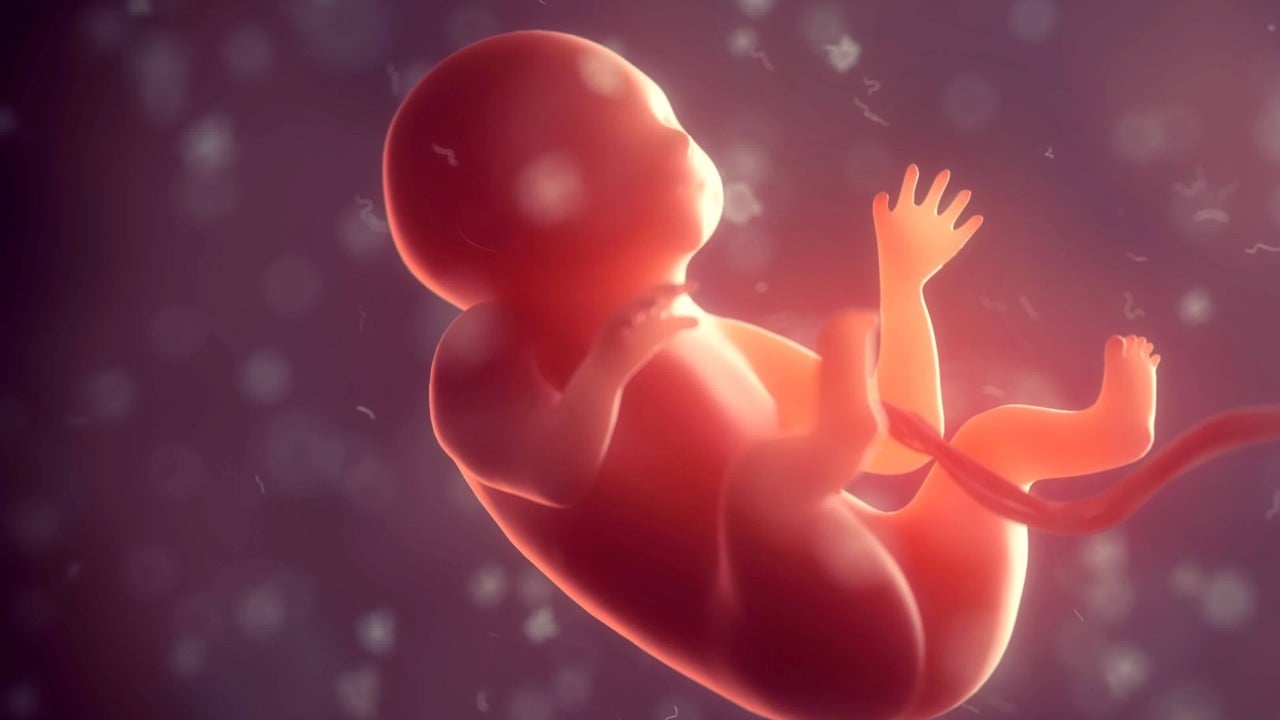
The aerospace press is swooning again. This time, the excitement stems from experiments conducted by Chinese researchers who sent early-stage mammalian embryos into orbit. The headlines practically write themselves: "A bumpy road, but space colonization is still on track!" They point to the fact that some mouse cells managed to divide and reach the blastocyst stage in microgravity as a "silver lining."
This is not a silver lining. It is a dangerous, biologically illiterate distraction.
We are treating the monumental barrier of extra-terrestrial reproduction like an engineering snag—a minor bug to be patched in the next software update. The reality is far more brutal. Mammalian reproduction did not evolve to adapt to different environments; it evolved as a highly specific, hard-coded negotiation with Earth's gravity vector and magnetosphere.
To suggest we are "getting closer" to breeding in space because a few cells managed to divide in Low Earth Orbit (LEO) is like throwing a car engine block off a cliff, watching it spin, and claiming we are close to inventing a flying car.
The Cleavage Delusion: Why Early Division is a False Metric
The core of the scientific misdirection lies in confusing cleavage with morphogenesis.
During the first few days after fertilization, an embryo undergoes cleavage. This is a sequence of rapid cell divisions where the overall volume of the embryo does not change; it simply partitions itself into smaller cells. It is a largely mechanical, pre-programmed process driven by maternal proteins and RNAs already present in the egg.
Yes, a mouse embryo can divide into a blastocyst in microgravity. But a blastocyst is just a hollow ball of cells. The real challenge of development is not division; it is organization.
When you strip away Earth's gravitational constant of $1\text{ g}$ ($9.8\text{ m/s}^2$), the spatial coordinates of the developing embryo collapse. During my time analyzing developmental bio-payloads for orbital research initiatives, we saw this repeatedly: cells can split in zero gravity, but they do not know where to go.
Without gravity, the physical cues that dictate the axis of the body—deciding what becomes the head and what becomes the tail—are fundamentally scrambled.
- Polarity Loss: In gravity, dense yolk components and organelles settle, establishing a natural top-to-bottom axis. Without this gradient, the delicate symmetry-breaking events required for gastrulation fail.
- Gastrulation is the Real Wall: Gastrulation is the phase where the single-layered blastocyst reorganizes into three distinct germ layers: the ectoderm, mesoderm, and endoderm. It is the moment a blob of cells begins to resemble an animal. In microgravity, this process descends into structural chaos.
If you cannot successfully navigate gastrulation, you do not get a fetus. You get a disorganized mass of teratoma-like tissue. Celebrating blastocyst formation is celebrating a race that stopped at the starting gun.
The Convection Catastrophe inside the Womb
To understand why space pregnancy is a dead end, we must look at the physics of fluids in microgravity.
On Earth, natural convection drives the movement of nutrients, waste, and signaling molecules. Warm, less dense fluids rise, and cool, denser fluids sink. This constant, gravity-driven mixing ensures that cellular waste products are carried away and nutrients are delivered to the cell surface.
In microgravity, natural convection ceases entirely. The physical environment shifts to one dominated purely by diffusion.
Imagine a developing embryo sitting in a microscopic pocket of fluid.
- As the embryo consumes oxygen and expels metabolic waste, a stagnant boundary layer forms around it.
- Without gravity to drive fluid movement, the embryo is rapidly starved of oxygen while being suffocated by its own lactic acid and cellular debris.
- The signaling molecules (morphogens) that must travel from one side of the embryo to the other to instruct cells on what tissue type to become are trapped in sluggish diffusion gradients.
The womb is not a passive biological sack; it is an active mechanical pump that relies on the mother’s physical movement, vascular pressure, and gravity to circulate fluids. When you remove gravity, the entire mass-transport system of the maternal-fetal interface breaks down.
The Coriolis Lie: Why "Just Spin the Ship" is Not the Answer
The standard, lazy counter-argument to space-reproduction barriers is simple: "We will just build rotating space stations to generate $1\text{ g}$ of artificial gravity."
This is a profound misunderstanding of rotational physics and biological development.
To generate $1\text{ g}$ of artificial gravity without causing severe motion sickness in the inhabitants, a space station must have a massive radius. If you use a smaller, economically viable rotating habitat, you introduce a deadly force: the Coriolis effect.
In a small rotating habitat, the gravity gradient varies wildly across even short distances. The force felt at a person's head is significantly different from the force felt at their feet. This gradient creates constant, disruptive shear stresses in fluids.
$$a_c = -2(\vec{\omega} \times \vec{v})$$
The Coriolis acceleration ($a_c$) is directly proportional to the angular velocity ($\vec{\omega}$) and the velocity of the fluid moving within the system ($\vec{v}$). Within a pregnant uterus, maternal blood flow, amniotic fluid currents, and intracellular transport are all dynamic, moving fluids.
When a pregnant mother turns her body or even walks inside a small rotating habitat, the Coriolis forces will generate abnormal, twisting fluid shears within the amniotic sac. These artificial shear stresses will:
- Disrupt the delicate mechanotransduction pathways of the developing embryonic skeleton.
- Interfere with the migration of neural crest cells, which are highly sensitive to shear stress.
- Scramble the development of the vestibular system (the inner ear), which relies on gravity-sensitive otoliths to establish balance.
An infant gestated in a high-Coriolis environment would likely be born with severe skeletal deformities and a permanently broken sense of balance, unable to function in either zero gravity or Earth's gravity.
The High-Z Cosmic Ray Threat
Even if we magically solved the gravity and fluid-dynamics crises, we are still ignoring the nuclear furnace of deep space.
Low Earth Orbit is protected by the Van Allen radiation belts. The Chinese embryo experiments, like almost all space biology experiments to date, occurred under this protective magnetic umbrella.
Deep space is entirely different. It is constantly bombarded by Galactic Cosmic Rays (GCRs) and Solar Particle Events (SPEs). These are not just X-rays; they are HZE ions—highly charged, heavy, relativistic nuclei like iron ($^{56}\text{Fe}$) traveling at near-light speeds.
[HZE Ion Track] ====>  \ (Double-Strand DNA Break)
                       / (Epigenetic Scrambling)
                      *  (Apoptosis / Cell Death)
A single HZE ion passing through a blastocyst can destroy dozens of adjacent cells, leaving a path of ionization that destroys the epigenetic markers needed for cell differentiation.
While an adult human can survive moderate radiation doses with an increased lifetime risk of cancer, an embryo has zero redundancy. If an ion track obliterates the handful of cells destined to become the heart or the central nervous system during early organogenesis, the pregnancy terminates instantly.
To shield a pregnant woman from GCRs in deep space would require meters of water, regolith, or active magnetic shielding systems that are currently beyond our engineering capabilities.
Stop Trying to Save the Wrong Species
We need to stop asking how we can get mammalian biology to survive in space. It is the wrong question.
We are trying to force a fragile, carbon-based machine that evolved under a specific atmospheric pressure, magnetosphere, and gravitational vector to survive in an environment that is hostile to its very chemical foundations.
If we are serious about occupying the cosmos, we must abandon the romantic, sci-fi fantasy of natural human reproduction in space. The path forward is not "silver linings" in mouse embryo division. It is radical, uncomfortable, and highly controversial technological intervention.
We must focus our research on:
- Synthetic Biology and Germline Modification: Engineering human genomes to tolerate higher radiation thresholds by incorporating extremophile DNA repair mechanisms (such as Dsup proteins from tardigrades).
- Ex vivo Gestation with Mechanical Gravity: Developing artificial wombs housed inside massive, non-Coriolis-producing linear acceleration chambers, rather than trying to sustain a pregnancy inside a living, moving mother in microgravity.
- Accepting the Robotic Proxy: Recognizing that our biological descendants may never colonize deep space. Our machine descendants, or highly modified post-human lineages, will.
The insistence that we can colonize Mars or the Moon using traditional biological reproduction is a form of scientific denialism. It is time to retire the fantasy, look at the brutal developmental biology, and start designing for the universe as it actually is—not how we wish it to be.