The Sound Before the Silence
The air changes first. It loses its salt-soft warmth, turning heavy, metallic, and sharp. If you have spent enough mornings standing on the cliffs above the Pacific, you learn to read the atmosphere long before you look at the horizon. You can feel the barometric drop in your teeth.
Then comes the sound. Not the rhythmic, hypnotic wash of a summer swell that lulls beachgoers into a false sense of security, but a deep, subterranean thrum. It vibrates through the soles of your feet through the damp sand. It is the sound of thousands of tons of water waking up, driven by a distant gale thousands of miles out to sea, marching across the blue desert of the Pacific with a singular, violent purpose. Recently making headlines recently: The Structural Mechanics of Middle Power Diplomacy: Quantifying South Korea Strategic Pivot.
By midday, the postcard is gone.
The wide, golden ribbons of California sand that tourists flock to are swallowed. The familiar shoreline is replaced by a churning, dark-brown soup of foam, debris, and raw kinetic energy. Storm swells have arrived. And with them come the hidden hazards that turn a casual coastal walk into a high-stakes gamble. More information regarding the matter are explored by TIME.
Anatomy of an Invisible Engine
To understand why a distant storm off the Aleutian Islands can turn a Tuesday afternoon in Santa Cruz or Ventura into chaos, you have to look past the surface. Water is deceptive. It looks soft. It yields to the hand, parts for a swimmer, and reflects the sunset. But motion changes everything.
Consider a hypothetical afternoon with Elena, a veteran lifeguard who has spent fifteen summers watching the water from an elevated wooden perch. She knows the ocean’s moods better than her own apartment. When a heavy storm churns the northern Pacific, it generates long-period swells. These are not local wind chop that dies down by dinner time. These are organized trains of energy—energy packets moving at highway speeds beneath the waves.
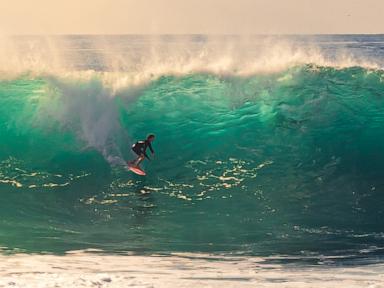
When these swells hit the sudden shallow shelf of the California coast, they do not just break. They pile up. They rear back like startled horses, doubling in height as they find the continental shelf.
"People see a big wave and they respect it," Elena often tells the junior guards. "It is the water they do not see that breaks their hearts."
The real danger is the undertow and the rip current system. As millions of gallons of water are hurled onto the beach by successive monster waves, that water has to go somewhere to get back out to sea. It rushes backward through narrow channels in the sandbars, creating invisible rivers running perpendicular to the shore. These rip currents can flow at speeds up to eight feet per second. That is faster than an Olympic swimmer can sprint.
If you step into one, rationality evaporates. The water does not care that you paid for parking. It does not care that you are a strong swimmer or that your towel is waiting on the dry sand fifty yards away. It simply pulls.
The Weight of a Red Flag
On days like this, the rituals of the beach shift entirely. The volleyball nets are rolled up and tucked away. The concession stands pull their metal shutters down. The only bright spots against the bruised, grey-violet expanse of the shoreline are the neon uniforms of emergency personnel and the snapping fabric of red warning flags.
Those flags are not suggestions. Yet, every single time a high-surf advisory drops along the coast, someone tests the math.
Watch the shoreline for ten minutes. A tourist walks down to the foam line, sneakers in hand, laughing as a rogue tongue of water laps at their ankles. They are looking at the horizon, admiring the sheer drama of the spray hitting the cliffs. They are taking a photograph for a screen.
They are missing the pulse interval.
Ocean swells arrive in sets. There might be a deceptive lull of five minutes where the water flattens out, inviting you to venture just a little closer. That lull is the inhale before the ocean catches its breath. Then the set arrives—three, five, sometimes seven waves larger than all the rest, sweeping fifty yards higher up the beach than the footprint you left a moment ago.
When that wall of water hits a seawall or a rocky outcrop, it does not stop. It ricochets. It turns into backwash—a violent, churning torrent of water racing back out to sea, capable of sweeping a grown adult off their feet in ankle-deep water, dragging them into the impact zone where the next wave is already curling.
Living on the Edge of a Blue Desert
There is a profound humility that comes from living beside the Pacific. We build our coastal highways, our sprawling beachside neighborhoods, our piers, and our promenades as if the land were permanent. We treat the ocean like a permanent backdrop for our weekends.
We forget that the ocean is a dynamic, shifting boundary. It is an engine of weather, an ancient wilderness that operates entirely outside human schedules.
When the winter storms brew and the high-surf warnings flash across local news feeds, the California coast undergoes a psychological transformation. The crowds vanish. The beach belongs once again to the elements. Gulls wheel wildly against the squall, riding the onshore gales with effortless arrogance, while down below, the relentless pounding of the surf reshapes the coastline foot by foot, grain by grain.
If you go down to the water today, leave your shoes on. Keep your distance from the jetties and the slippery rocks where the spray hangs heavy in the air. Respect the red flags snapping in the gale. Stand far enough back to feel the concussive thump of the water in your chest, and let the ocean remind you of just how small we are, and how fierce the world remains when it decides to stretch its limbs.