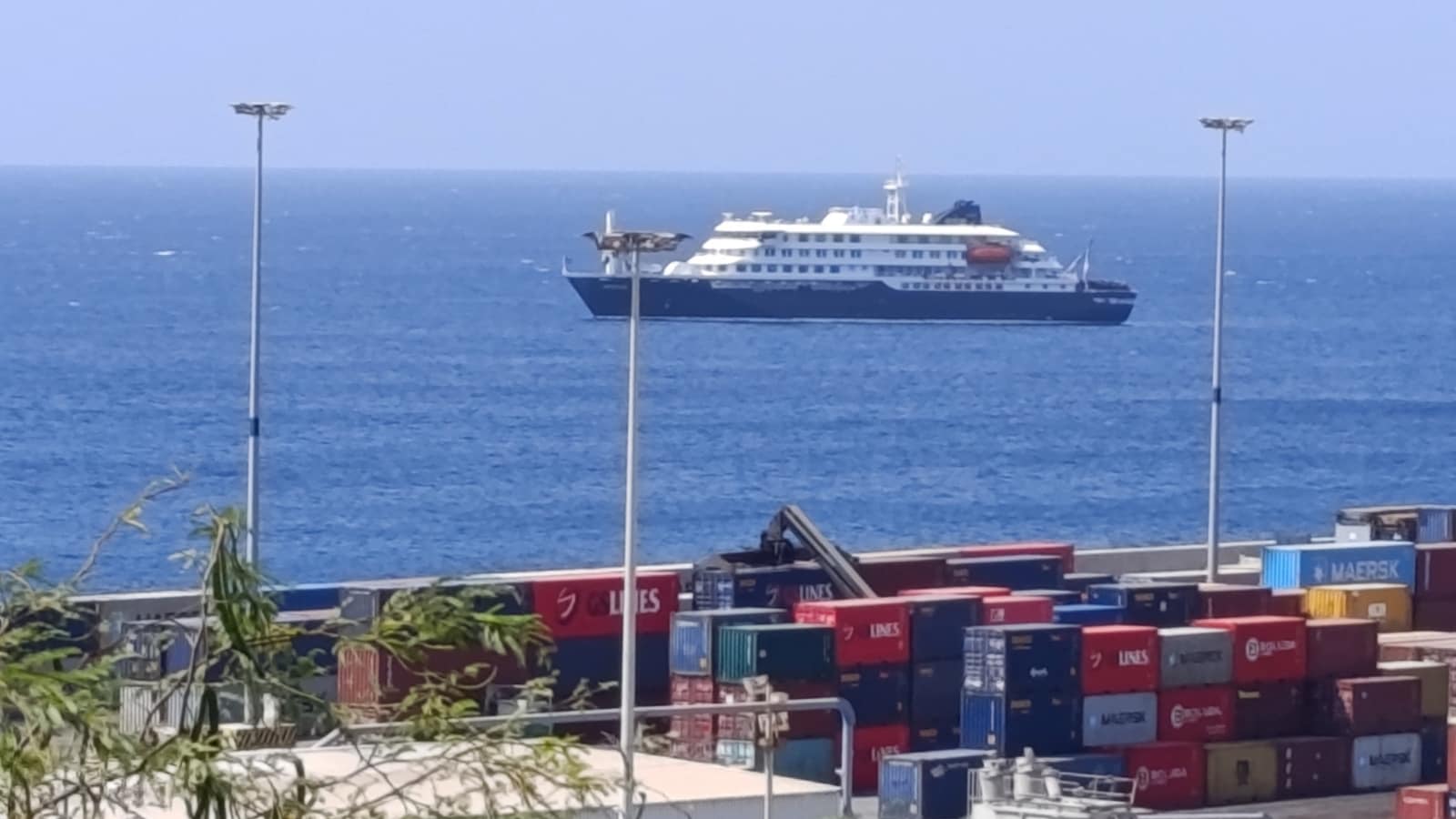
The containment of high-consequence viral pathogens within a civilian infrastructure requires a transition from standard clinical care to a closed-loop biocontainment system. When managing a cluster of Hantavirus Pulmonary Syndrome (HPS) cases—specifically those emerging from a confined environment like a cruise ship—the objective shifts from simple patient recovery to the total mitigation of environmental leakage and cross-contamination. This transition is governed by three critical pillars: physical spatial engineering, pressure gradient management, and the biological waste lifecycle.
The Tri-Zonal Isolation Framework
Effective biocontainment does not exist in a single room; it is a spatial hierarchy designed to create a series of barriers between the infected host and the public. In the context of a dedicated isolation ward, the floor plan is divided into distinct risk zones that dictate staff movement and air filtration requirements.
- The Hot Zone (Inpatient Room): This is the primary source of viral shedding. For Hantavirus, which is primarily transmitted via aerosolized excreta from rodents but managed with extreme caution in clinical settings to prevent any theoretical person-to-person or environmental spread, the room must act as a terminal sink. All surfaces must be non-porous and resistant to high-concentration sodium hypochlorite solutions.
- The Warm Zone (Antechamber/Doffing Area): This serves as the transition point for healthcare workers. It is a pressurized airlock where Personal Protective Equipment (PPE) is removed following strict sequential protocols. The spatial layout here must prevent "re-entrainment," where turbulent air currents pull contaminants from the Hot Zone into the clean corridor.
- The Cold Zone (Clean Corridor): The staging area for equipment and monitoring. This area maintains positive pressure relative to the isolation suite to ensure that if a seal fails, clean air flows into the contaminated area, rather than the reverse.
Pressure Gradient Dynamics and Air Exchange Rates
The invisible barrier of a containment ward is the atmospheric pressure differential. To achieve clinical-grade isolation, the ward must maintain a negative pressure of at least -2.5 Pascals (0.01-inch water gauge) relative to the surrounding hallways. This ensures a persistent inward directional airflow.
Air quality is managed through High-Efficiency Particulate Air (HEPA) filtration systems. These filters must be rated to capture 99.97% of particles at a 0.3-micron diameter. Since Hantavirus particles are approximately 80-120 nanometers, they are captured through a combination of diffusion and interception within the HEPA matrix. The system must achieve a minimum of 12 air changes per hour (ACH). In a high-density scenario involving multiple cruise ship passengers, this rate is often pushed to 20 ACH to rapidly dilute the viral load in the air.
The failure point in many facilities is the "door-opening transient." When a door opens, the pressure differential momentarily collapses. To counter this, the antechamber acts as a buffer, ensuring that the Hot Zone never has a direct opening to the Cold Zone.
Pathogen Characteristics and Clinical Manifestations
Hantavirus is not a monolithic threat; its severity depends on the specific viral strain. In the Americas, the Sin Nombre virus is the primary driver of Hantavirus Pulmonary Syndrome (HPS). The viral mechanism involves the infection of endothelial cells—the cells lining the blood vessels.
The clinical progression follows a predictable but lethal trajectory:
- The Prodromal Phase: Lasting 3 to 5 days, characterized by fever, myalgia, and gastrointestinal distress. At this stage, it is often indistinguishable from influenza, creating a significant diagnostic lag.
- The Cardiopulmonary Phase: A rapid onset of pulmonary edema and hypotension. This is caused by "capillary leak syndrome," where the blood vessels become permeable, flooding the lungs with plasma.
- The Diuretic Phase: In survivors, this marks the rapid clearance of pulmonary edema and the restoration of vascular integrity.
The mortality rate for HPS remains near 35-40%. Because there is no specific antiviral treatment or vaccine, the medical strategy is entirely supportive. This necessitates the use of Extracorporeal Membrane Oxygenation (ECMO) in severe cases. ECMO serves as an external lung, oxygenating the blood and allowing the patient's lungs to rest and recover from the fluid overload.
The Biological Waste Lifecycle
A cruise ship cluster generates a massive volume of Category A infectious waste. The containment ward must be treated as a biological refinery where everything that enters is eventually sterilized before exiting.
The waste stream is categorized into three paths:
- Liquid Effluent: All sinks and toilets in the isolation ward must lead to a dedicated decontamination tank. Chemical sterilization or heat-treatment systems ensure that no viable viral particles enter the municipal sewer system.
- Solid Waste: PPE, linens, and medical disposables are double-bagged within the Hot Zone, wiped down with disinfectant in the antechamber, and then transported to an on-site autoclave. Autoclaving uses saturated steam at $121^\circ C$ ($250^\circ F$) under high pressure to denature viral proteins.
- Gaseous Waste: As previously noted, this is handled via HEPA filtration, often followed by UV-C germicidal irradiation within the ductwork to disrupt the viral RNA.
Operational Constraints in Mass Casualty Events
Moving an entire cohort of passengers from a cruise ship to a land-based isolation ward introduces a "logistical friction" that degrades containment protocols. The primary risk factor is the transport interface. Each transfer point—from the ship’s gangway to the ambulance, and the ambulance to the hospital intake—represents a potential breach.
The standard operating procedure involves the use of Isopod units. These are portable, negative-pressure envelopes that encapsulate the patient during transit. However, these units have a limited battery life for their filtration fans, creating a hard time-limit on the distance between the port and the biocontainment facility.
Furthermore, the "nursing-to-patient ratio" in a Level 4 ward is typically 1:1 or 2:1. A cluster of 20 or 30 passengers would immediately overwhelm most regional biocontainment units, which are usually designed for 2 to 5 concurrent patients. This creates a bottleneck where patients must be triaged based on the "Respiratory Distress Index," with only the most critical receiving Level 4 isolation while others are held in improvised Tier 2 facilities.
Strategic Recommendation for Port-City Infrastructure
The current reliance on static, distant hospital wards for maritime disease outbreaks is structurally flawed. The delay between ship docking and ward stabilization allows for the escalation of the cardiopulmonary phase in infected passengers.
Municipalities must shift toward a "Modular Containment Strategy." This involves the deployment of rapidly scalable, ISO-containerized biocontainment units directly to the pier. These modules provide immediate Level 3+ isolation and ECMO capability, eliminating the high-risk transport phase. By treating the pier as the primary containment boundary, the city protects its central medical infrastructure from the strain of a concentrated outbreak while ensuring the highest survival probability for the infected cohort. This approach moves the barrier to the pathogen, rather than moving the pathogen through the city to the barrier.