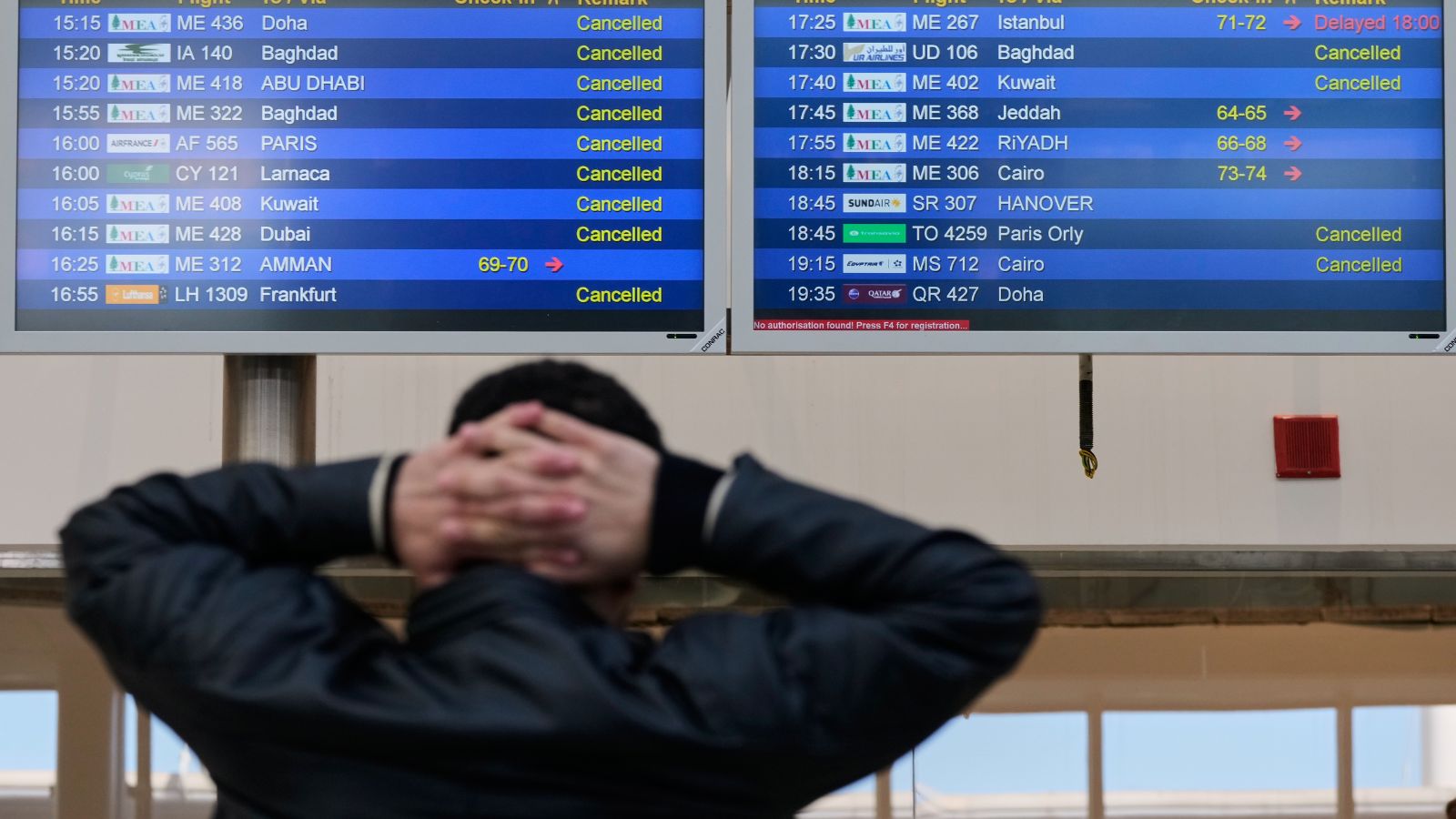
The collapse of transit operations at Dubai International (DXB) during extreme meteorological events is not a failure of individual airline service but a systemic breach of a high-utilization hub model. When a primary global node, which facilitates over 80 million passengers annually, encounters a "black swan" weather event, the resulting chaos is a mathematical certainty of queue saturation and resource depletion. The "confusion" reported by travelers is the psychological manifestation of a breakdown in information symmetry between the airport's centralized command and its distributed service endpoints.
To understand the breakdown, one must analyze the airport as a series of interconnected pressure vessels. When flight cancellations occur, the pressure—represented by passenger volume—cannot be vented; it simply transfers from the airside (planes) to the landside (terminals), quickly exceeding the physical and digital bandwidth of the facility.
The Triad of Hub Paralysis
Three distinct variables dictate the severity of a hub's operational failure: nodal density, recovery velocity, and the information-action gap.
1. Nodal Density and Flow Constraints
Dubai operates on a high-density "hub and spoke" architecture. Unlike point-to-point networks where a disruption is localized, a hub-and-spoke model relies on the synchronized arrival and departure of "waves."
- Wave Synchronization: In a standard cycle, hundreds of aircraft land within a narrow window to facilitate thousands of transfer connections.
- The Logistical Bottleneck: When the "departure" phase of a wave is canceled, the "arrival" phase of the next wave continues until the tarmac reaches physical capacity.
- Terminal Saturation: Once the aircraft can no longer deplane because the terminal has reached its fire-code occupancy or staffing limit, the system enters a "deadlock" state. This is where passengers remain trapped on planes for 10 to 20 hours—not due to negligence, but because the terminal lacks the "buffer" space to absorb the influx.
2. Recovery Velocity and Staffing Elasticity
Recovery velocity is the rate at which a system returns to its steady state. In Dubai's case, the velocity is hampered by the specialized nature of the workforce. Ground handling, refueling, and security clearance require specific certifications. During a crisis, the "staffing elasticity"—the ability to scale up manpower—is virtually zero.
The disruption is compounded by the "Crew Duty Limit" (CDL). Civil aviation regulations strictly dictate how long a pilot or flight attendant can work. When a flight is delayed by six hours, the crew often "times out." Because the hub is already saturated, there are no hotel rooms available for the timed-out crew, and no way to transport fresh crew to the airport through flooded or blocked infrastructure. The recovery velocity drops to near zero because the human components of the machine are legally and physically immobilized.
3. The Information-Action Gap
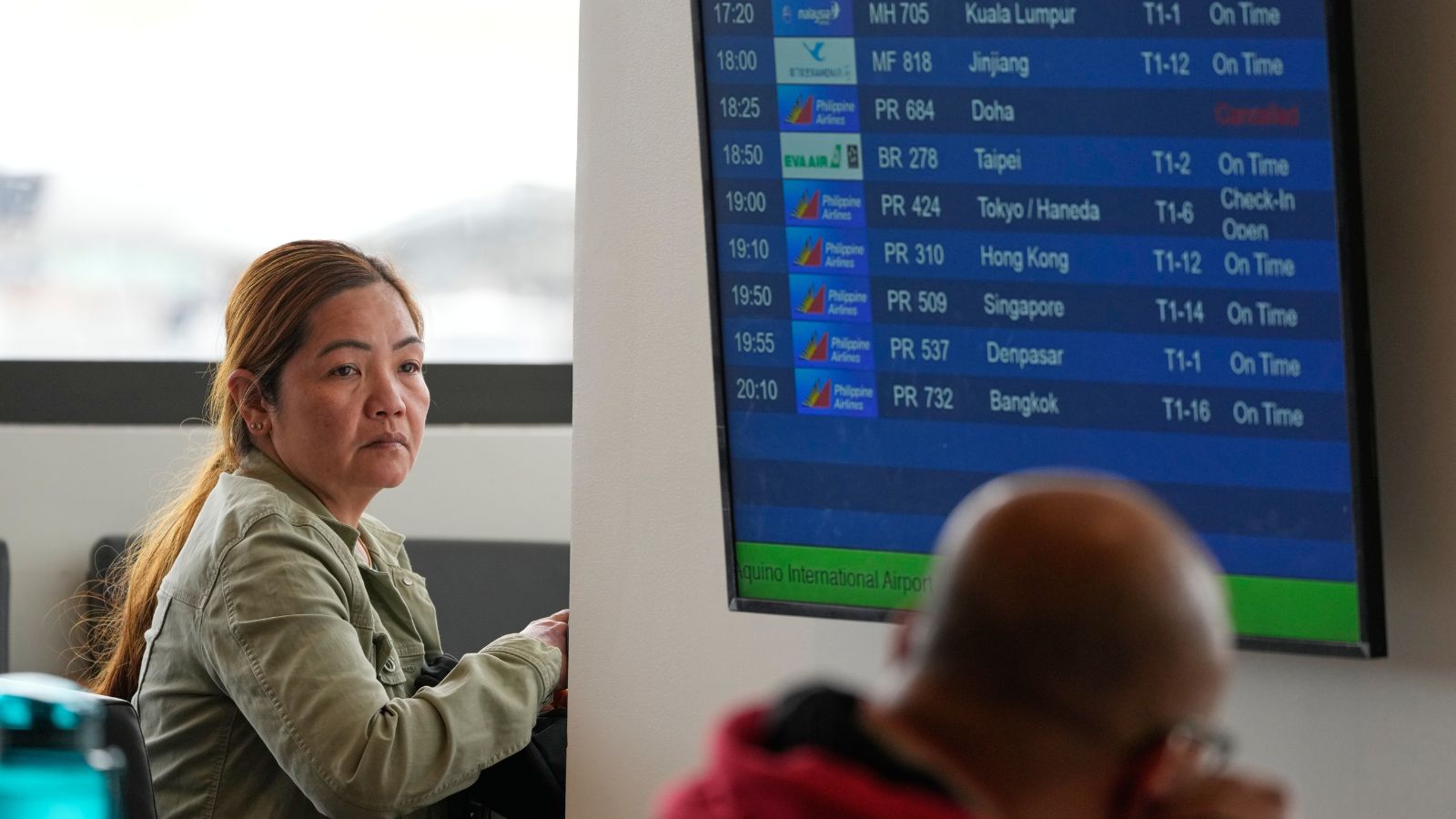
Confusion arises when the "Ground Truth" (what is actually happening) diverges from the "System Truth" (what the digital boards display). In many instances, passengers see "On Time" for a flight that is physically impossible to board.
This happens because the Resource Management System (RMS) often fails to update in real-time when manual overrides are high. When an airline’s digital infrastructure cannot keep pace with the physical reality of a grounded fleet, the resulting "information asymmetry" leads to erratic passenger behavior, increased security friction, and the mass-crowding of service desks that are already under-resourced.
The Cost Function of Stranded Assets
The financial and operational impact of a hub shutdown is calculated through a complex cost function. It is not merely the loss of ticket revenue, but the compounding cost of "displaced assets."
- Aircraft Displacement: An Airbus A380 stuck in Dubai is an asset that cannot perform its next scheduled leg from London to New York. The opportunity cost ripples across the global network.
- Perishable Inventory: Catering and fuel loads have "expiration" windows in a crisis. Thousands of meals must be discarded, and refueling schedules are shattered, leading to a secondary crisis of logistics once the weather clears.
- Reputational Litigative Risk: In jurisdictions like the EU (under EC 261/2004), the financial penalties for delays are significant. While "extraordinary circumstances" (like weather) often exempt airlines from direct compensation, the "duty of care"—providing hotels and meals—remains a mandatory, unhedged expense.
Structural Vulnerabilities in Desert Infrastructure
The specific failure in Dubai highlights a disconnect between "Design Intent" and "Edge Case Reality."
Dubai’s infrastructure is optimized for heat, not hydraulic load. The drainage systems of the runways and surrounding access roads are designed for low-frequency, low-intensity rainfall. When precipitation exceeds the 100-year mean, the "Hardstand" (where planes park) becomes a lake.
- Engine Ingestion Risks: Water levels on the tarmac can reach heights where jet engine intakes are at risk of ingesting debris or excessive moisture, preventing taxiing even if the visibility is clear.
- Automated System Failures: Underground electrical vaults and baggage handling tunnels are susceptible to flooding, which can disable the Automated People Movers (APM) and the baggage belts, effectively "blinding" the airport's internal logistics.
The Behavioral Economics of Terminal Chaos
As the physical environment degrades, passenger behavior shifts from "cooperative" to "competitive." This transition is driven by the scarcity of three primary resources:
- Information: The need to know when they will leave.
- Physical Comfort: Access to seating, food, and hygiene.
- Digital Power: Access to charging stations to maintain communication with the outside world.
When these resources become scarce, the "Self-Service" model of modern airports fails. Passengers who would normally use an app are forced to seek human interaction. This creates a "Denial of Service" (DoS) attack on airport staff. If 40,000 passengers all attempt to speak to 200 gate agents, the response time per passenger becomes infinite, ensuring the "chaos" reported by media outlets.
Strategic Mitigation Frameworks
For a hub to survive these events, a transition from "Efficiency-First" to "Resilience-First" modeling is required.
Dynamic Buffer Allocation
Hubs must maintain "Ghost Lounges"—areas of the airport that remain unused during 95% of the year but are equipped with basic life-support (cots, water, power) for the remaining 5%. Converting gate areas into triage centers is currently a reactive process; it must become a pre-planned "hot-swap" of the physical space.
Decentralized Rebooking Logic
The reliance on a central "Customer Service Desk" is a legacy bottleneck. Airlines must deploy "Field Rebooking Units" equipped with mobile satellite uplinks to bypass the airport’s internal Wi-Fi/LAN, which often crashes under the load of thousands of simultaneous users.
Cross-Modal Redundancy
A major failure point in Dubai was the inability of passengers to leave the airport due to flooded roads and the suspension of the Dubai Metro. A resilient hub requires "hardened" transport corridors—elevated rail or specialized all-weather transit—that can function independently of the primary road network.
The Strategic Play
Aviation stakeholders must acknowledge that the "Global Hub" model is currently tuned for a climate and operational environment that no longer exists. The increasing frequency of extreme weather events requires a fundamental shift in capital expenditure.
The move is to prioritize Operational Liquidity. This means maintaining higher levels of standby crew, investing in "Amphibious" ground support equipment, and implementing AI-driven predictive rerouting that triggers 48 hours before the storm hits. Waiting for the first drop of rain to cancel flights is a 20th-century strategy. The modern hub must begin shedding load—proactively canceling 20% of flights to save the remaining 80%—long before the system hits the point of total entropy.
Airlines should immediately implement a "Triage Communication Protocol" that replaces vague "Delayed" status updates with high-probability "Next Action" windows. By giving a passenger a definitive time—even if that time is 24 hours away—the system reduces the physical load on the terminal by encouraging off-site waiting, thereby preserving the terminal's remaining "life-support" bandwidth for those with no other options.