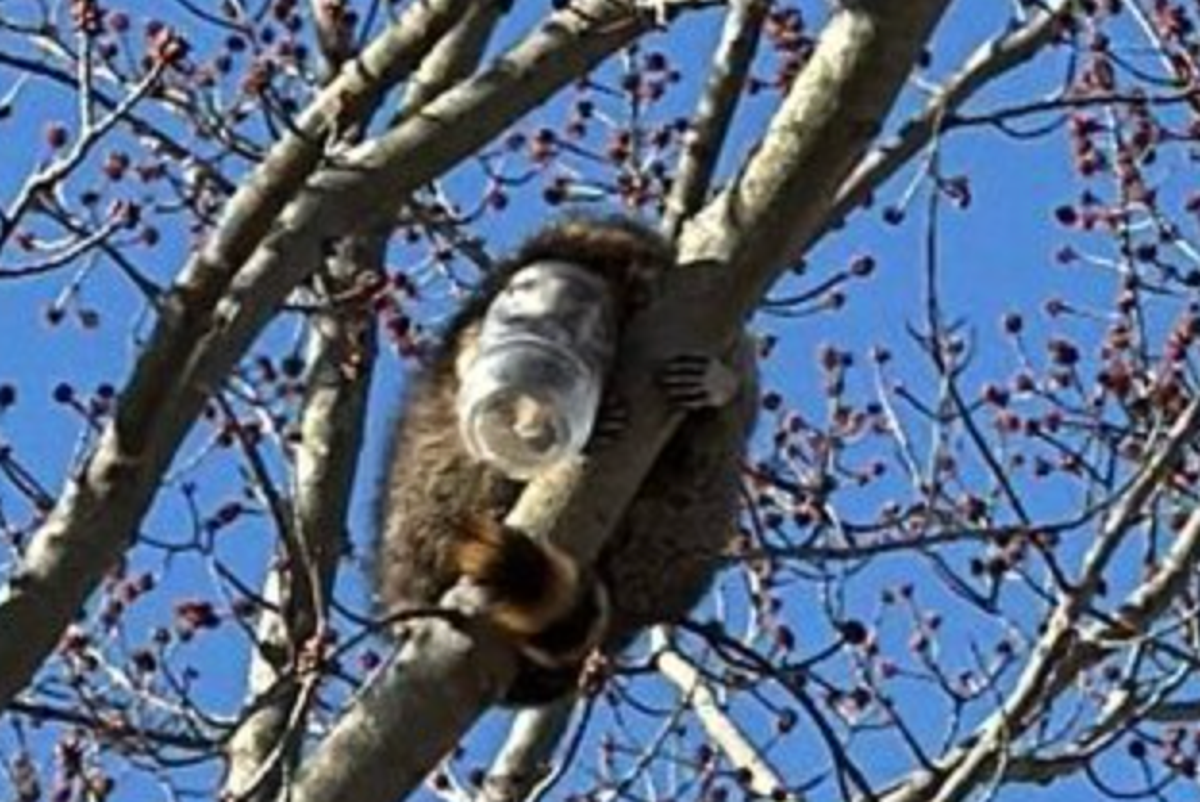
The intersection of urban wildlife foraging behavior and industrial packaging design creates a recurring structural failure known as the "constriction bottleneck." While media narratives often frame the rescue of a raccoon from a peanut butter jar as a heartwarming anecdote of greed, a technical analysis reveals a complex interaction between caloric drive, anatomical mechanics, and the economic displacement of emergency services. The incident serves as a primary case study in how synthetic materials disrupt biological survival heuristics, turning a high-reward food source into a terminal physical trap.
The Foraging Cost-Benefit Disparity
Raccoons (Procyon lotor) operate on an opportunistic foraging model governed by the marginal value theorem. In an urban ecosystem, the caloric density of processed human food—specifically lipid-heavy substances like peanut butter—far exceeds that of natural prey or vegetation. This creates a powerful incentive for the animal to ignore sensory warnings or physical resistance in pursuit of a high-energy payoff.
The mechanical failure occurs during the transition from the "exploration phase" to the "extraction phase."
- The Entry Vector: The raccoon utilizes its highly tactile front paws to manipulate the container. However, the depth and narrowness of a standard 16-ounce or 32-ounce plastic jar often exceed the reach of the limb, forcing the animal to insert its head to reach the remaining volume.
- The One-Way Valve Effect: Raccoons possess a tapered cranial structure. The forward-facing orientation of the ears and the sleekness of the fur allow the head to enter a constricted opening with relatively low friction.
- The Expansion Lock: Once the head is inside, several physiological factors prevent self-extrication. Stress-induced tachycardia increases blood flow to the head and neck, causing soft tissue swelling (edema). Furthermore, the backward-pointing orientation of the ears acts as a biological barb, catching on the internal rim of the jar's neck.
This sequence transforms a foraging event into a "mechanical entrapment," where the force required for removal exceeds the animal's physical leverage capacity.
Anatomy of the Rescue: Tactical Intervention Framework
When municipal fire departments are dispatched to a wildlife entrapment, the operation shifts from a biological event to a technical rescue. Firefighters do not simply "pull" the animal out; doing so would likely result in cervical dislocation or severe soft tissue trauma. Instead, the intervention follows a three-stage de-escalation and extraction protocol.
1. Stress Modulation and Immobilization
The primary risk to both the animal and the responder is the "flight or fight" response. A raccoon with a jar on its head is effectively sensory-deprived, leading to unpredictable, aggressive thrashing.
- Visual Shielding: Covering the jar with a heavy towel or blanket serves to dampen external stimuli and provides a physical barrier for the handler.
- Physical Stabilization: Responders must secure the animal’s body to prevent spinal injuries during the torque phase of the extraction.
2. Friction Reduction and Lubrication
The interface between the plastic rim and the fur is the point of highest resistance. Responders typically utilize hydrophobic lubricants—such as dish soap or medical-grade oils—to coat the neck area. This reduces the coefficient of friction, allowing the fur to slide beneath the rim rather than bunching up and increasing the diameter of the obstruction.
3. Structural Destruction of the Vessel
If lubrication fails, the team must perform a controlled breach of the container. This is the highest-risk phase.
- The Compression Hazard: Using heavy shears or snips on a plastic jar creates localized pressure points. If the plastic is brittle, it may shatter, sending shards into the animal’s eyes or respiratory tract.
- The Heat Variable: Power tools, such as rotary saws, generate friction heat that can melt the plastic onto the animal's skin or cause thermal burns.
- The Airflow Restoration: The first priority in any breach is creating an air hole at the base of the jar to prevent hypoxia while the more complex neck-rim removal is conducted.
Resource Displacement and the Economics of Public Safety
While a single wildlife rescue may seem trivial, it represents a significant "opportunity cost" for municipal emergency services. The deployment of a fire engine or a specialized rescue squad involves a specific burn rate of taxpayer capital and a temporary reduction in district coverage.
- Crew Availability: A standard engine company consists of three to four personnel. Engaging this team in a 45-minute wildlife extraction removes them from the "Available" status for high-priority life-safety calls, such as structure fires or cardiac arrests.
- The Dispatch Logic: Most municipalities categorize wildlife calls as "Low Priority" or "Public Service." However, if the animal is in a high-traffic area or causing a public disturbance, the priority level is often artificially inflated to clear the scene and maintain public order.
- Equipment Wear: While the physical wear on tools is minimal, the decontamination process required after handling wildlife—especially species known as rabies vectors—takes the unit out of service for an additional period.
This creates a systemic inefficiency where the failure of a private citizen to secure a recyclable container results in a public expenditure of several thousand dollars in man-hours and operational costs.
Structural Deficiencies in Packaging Design
The "Greedy Raccoon" narrative shifts the blame onto the animal’s biological imperatives, ignoring the industrial design flaws that facilitate these incidents. Modern food packaging is optimized for shipping density and consumer shelf-appeal, with little regard for the "post-consumer lifecycle" in the context of urban ecology.
The Tapered Neck Paradox is a recurring issue. To maintain structural integrity and reduce plastic weight, manufacturers often use a reinforced, threaded rim that is significantly more rigid than the body of the jar. This creates a "hard-stop" for any object—biological or otherwise—that enters the more flexible body and then attempts to exit.
Mitigation Strategies for Waste Management
Reducing these incidents requires a shift from reactive rescue to proactive containment.
- Rinsing and Resealing: The simplest mechanical deterrent is the application of the original lid. A sealed container removes the scent profile and creates a physical barrier that most urban wildlife cannot breach without significant effort.
- The "Crush and Fold" Method: For aluminum cans or thin plastics, flattening the opening prevents limb or head insertion.
- Lid Engineering: Implementing "breakaway" or "scored" rims on common food jars could allow animals to exert enough force to snap the plastic if they become stuck, though this would likely increase production costs and compromise seal integrity for human use.
The Strategic Shift Toward Coexistence Management
The presence of a raccoon in a peanut butter jar is a symptom of a larger "Urban-Wildland Interface" friction. As metropolitan areas expand, the density of synthetic traps increases. We are currently seeing a divergence in wildlife behavior: "urban specialists" are evolving higher levels of problem-solving skills to navigate human waste, but their physical evolution cannot keep pace with the material science of high-density polyethylene (HDPE).
The long-term solution is not found in the efficiency of firefighter extraction techniques, but in the hardening of urban infrastructure.
Municipalities should transition from "Service-Based Response" (sending firefighters to the jar) to "Infrastructure-Based Prevention" (standardizing animal-proof waste bins). This reduces the volatility of the emergency dispatch queue and mitigates the unnecessary trauma to local wildlife populations.
The strategic play for the individual is a rigorous audit of the disposal chain:
- Step 1: Categorize all discardable containers by "entrapment risk" based on neck diameter (anything between 2 and 5 inches is high risk).
- Step 2: Ensure all high-risk vessels are either cleaned of caloric residue or mechanically disabled via crushing.
- Step 3: Secure the waste in a secondary containment system that requires opposable thumb dexterity or significant force to open.
Failure to address the source of these mechanical traps ensures a continued, expensive, and unnecessary reliance on high-skill first responders for low-skill waste management failures.