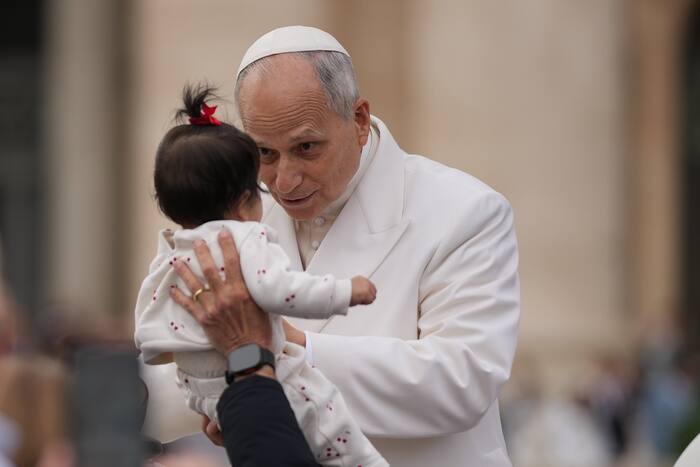
Executing a 12-day apostolic journey across Latin America while a head of state is actively recovering from acute medical intervention represents a severe physiological and logistical gamble. Standard media narratives frame a pontiff's return to Peru through the lens of personal nostalgia and cultural homecoming—specifically referencing Pope Leo XIV’s decades of missionary and episcopal service in Chiclayo and Lima. That sentimental framing obscures the operational reality. A 12-day multi-jurisdictional itinerary in the Andes and the Amazon basin is not a victory lap; it is a high-stakes stress test of Vatican continuity, medical logistics, and regional diplomatic stabilization.
To understand why the Holy See authorizes an extended, physically punishing itinerary under compromised health parameters, analysts must separate emotional rhetoric from institutional calculus. The decision rests on three interlocking mechanisms: physiological risk tolerance, ecclesiastical consolidation in the Global South, and the weaponization of soft power in politically fractured states.
The Physiological Cost Function of Extended Apostolic Travel
Conventional reporting treats a "still-recovering" pope as a human-interest detail rather than a primary operational constraint. In practice, medical recovery dictates every variable of a papal itinerary, from flight pressurization schedules to motorcade velocity and altar ergonomics.
A 12-day tour through Latin America introduces four compounding physiological stressors that directly threaten a recovering executive:
- Circadian Desynchronization and Cumulative Fatigue: Transatlantic flight from Rome (UTC+1) to Lima (UTC-5) imposes a six-hour phase delay. While westward travel is generally better tolerated by human circadian rhythms than eastward return flights, the immediate compression of public liturgies, bilateral state meetings, and crowd transit prevents baseline sleep recovery. Sleep deprivation directly impairs immune response and increases systemic inflammation, amplifying the baseline risk of post-recovery relapse.
- Barometric and Hypoxic Stress: Peru’s geography splits into three distinct atmospheric zones: the coastal desert (Costa), the Andean highlands (Sierra), and the Amazonian basin (Selva). Even if the primary liturgical hubs remain at sea level in Lima or northern coastal cities like Trujillo and Chiclayo, any transit into Andean jurisdictions—such as Cusco or Arequipa—exposes the cardiovascular and respiratory systems to hypobaric hypoxia. At elevations exceeding 2,300 meters, reduced partial pressure of oxygen forces compensatory increases in heart rate and pulmonary artery pressure. For an elderly executive recovering from recent pathology, altitude acts as an acute force multiplier for cardiopulmonary failure.
- Thermal and Micro-Environmental Volatility: Moving between the humid, temperate coastal fog of Lima, the arid cold of the Andes, and the high-humidity heat of Amazonian outposts like Puerto Maldonado requires rapid thermoregulatory adaptation. Combined with exposure to dense, unmasked crowds of hundreds of thousands of pilgrims, the vector risk for secondary respiratory or gastrointestinal infection rises exponentially.
- Orthostatic and Mobility Strain: Papal liturgies require prolonged periods of standing, kneeling, and repetitive upper-body movement, punctuated by uneven terrain during outdoor masses. Even with mechanical accommodations—such as hydraulic lifts on the popemobile or seated liturgical protocols—the cumulative musculoskeletal load over 12 consecutive days degrades physical resilience by day six.
The Vatican’s Office of Liturgical Celebrations and the Directorate of Health and Hygiene mitigate these variables through strict compartmentalization. The itinerary is engineered around "micro-recovery windows"—mandatory four-to-six-hour blocks inside apostolic nunciatures where medical teams monitor vital signs, administer intravenous hydration if necessary, and restrict unscheduled bilateral audiences. When a 12-day schedule survives medical vetting, it signals that the Secretariat of State considers the geopolitical return on investment high enough to justify pushing the pontiff close to his physiological ceiling.
The "Homecoming" Fallacy and Institutional Consolidation
Media coverage instinctively leans on biographical familiarity—labeling Peru "his beloved Peru" because the pontiff spent formative years there as an Augustinian missionary and bishop. While biographical affinity lubricates local reception, the Vatican does not deploy its chief executive for 12 days to indulge personal nostalgia. The trip functions as an audit and consolidation of institutional control.
Latin America holds roughly 40 percent of the world's baptized Catholics, yet the region has experienced sustained structural erosion over the past three decades. Evangelical and Pentecostal movements have captured significant market share in urban peripheries and rural provinces, while secularization has accelerated among educated urban demographics in Lima, Santiago, and Buenos Aires. Simultaneously, the Peruvian Church has endured severe reputational damage stemming from internal governance failures, notably the prolonged canonical dismantling of the Sodalitium Christianae Vitae (Sodalitium of Christian Life) over financial corruption and systemic abuse.
A pontiff with direct, granular knowledge of the Peruvian episcopate possesses an asymmetric informational advantage over local actors. Unlike a visiting foreign dignitary reliant on nunciature briefings, a former local bishop knows the faction lines within the Peruvian Episcopal Conference, understands the socioeconomic grievances of northern provinces like Lambayeque and La Libertad, and recognizes which regional prelates are executing Vatican reforms versus stalling them.
The operational objectives of this "homecoming" divide into three distinct administrative levers:
- Bypassing Curial Filters: Direct presence allows the pope to conduct unmediated assessments of diocesan leadership, signaling unequivocal backing for reformist bishops while isolating holdouts resistant to accountability protocols.
- Re-anchoring Peripheral Loyalty: By prioritizing secondary cities—such as Chiclayo, Trujillo, or Amazonian vicariates—over exclusive focus on the capital, the itinerary validates marginalized populations. In ecclesiastical terms, this reinforces the periphery-to-center governance model, counteracting the historical perception that the Catholic hierarchy aligns exclusively with Lima’s economic elite.
- Synchronizing the Regional Synodality Agenda: A 12-day footprint provides the bandwidth to convene regional bishops' conferences, ensuring that local pastoral plans align with Rome’s broader doctrinal and social directives rather than drifting into localized ideological fragmentation.
Geopolitical Stabilization in a High-Friction Environment
A papal visit to Peru never occurs in a political vacuum. Peru’s recent political history is characterized by chronic executive instability, high presidential turnover, deep institutional distrust between the legislature and the judiciary, and recurring social unrest rooted in extractive industry conflicts and rural-urban inequality.
When a head of state who also commands supreme moral authority enters a polarized jurisdiction, the visit alters the domestic political equilibrium. Both the sitting Peruvian government and opposition factions attempt to capture the symbolic capital of the event. The executive branch seeks photographic proximity to project legitimacy and stability to international markets and domestic voters; protest movements utilize the concentrated international media presence to amplify grievances regarding mining concessions, environmental degradation, and state neglect.
The Vatican Secretariat of State manages this friction through calibrated ambiguity and structural neutrality:
- Protocol Separation: State ceremonies at the Palacio de Gobierno in Lima are strictly segregated from pastoral events. The Vatican enforces rigid guest-list controls to prevent political operatives from turning liturgical spaces into campaign platforms.
- Encoded Rhetoric: Papal addresses in fragile democracies rarely name specific political parties or endorse legislative bills. Instead, they deploy targeted social doctrine—emphasizing institutional integrity, anti-corruption, ecological stewardship, and the protection of indigenous land rights. In the Peruvian context, invoking environmental protection in the Amazon or institutional justice in Lima functions as a direct critique of state failures without triggering a formal diplomatic breach.
- De-escalation Buffer: The sheer logistical footprint of a papal visit imposes a temporary truce on civil unrest. Security forces, municipal authorities, and civil society organizations must coordinate infrastructure, crowd control, and emergency services. While temporary, this forced operational cooperation creates a brief window of civic cohesion that the Church attempts to convert into longer-term dialogue mechanisms between state ministries and regional communities.
The 12-Day Endurance Threshold: Operational Vulnerabilities
Extending a tour to 12 days rather than compressing it into a standard four-to-five-day surgical visit exponentially increases the surface area for operational failure. In event logistics and diplomatic security, risk does not scale linearly with time; it compounds.
The first vulnerability is narrative fatigue and message dilution. Over a 72-hour trip, every homily and bilateral meeting commands concentrated global media attention. Across 12 days, international press corps cycle out, coverage fragments into localized soundbites, and a single unscripted remark—or a visible moment of physical exhaustion—can hijack the entire communications architecture. A stumble on the steps of an aircraft or a visibly slurred address on day nine immediately shifts global headlines from pastoral strategy to succession speculation.
The second vulnerability is security apparatus degradation. Protecting a high-value target across multiple cities, open-air venues, and motorcade routes over nearly two weeks exhausts local police and military intelligence units. Fatigue among perimeter personnel degrades threat detection during the final third of the itinerary—precisely when the pontiff’s own physical alertness is lowest. The Vatican Gendarmerie Corps mitigates this by rotating advance teams ahead of the main delegation, establishing sterile zones 48 hours prior to arrival, and maintaining sovereign control over the immediate inner ring. Nevertheless, the reliance on host-nation infrastructure for airspace control, crowd barrier integrity, and emergency medical evacuation remains an irreducible external dependency.
The third vulnerability is the economic backlash of hosting. Mounting a 12-day multi-city papal tour requires tens of millions of dollars in municipal expenditure—covering road resurfacing, temporary altar construction, sanitation infrastructure, and security overtime. In an economy grappling with inflation or sluggish growth, opposition critics inevitably scrutinize public expenditure on religious pageantry. If local authorities fail to demonstrate transparent cost-sharing with the private sector and the local Church, the visit risks generating domestic resentment that undermines its pastoral objectives.
Strategic Execution for Institutional Observers
Analysts, diplomats, and institutional stakeholders tracking this journey must discard sentimental interpretations and evaluate the 12-day deployment through hard operational indicators.
First, monitor the micro-adjustments to the liturgical schedule after day four. The cancellation of evening courtesy calls, the substitution of standing rituals with seated protocols, or the delegation of homily readings to accompanying cardinals will provide the earliest empirical evidence that the physiological cost function has exceeded medical projections.
Second, track the specific diocesan appointments and canonical decrees announced within 60 days following the pontiff’s return to Rome. A 12-day on-the-ground audit by a former Peruvian bishop is an intelligence-gathering operation; the true strategic output will not be found in the public speeches delivered in Lima or Chiclayo, but in the personnel removals, episcopal transfers, and administrative restructurings executed once the papal aircraft clears Peruvian airspace.